ByMax Lee
Northern Mariana Islands Tractor Road Laws & Flashing Lights
Northern Mariana Islands farm tractor road use laws and flashing light requirements are serious business. If you operate a tractor on any public road, understanding the legal obligations keeps you from getting fined. More importantly, proper equipment prevents collisions on narrow island roads where visibility is already limited.
Per the Commonwealth of the Northern Mariana Islands vehicle code and ASABE S276 standards, farm tractors traveling on public roads must display an illuminated amber warning system and a slow-moving vehicle emblem. These aren't suggestions. They're enforceable legal requirements with real consequences behind them.
How CNMI Traffic Code Applies to Agricultural Equipment
The Commonwealth of the Northern Mariana Islands operates under its own vehicle and traffic regulations. These align closely with broader U.S. principles but carry their own local enforcement patterns.
The key distinction sits between vehicles used exclusively off-road and those that occasionally travel on public roads. When a tractor crosses from field to field using village roads or paved highways, it becomes subject to road-use regulations.
The CNMI Traffic Code classifies farm tractors as slow-moving motorized equipment. They don't carry the same classification as standard passenger vehicles. This distinction carries specific obligations:
- Operators must ensure proper lighting is functional before any public road use
- Vehicles must display identification markings visible to other drivers
- Speed expectations differ, which affects right-of-way dynamics
- Law enforcement may stop any vehicle lacking required safety equipment
Local enforcement varies between islands. Saipan sees more regular traffic checks given its denser population and road network. Tinian and Rota tend toward more relaxed practical enforcement on remote rural roads.
But "less likely to get stopped" doesn't mean "legal."
Agricultural exemptions exist in many jurisdictions. These sometimes allow tractors on certain roads during specific hours or under particular conditions. CNMI law does provide some flexibility for farm operations.
However, these exemptions rarely waive the core safety equipment requirements.
The Quick Answer: What the CNMI Requires for Farm Tractors on Public Roads
Before heading anywhere near a public road, your tractor needs four things checked and confirmed:
| Requirement | What It Means |
|---|---|
| Amber flashing warning lights | At least one illuminated amber beacon on the roof or front |
| SMV emblem | Orange triangle with red border, mounted on the rear |
| Headlights | White front-facing lights for forward visibility |
| Taillights | Red rear-facing lights for rear visibility |
These form the baseline. Anything missing puts you out of compliance.
A functional brake light is also expected if the tractor has a braking system accessible from the driver position.
Flashing Light Requirements: Colors, Placement, and Visibility
YouTube / EIRUIYO Warning Lights (YouTube thumbnail (fair-use with source credit))
Color matters enormously here. Amber is the correct color for warning lights on slow-moving agricultural equipment. Using red flashing lights on the front of a tractor sends the wrong signal.
Red lights indicate emergency vehicles or hazard warnings.
Placement determines visibility. The amber beacon needs to sit at the highest practical point on the tractor. Ideally on the roof rack or a dedicated light bar above the cab.
This height ensures other drivers see the light over vehicles, fences, and tropical vegetation.
The brightness requirement isn't written in precise candlepower for most local codes. But practical visibility distance is. Your flashing amber light should be clearly visible from at least 500 feet on a clear night.
In daylight, a rotating beacon or strobe unit performs noticeably better than a steady bulb.
Most CNMI farm travel happens during early morning and evening hours. Low-angle sunlight washes out dim lights completely. If your tractor lacks factory-installed lighting, aftermarket kits fill the gap well.
Slow-Moving Vehicle (SMV) Emblem Rules in the CNMI
YouTube / Streetwise Carts (YouTube thumbnail (fair-use with source credit))
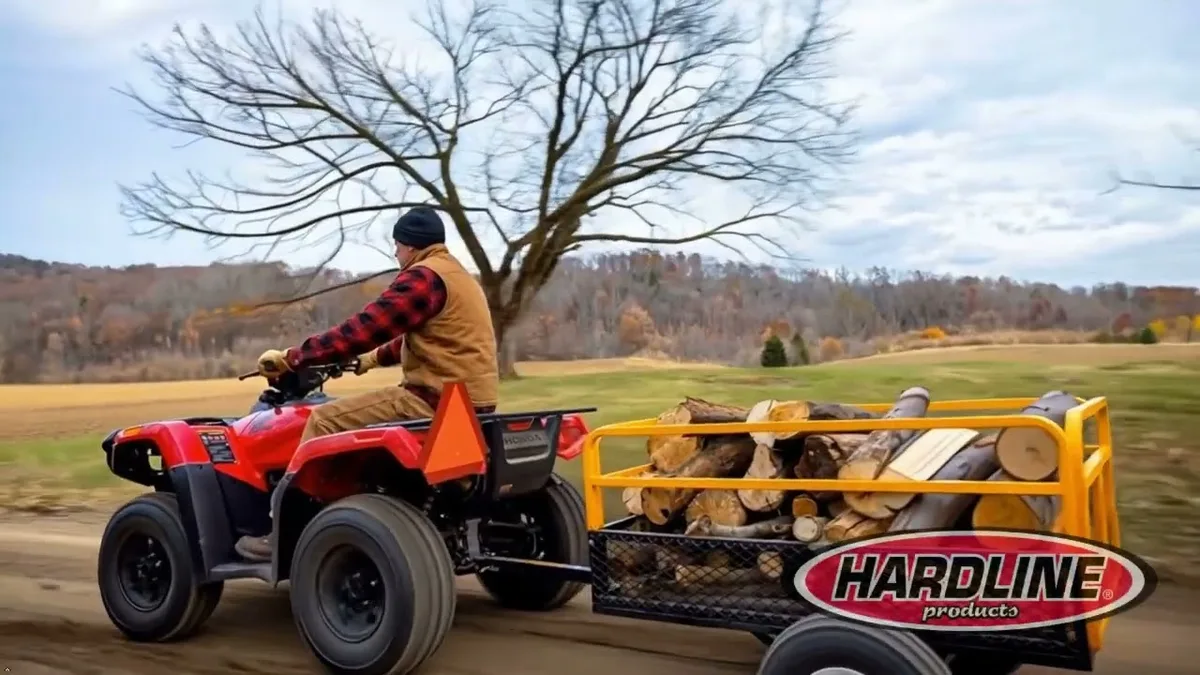
The SMV emblem is non-negotiable. The triangle uses fluorescent orange with a bright red reflective border. This combination stands out in both daylight and headlight beams.
Position is critical. The emblem must mount on the rear of the tractor, centered as much as possible within the frame width. Height matters too.
For most farm tractors, placing the emblem between 2 and 4 feet above ground level provides optimal visibility.
The emblem alone doesn't replace lights. Think of it as a passive companion to your active warning system. During daytime hours, the SMV sign alerts approaching drivers.
At night, headlights illuminate the reflective border.
Some tractors pull towed implements that block the rear emblem view entirely. If you're hauling a wide baler or planting rig, the implement itself may obscure the triangle from behind. In those cases, additional signage or auxiliary lighting on the implement becomes necessary.
When You Need Additional Lighting (And When You Don't)
Not every tractor situation demands extra lights. But knowing when to add them separates safe operators from risky ones.
Here's a practical breakdown:
| Situation | Additional Lighting Needed? |
|---|---|
| Daylight travel on well-lit village roads | No |
| Dawn or dusk movement between fields | Yes, active warning lights mandatory |
| Night operation on any public road | Yes, full lighting system required |
| Hauling wide implements that block visibility | Yes, auxiliary lights on implement |
| Operation in heavy rain or poor weather | Yes, lights essential for visibility |
You don't need rotating beacons for a quick trip to the next field during broad daylight. But as soon as light fades, that changes immediately.
Many operators on Saipan make the mistake of relying solely on the SMV emblem at night. The triangle looks fine in daylight. It disappears completely under low light or heavy cloud cover.
Common Mistakes That Get CNMI Farmers Pulled Over
YouTube / Hardline Products® (YouTube thumbnail (fair-use with source credit))
Let's talk about what actually goes wrong.
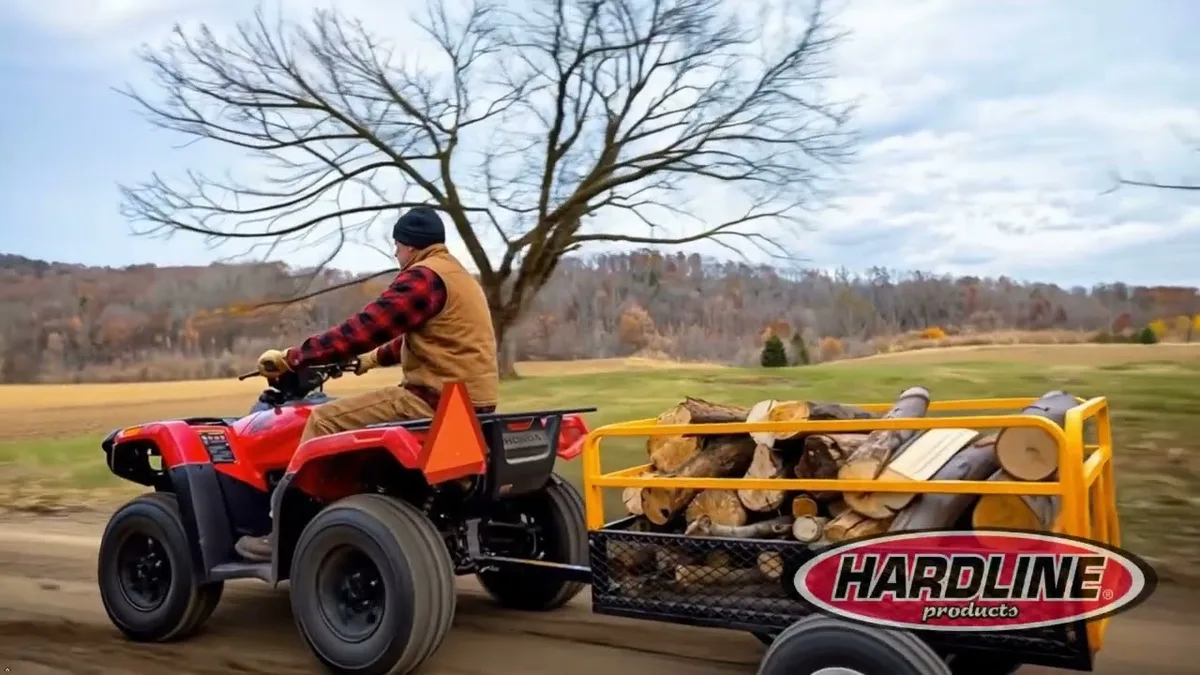
Faded or dirty SMV emblems. This tops the list. An SMV emblem loses its fluorescent brightness after months of tropical sun exposure. Mud and dust cover it further.
A faded emblem is almost invisible to approaching drivers.
Light wiring left exposed. Many tractor owners run power cables along the roll bar without proper insulation. Rain and humidity cause short circuits fast. A flickering light looks worse than no light at all.
Using red forward-facing lights. Some operators mount red rotating beacons on the front of their tractor. They think it looks aggressive or stands out more. Red lights on the front signal emergency vehicles to other drivers.
Missing brake lights. Tractors with simple hydraulic brakes often lack rear brake lights. This isn't a design flaw. It's a legal gap.
Adding a brake light kit to your tractor is inexpensive and prevents rear-end collisions.
Ignoring turn signals. Some older tractors never came with turn signals. Some owners simply never wire them up. But signaling a turn on a public road is a basic legal requirement.
Mounting lights too low. A flashing beacon mounted on the fender or seat frame offers poor visibility. Other drivers can't see it past hills or vegetation.
Step-by-Step: Making Your Tractor Road-Legal in the CNMI

YouTube / Alltruckled (YouTube thumbnail (fair-use with source credit))
Step 1: Inspect Your Current Setup
Walk around the tractor with the lights off. Check for visible damage to existing wiring. Test each light function.
Step 2: Upgrade or Install Warning Lights
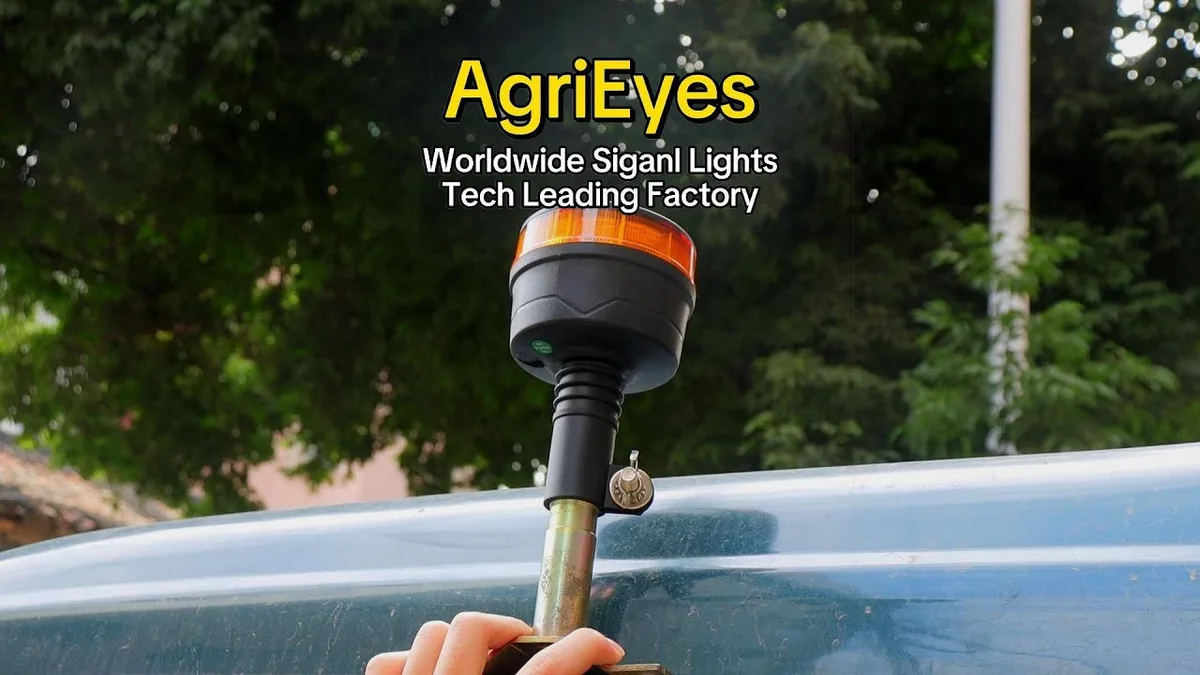
If your tractor lacks an amber flashing light, install one now. Choose a quality LED beacon rated for outdoor use. Mount it at the highest point possible.
Step 3: Verify the SMV Emblem
Replace any faded or cracked emblems. The triangle must face directly rearward. Center it within the tractor's width.
Step 4: Add Required Lights
Verify your tractor has working headlights and taillights. Add a brake light if yours lacks one. Turn signals add protection even if enforcement is loose.
Step 5: Document Your Compliance
Take photos of your complete lighting setup. Keep these on your phone in case of a stop.
Step 6: Schedule Regular Checks
Tropical conditions degrade equipment fast. Check your lights monthly during the rainy season.
Insurance, Registration, and Other Legal Fine Print
YouTube / AgriEyes (YouTube thumbnail (fair-use with source credit))
Farm tractors used primarily on private property don't require CNMI registration. Once you travel on public roads regularly, that changes. Local authorities expect registered equipment with current plates.
Insurance for agricultural equipment varies widely. Some policies cover tractors as farm machinery. Others classify them as motor vehicles requiring standard auto coverage.
If you tow a trailer behind your tractor, that trailer may need its own lighting and registration. The rules depend on trailer weight and width.
Don't overlook operator licensing. While you don't need a special license to drive a farm tractor, having a valid CNMI driver's license helps if stopped.
Local DPS officers occasionally ask for proof of registration and insurance during roadside stops. Keep these documents accessible in the tractor's glove compartment or a waterproof pouch.
Island-Specific Considerations: Saipan, Tinian, and Rota Differences
YouTube / What's alert (YouTube thumbnail (fair-use with source credit))
Saipan demands the most attention. It carries the largest population and busiest road network. Narrow shoulders and limited turnouts make tractor travel riskier here.
Tinian offers quieter roads but equally narrow passages. Agricultural activity is more concentrated in specific zones. Local officers know regular farm routes well.
Rota presents the smallest road network with the least traffic. Rural conditions mean longer stretches without street lighting. Headlight use becomes critical here.
Weather affects all three islands differently. Saipan sees heavier afternoon rains during monsoon season. Humidity degrades electrical connections across all islands.
What to Do If You're Stopped by CNMI DPS
Pull over safely as soon as possible. Turn on your hazard lights to signal your compliance.
Have your documents ready. Keep registration, insurance, and a photo of your lighting setup accessible. Be polite and cooperative.
If cited, ask for clarification on the specific violation. This helps you address the issue before your next trip.
Where to Get Compliant Lights and SMV Signs Locally
Local farm supply stores on Saipan carry basic lighting kits. Hardware stores often stock SMV emblems and wiring supplies.
Check with the CNMI Division of Agriculture for recommended vendors. They maintain lists of approved suppliers for agricultural safety equipment.
FAQs About CNMI Farm Tractor Road Use
Do I need a driver's license to operate a tractor on public roads?
A standard CNMI driver's license isn't required for farm tractors. But having one demonstrates you understand basic road rules.
Can I use red flashing lights on my tractor?
No. Red lights are reserved for emergency vehicles. Amber is the correct color for agricultural warning lights.
How often should I replace my SMV emblem?
Replace it every two years or when the fluorescent orange fades. Tropical sun degrades the material quickly.
What's the minimum height for mounting warning lights?
Mount amber beacons as high as practical. The roof or top of the roll bar is ideal.
Are turn signals required on farm tractors?
Not strictly required by CNMI code. But they're highly recommended for safety.