ByMax Lee
Guide to DUI Laws: Strict Penalties for Driving Under the Influence of Alcohol.
You're driving home. You had two drinks at dinner. You feel fine.
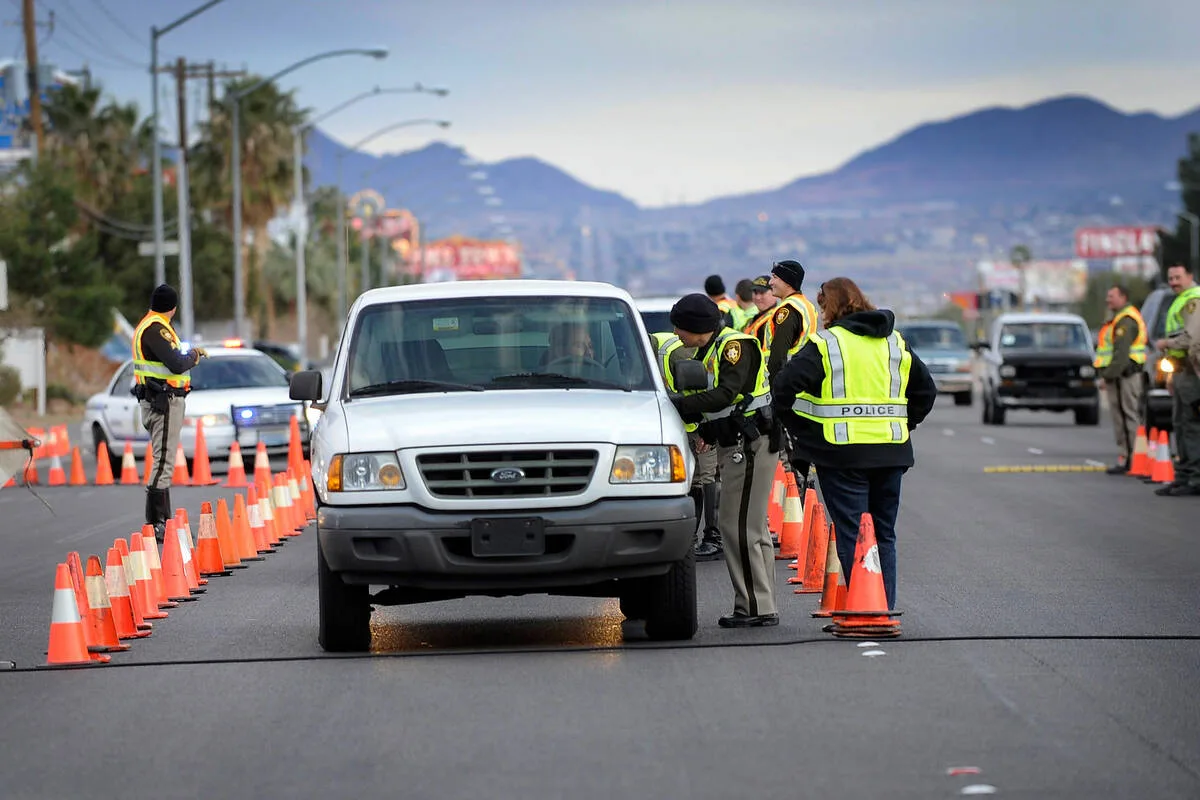
The blue lights appear in your rearview mirror. Your heart drops.
DUI Laws: Strict penalties for driving under the influence of alcohol. are not a joke. They are not a slap on the wrist. A first offense can cost you over $10,000, land you in jail for days, and suspend your license for a year or more.
The system is designed to punish hard and fast. As of 2026, all 50 states enforce a 0.08 percent blood alcohol concentration (BAC) limit for adults, and every state has an implied consent law that triggers automatic penalties if you refuse a chemical test. The moment you are arrested, you are in a high-stakes process where one wrong move makes everything worse.
Let's walk through what you actually face and how the system works.
Quick Answer
DUI penalties are strict by design. A first offense can include jail time up to six months. Fines range from $500 to $2,000.
License suspension can last 90 days to a year. You may need an ignition interlock device. Repeat offenses carry mandatory minimums.
The total cost often exceeds $10,000. Hiring an attorney is critical.
Bing (Web (fair-use with source credit))
Why DUI Penalties Are No Joke – The Stakes You Need to Know
Most people think a DUI is a traffic ticket. It is not. It is a criminal offense.
A misdemeanor DUI goes on your permanent criminal record. A felony DUI means prison time measured in years.
The stakes go far beyond the courtroom. A DUI conviction affects your job, your insurance rates, and your freedom to drive. If your job requires a commercial driver's license (CDL), one DUI can disqualify you for a full year.
For non-U.S. citizens, a DUI conviction can trigger deportation proceedings or a permanent ban from re-entering the country.
The financial hit is brutal. Between court costs, lawyer fees, fines, DUI school, increased insurance premiums, and the ignition interlock device, you are looking at a total that often falls between $10,000 and $25,000. That is not a typo.
That is the average for a first offense.
And here is something most people do not realize: the penalties get exponentially worse with each offense. A second DUI doubles the jail time and fines in many states. A third offense frequently becomes a felony, with multi-year prison sentences possible.
The system is not messing around.
The Legal BAC Limits – And How They Apply to You
The law draws a hard line at specific blood alcohol concentration (BAC) numbers. These are the limits that matter:
| Driver Type | BAC Limit | Notes |
|---|---|---|
| Adult (21+) | 0.08 percent | National standard, all 50 states |
| Commercial driver (CDL) | 0.04 percent | Federal law, enforced in every state |
| Under 21 (any license) | 0.02 percent | Zero tolerance laws apply. Some states enforce 0.00 percent |
| Enhanced penalty threshold | 0.15 percent | Triggers aggravated DUI charges in most states |
| Refusal to test | N/A (automatic penalty) | License suspension, higher fines |
Bing (Web (fair-use with source credit))
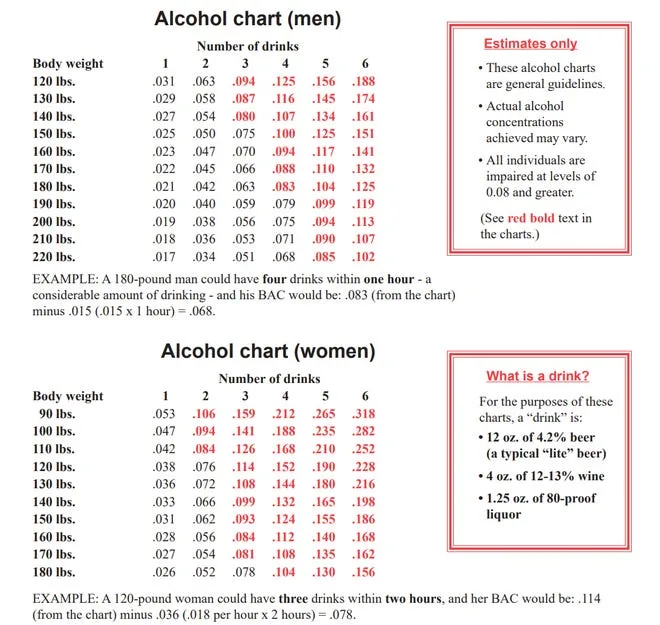
How many drinks does it take to hit 0.08 percent?
That depends on your weight, sex, food intake, and drinking speed. A 180-pound man who drinks two standard beers in one hour might be at 0.05 percent. A 140-pound woman who drinks two glasses of wine in the same hour can easily hit 0.08 percent or higher.
Here is the hard truth: you cannot reliably guess your BAC. You cannot "feel" whether you are under 0.08 percent. That is why the law uses chemical tests.
Your opinion does not matter. The machine does.
Does your state have a legal limit below 0.08?
Yes, some states have lower limits for certain drivers. Utah, for example, sets the adult limit at 0.05 percent. Other states have zero tolerance for any measurable alcohol in drivers under 21.
Always check your state's specific laws before you drive.
What about "one drink per hour" advice?
That rule of thumb is dangerously unreliable. Alcohol absorption varies wildly based on metabolism, body composition, and how recently you ate. The safest number is zero.
If you are driving, do not drink at all.
What Happens the Night of Your Arrest – Your Rights and Risks
The sequence of events after you see those flashing lights follows a predictable script. Knowing it in advance can save you from making things worse.
The Traffic Stop
The officer approaches your vehicle and asks for your license and registration. They are already assessing you for signs of impairment. Red eyes, slurred speech, the smell of alcohol, fumbling with paperwork.
Everything you do is being noted for the police report and body camera footage.
Field Sobriety Tests (FSTs)
If the officer suspects impairment, they will ask you to step out of the car for field sobriety tests. The three standardized tests are:
- Horizontal gaze nystagmus (HGN): The officer moves a pen in front of your eyes to see if your eyes jerk involuntarily at certain angles.
- Walk-and-turn: You take nine heel-to-toe steps along a straight line, turn, and come back.
- One-leg stand: You stand on one foot with your arms at your sides for 30 seconds.
These tests are not pass/fail in the normal sense. The officer scores specific clues. If you have enough "clues," you are considered impaired.
You can politely decline field sobriety tests. In most states, there is no penalty for refusing FSTs. The officer cannot force you to perform them. Say: "Officer, I respectfully decline to perform field sobriety tests."
The Preliminary Breath Test (PBT)
If you fail or refuse FSTs, the officer will ask you to blow into a handheld portable breath tester at the roadside. This is different from the big machine at the station.
You can also refuse the PBT in many states with no additional penalty. But here is where things get tricky.
The Chemical Test (Evidentiary)
Once you are under arrest, the officer will take you to the station and demand a chemical test. This is typically a breath test on an evidentiary machine or a blood draw. This test is legally mandatory.
Under implied consent laws, if you refuse this test, you face an automatic license suspension of 12 months or more, plus it can be used as evidence of guilt at trial.
Do not confuse roadside FSTs with the station test. One you can refuse. The other you cannot without heavy consequences.
Your Rights During the Process
- You have the right to remain silent beyond giving your name and documents.
- You have the right to an attorney. Ask for one clearly and repeatedly.
- You are not required to answer questions about where you were drinking or how much.
The Penalty Breakdown – First Offense vs. Repeat Offenses
Penalties vary by state, but the patterns are consistent. Here is what you can expect:
First Offense (Misdemeanor)
| Penalty | Typical Range |
|---|---|
| Jail time | 48 hours to 6 months (some states have mandatory minimums) |
| Fines | $500 to $2,000 plus court surcharges |
| License suspension | 90 days to 1 year |
| DUI school / alcohol education | 12 to 48 hours |
| Ignition interlock device | 6 to 12 months (required in many states) |
| Community service | 50 to 200 hours |
| Probation | 1 to 3 years |
A first offense is usually a misdemeanor. But do not underestimate it. You still go to jail (even if just for a couple of days).
You still pay thousands. Your insurance rates triple or quadruple for three to five years.
Second Offense (Misdemeanor or Felony Depending on State)
| Penalty | Typical Range |
|---|---|
| Jail time | 10 days to 1 year |
| Fines | $1,000 to $5,000 |
| License suspension | 1 to 2 years |
| Ignition interlock device | 1 to 3 years |
| Vehicle impoundment | 30 to 90 days |
| Probation | 2 to 5 years |
The jump from first to second offense is dramatic. Some states mandate a minimum of 10 days in jail. You will almost certainly lose your license for at least a year.
Third Offense (Felony in Most States)
A third DUI is a felony in nearly every state. You are looking at:
- 1 to 5 years in state prison
- Fines up to $10,000 or more
- License revocation for 3 to 10 years
- Permanent criminal record
A felony DUI makes it very hard to find a job, rent an apartment, or get professional licenses.
What Makes a DUI "Aggravated"?
Aggravated DUI charges apply when:
- Your BAC is 0.15 percent or higher
- A child under 16 was in the vehicle
- You caused an accident with injury or death
- You were driving on a suspended license
- You refused a chemical test
Aggravated charges carry significantly harsher penalties, including longer jail time, higher fines, and mandatory interlock periods.
The financial hit from a DUI can force you to rethink every car-related expense. You may need to learn how to maintain your own car to save money, like using a special soap for tesla or understanding what to use to wash my engine spot less. But honestly, the most important thing you can do is avoid the DUI in the first place.
The Hidden Costs of a DUI – Fines, Fees, and Insurance Nightmares
The fines you see on paper are just the beginning. Court surcharges, administrative fees, and mandatory program costs pile up fast.
Here is what a first offense actually costs in most states:
| Cost Item | Typical Amount |
|---|---|
| Court fines | $500 to $2,000 |
| Court surcharges and fees | $300 to $1,000 |
| DUI school / alcohol education | $200 to $800 |
| Ignition interlock installation | $70 to $150 |
| Ignition interlock monthly rental | $60 to $100 per month |
| Attorney fees | $1,500 to $5,000 |
| Increased insurance premiums (3-5 years) | $3,000 to $10,000 total |
| License reinstatement fee | $100 to $500 |
| SR-22 insurance filing fee | $25 to $50 |
The total for a first offense lands between $10,000 and $25,000. That is the average. A friend of ours in Arizona paid over $18,000 for a first DUI with a 0.11 percent BAC.
What is SR-22 insurance?
SR-22 is not actually insurance. It is a certificate your insurance company files with the state. It proves you carry the minimum liability coverage.
You need it for 3 to 5 years after a DUI. Your premium will triple or quadruple during that time.
Can you avoid the hidden fees?
Most of them are mandatory. You cannot skip DUI school, the interlock, or the reinstatement fee. The only cost you control is your attorney.
Our research shows that paying for a good lawyer upfront saves you money in the long run by reducing charges and penalties.
License Suspension and Ignition Interlocks – What to Expect
A DUI arrest triggers two separate actions against your license. One is administrative. One is criminal.
Both hurt.
Administrative Suspension
The moment you fail or refuse a chemical test, the arresting officer takes your license and issues a temporary driving permit. That permit is good for 30 to 45 days. After that, the Department of Motor Vehicles (DMV) suspends your license automatically.
You do not need to be convicted in court for this to happen.
The administrative suspension period for a first offense is typically 90 days to 1 year. You can request a DMV hearing to fight it, but you have only 10 days from the arrest date to file that request. Miss the deadline, and you lose the right to challenge it.
Criminal Suspension
If you are convicted in court, the judge orders a separate criminal suspension. This runs either at the same time as the administrative suspension or back-to-back. The total time without a valid license can stretch to 18 months or more.
The Ignition Interlock Device (IID)
Bing (Web (fair-use with source credit))
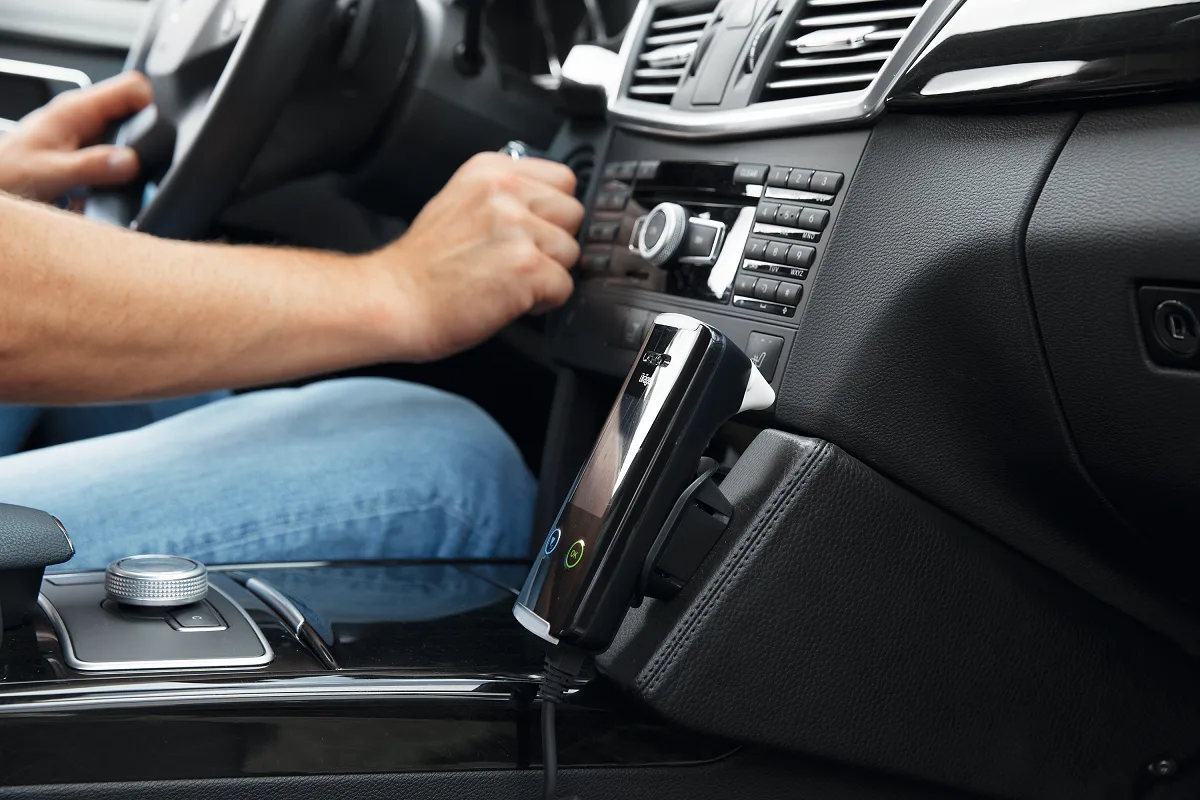
An IID is a breathalyzer installed in your vehicle. You blow into it before the car starts. If your BAC is above a preset limit (usually 0.02 percent), the car will not start.
You may also be required to blow during the drive (rolling retests).
Most states require an IID for at least 6 months after a first offense. Repeat offenders may need one for 2 to 3 years.
The device costs around $70 to $150 to install, plus $60 to $100 per month for monitoring. You cannot drive any vehicle, including a work truck or rental, without an interlock during your suspension period.
Can you drive at all during the suspension?
With an IID, yes, in most states. You can get a restricted license that allows you to drive to work, school, or medical appointments. Without the interlock, you cannot drive legally at all.
Driving on a suspended license is a separate criminal charge. It adds jail time and fines to your existing penalties. Do not do it.
The DUI Court Process – From Arraignment to Sentencing

Wikimedia Commons / onaeg news agency (CC BY-SA)
The court process moves fast. You have little time to make big decisions. Here is what happens step by step.
Step 1: Arraignment
You appear before a judge and hear the formal charges. You enter a plea: guilty, not guilty, or no contest. If you plead not guilty, the judge sets a date for the pre-trial conference.
You should have an attorney by this point. Never walk into arraignment without one.
Step 2: Pre-Trial Conferences
Your attorney meets with the prosecutor to discuss the evidence. The prosecutor reviews the police report, body camera footage, and chemical test results. This is where plea negotiations happen.
Step 3: Motions
Your attorney can file motions to suppress evidence. Common arguments include lack of probable cause for the stop, improper administration of field sobriety tests, or faulty breathalyzer calibration. If the motion succeeds, key evidence could be excluded.
Step 4: Plea or Trial
Most DUI cases end with a plea agreement. The prosecutor offers a reduced charge or lighter sentence in exchange for a guilty plea. If no agreement is reached, the case goes to trial.
Trial is risky. A jury decides your guilt based on the evidence. If you lose, you face the maximum penalties.
Step 5: Sentencing
If you plead or are found guilty, the judge issues the sentence. This includes jail time, fines, probation, DUI school, and the ignition interlock requirement. The judge has some discretion but must follow mandatory minimums set by state law.
Can You Reduce the Charge? Plea Bargains and Wet Reckless
Plea bargaining is common in DUI cases. The prosecutor may offer a lesser charge to avoid the time and cost of a trial.
What is a wet reckless?
A wet reckless is a charge of reckless driving involving alcohol. It sits between a standard reckless driving charge and a full DUI. It carries lighter penalties: shorter license suspension, lower fines, and no mandatory jail time in many states.
Not everyone qualifies. Wet reckless offers are most common for first-time offenders with a BAC just above 0.08 percent and no accident or injury.
What about reducing to reckless driving?
Some states allow a DUI to be reduced to a standard reckless driving charge if the evidence is weak. This avoids the DUI label entirely. The penalties are far less severe.
What affects your chances of a reduction?
Several factors work in your favor:
- Low BAC (0.08 to 0.10 percent)
- No accident or injury
- Clean driving record
- Cooperation with police
- Early completion of DUI school before the court date
- A skilled attorney who negotiates aggressively
Should you take a plea deal?
It depends. A plea deal avoids the risk of a trial and the maximum penalties. But it still results in a conviction on your record.
You must weigh the certainty of a lighter sentence against the chance of beating the charge completely.
Your attorney will advise you based on the strength of the state's case. Trust their judgment. They have seen the local court dynamics before.
Mistakes That Make a DUI Worse – What Not to Do
Some mistakes turn a bad situation into a catastrophic one. Avoid these at all costs.
1. Representing yourself
DUI law is complex. Chemical test procedures, chain of custody rules, and evidentiary standards are not something you learn from a quick online search. Public defenders are better than nothing, but a private DUI defense attorney knows the prosecutors and judges in your area.
2. Driving on a suspended license
It is a separate crime. In most states, a first offense for driving on a suspended license adds up to 30 days in jail and fines up to $1,000. A second offense can mean 90 days in jail.
3. Missing court dates
Failure to appear triggers a bench warrant. Police can arrest you at any time. Your bail increases.
The judge sees you as irresponsible and less likely to receive leniency.
4. Posting about the arrest on social media
Prosecutors check public social media accounts. A photo of you drinking or partying after the arrest is evidence they can use against you. Stay silent online until the case is closed.
5. Refusing the chemical test
We covered this earlier, but it bears repeating. Refusing the chemical test at the station triggers automatic license suspension of 12 months or more. It also becomes evidence of guilt at trial.
The "refusal penalty" often outweighs the penalty for the DUI itself.
6. Failing to request a DMV hearing
You have 10 days from your arrest to request a DMV hearing to fight the administrative license suspension. If you miss it, you lose your license for the full suspension period with no appeal. Mark your calendar the moment you are released.
When to Hire a DUI Attorney – And How to Choose One
You need an attorney from the moment you are arrested. Do not wait. The 10-day window to request a DMV hearing starts immediately.
A good DUI attorney knows the local prosecutors and judges. They can spot weaknesses in the evidence you would miss. Look for someone who handles DUI cases exclusively, not a general practice lawyer.
Check their track record with cases similar to yours.
Public defenders are free but overloaded. Private attorneys cost $1,500 to $5,000 for a first offense. That money often pays for itself in reduced penalties.
The Long-Term Impact – Employment, Immigration, and Record
A DUI stays on your criminal record permanently in most states. Employers see it on background checks. Jobs that require driving, security clearance, or professional licenses become harder to get.
For non-U.S. citizens, the stakes are life-changing. A DUI conviction can make you inadmissible to the United States or trigger deportation proceedings. Canadian law treats a DUI as a serious criminal offense, barring entry for years.
Insurance premiums triple or quadruple for three to five years. Some carriers drop you entirely. You will need SR-22 insurance to get coverage again.
Frequent Questions About DUI Penalties (FAQ)
Can a DUI be expunged from your record?
In some states, yes. You can petition for expungement after completing your sentence, including probation and DUI school. Eligibility depends on your state and the seriousness of the offense.
Do you need a lawyer for a first-time DUI?
Yes. Our research shows that represented defendants receive significantly lighter sentences than those who go pro se. An attorney can often negotiate a reduction to wet reckless or reckless driving.
What happens if you refuse a breathalyzer?
Refusing the station chemical test triggers an automatic license suspension of 12 months or more under implied consent laws. It also becomes evidence of guilt at trial in most states.
How long does a DUI stay on your driving record?
Typically 5 to 10 years, depending on your state. Insurance companies look back 3 to 5 years. The criminal conviction is permanent in many states.
Can you travel internationally with a DUI?
Yes, but with restrictions. Canada bars entry for DUI convictions for at least 5 to 10 years. Mexico and most European countries allow entry, but always check current entry requirements.
Final Take – The Smartest Move You Can Make
If you are reading this before a DUI happens, the smartest move is simple. Do not drink and drive. The cost, the risk, and the life disruption are not worth it.
If you have already been arrested, act fast. Hire an attorney. Request the DMV hearing within 10 days.
Follow every court requirement. Your future driving privileges depend on it.