ByMax Lee
Guide to Arizona U-turn Laws at Controlled Intersections
You're sitting at a busy intersection in Phoenix. The light goes green. No sign says "No U-Turn." So you're good to go, right?
Not always. Understanding Arizona U-turn laws at controlled intersections means knowing more than just what the signs say. The rules depend on the signal type, the road design, and even which city you're in.
As of 2026, Arizona Revised Statutes Title 28 is the main law covering this maneuver. The state code is clear on some points but leaves room for interpretation on others. The "safe distance" rule is where most tickets happen.
Let's walk through the real rules so you know exactly where you stand.
Bing (Web (fair-use with source credit))
Quick Answer
Arizona allows U-turns at controlled intersections unless a sign says no. Yield to all traffic and pedestrians. A green arrow gives you protected clearance.
A solid green ball does not. U-turns on red are illegal. Local restrictions apply near schools.
Here is a fast reference table for the main signal scenarios:
| Signal Display | U-Turn Legal? | Key Condition |
|---|---|---|
| Green Arrow | Yes | Protected, no need to yield |
| Solid Green Ball | Maybe | Must yield to oncoming traffic and pedestrians |
| Steady Red Light | No | Illegal under state law |
| No Prohibition Sign | Maybe | Must still be safe and unobstructed |
What Arizona Law Actually Says About U-Turns at Controlled Intersections
Arizona Revised Statute 28-772 is the core law. It says you can make a U-turn at an intersection unless a sign specifically prohibits it. The key phrase is "unless a sign prohibits." That leads many drivers to assume no sign means it is always allowed.
The law also requires the turn to be made safely and without interfering with other traffic.
Another statute, ARS 28-751, bans U-turns on curves and near the crest of a hill where you cannot see approaching vehicles. That applies even without a posted sign. Safety is baked into both laws.
| Statute | What It Covers | Key Rule |
|---|---|---|
| ARS 28-772 | U-turns at intersections | Allowed unless sign prohibits or unsafe |
| ARS 28-751 | U-turns on curves or hills | Prohibited when view is obstructed |
| ARS 28-644 | Obedience to traffic control devices | You must follow signals and signs |
| ARS 28-792 | Pedestrian right-of-way | Yield to pedestrians in crosswalks |
The practical takeaway? Arizona's default position is permissive. But permission comes with conditions.
You cannot just swing around blindly. The law expects you to check for oncoming traffic, pedestrians, and any local restrictions.
If you have questions about how traffic violations affect your driving record or insurance, you can check our blog for more resources on Arizona vehicle ownership.
The Big Confusion: When a "No U-Turn" Sign Is and Is Not Required
This is the part that catches people off guard. Many drivers think no sign means it is legal. That is mostly true in Arizona.
The state code does not require a sign at every intersection. But it is not the whole story.
Here is where it gets tricky. Even without a "No U-Turn" sign, a police officer can still cite you for an unsafe U-turn. The law says the maneuver must be made "with reasonable safety." That phrase gives officers discretion.
If you cut off a car, nearly hit a pedestrian, or make the turn too fast, you can get a ticket regardless of the sign.
City codes can add their own restrictions too. Phoenix, Tucson, and Tempe all have municipal ordinances that ban U-turns in certain business districts or near schools. Those restrictions might not be posted at every single intersection.
They can be enforced based on a general city-wide rule.
So the sign is one piece of the puzzle. But it is not the only piece. Safe execution and local ordinances matter just as much.
Green Ball vs. Green Arrow: This Detail Matters More Than You Think
Bing (Web (fair-use with source credit))
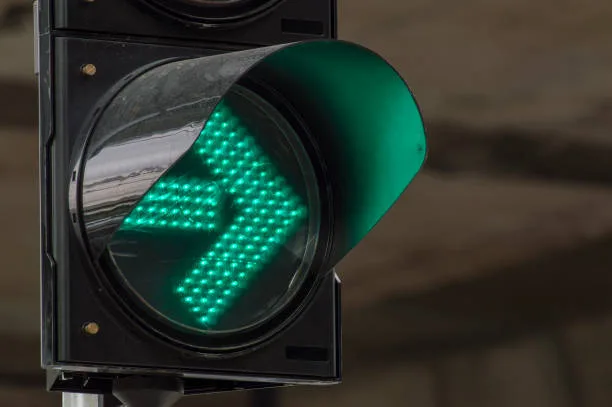
The type of green light changes everything. A green arrow means you have a protected turn. No oncoming traffic crosses your path.
You can complete the U-turn without yielding. It is the safest scenario.
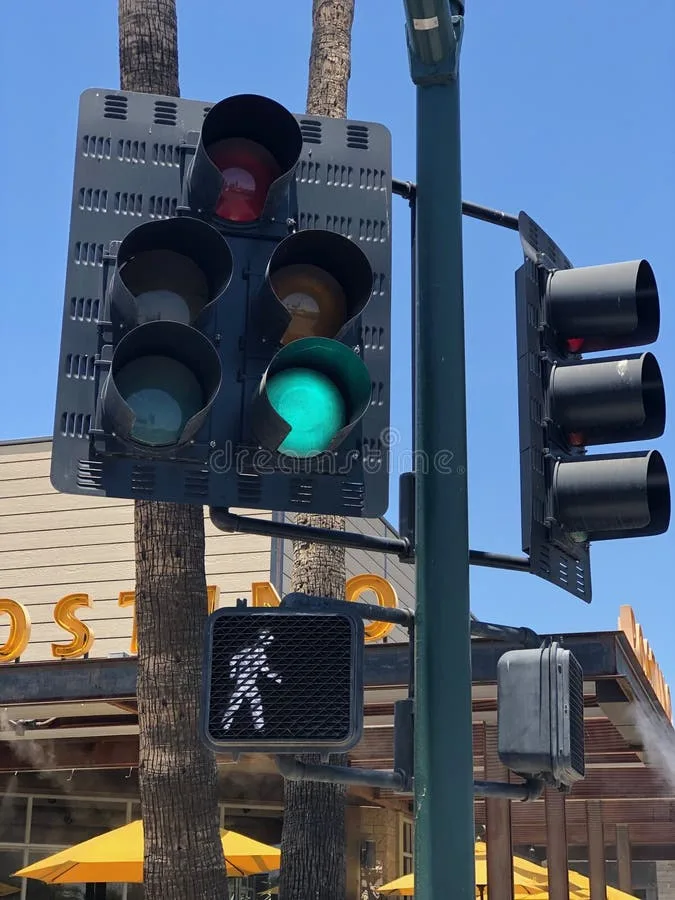
A solid green ball is a different story. It means through traffic has the green light too. You must yield to any vehicles coming from the opposite direction.
For a U-turn, that means waiting for a gap in traffic. You also need to check for pedestrians in the crosswalk before you go.
Here is the simple breakdown:
- Green arrow: Go ahead. Protected. No yield required.
- Solid green ball: Proceed only when clear. Yield to oncoming vehicles and pedestrians.
A common mistake is treating a solid green ball like a green arrow. If you pull out in front of someone coming straight through, you are at fault. That is how U-turn collisions happen.
In Arizona, the turning driver is almost always assigned liability.
Some newer intersections in the Phoenix metro area use a flashing yellow arrow for left turns and U-turns. That means the same thing as a solid green ball. Proceed only when safe.
It is not a protected turn.
U-Turns on Red at Controlled Intersections: The Short and Clear Answer

Bing (Web (fair-use with source credit))
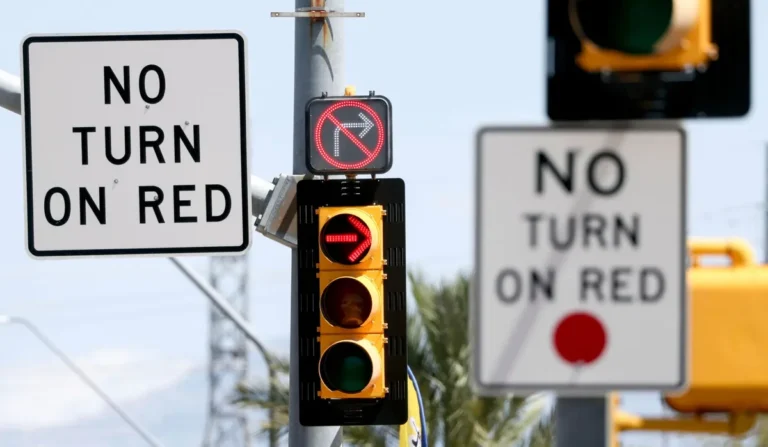
Do not make a U-turn on a red light in Arizona. Period. The law does not allow it.
Unlike some states that permit a U-turn on red after a full stop, Arizona treats it the same as running a red light.
Arizona Revised Statute 28-644 requires you to obey traffic control devices. A steady red signal means stop. You cannot proceed in any direction unless a sign specifically says you can.
There is no statewide exception for U-turns on red.
Some drivers confuse this with right-turn-on-red rules. Those are legal in Arizona unless posted otherwise. A U-turn is not a right turn.
The law treats it differently.
If you think you saw a green arrow but it turned red as you approached, just wait. Do not rush the turn. A ticket for running a red light in Arizona can cost you around $250 plus court fees.
It is not worth the risk.
For drivers in wet or dusty conditions, visibility is already reduced. The What To Expect In A Drive Through Car Wash article has tips on maintaining visibility. Those apply on the road too.
The Safe Distance Trap: Why You Can Still Get a Ticket Without a Sign
This is the most misunderstood part of Arizona U-turn law. You might have a green arrow, no prohibition sign, and perfect conditions. You could still get a ticket if an officer decides your turn was unsafe.
ARS 28-772 uses the phrase "with reasonable safety." That is a judgment call. There is no specific number written into the statute. There is no minimum distance from oncoming traffic.
The officer decides what looks dangerous.
Here is how it plays out in practice. You see a gap. You go for it.
The oncoming driver taps their brakes or swerves slightly. That is enough for a citation. The officer writes that you failed to yield the right-of-way.
| Scenario | Likely Outcome |
|---|---|
| Clear gap, no one adjusts speed | Legal, no ticket |
| Oncoming car brakes or swerves | Citation possible |
| Multiple vehicles in the lane | Officer may cite for unsafe maneuver |
| Pedestrian in crosswalk | Citation for failure to yield |
The fix is simple. Be patient. Wait for a gap that feels comfortable, not just barely doable.
If you are forcing someone to slow down, you are probably cutting it too close.
Our blog at RoadWorthy Labs covers more Arizona driving laws and best practices for staying citation free.
School Zones, Business Districts, and Other Local Restrictions
Bing (Web (fair-use with source credit))
State law is the baseline. But cities add their own rules. In Arizona, local ordinances can restrict U-turns in specific areas even without a posted sign at every intersection.
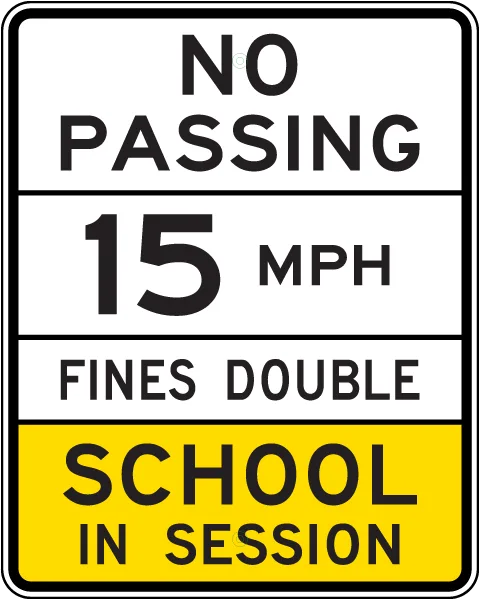
School zones are a common example. Many Arizona cities ban U-turns within a certain distance of a school during posted hours. The restriction might be 500 feet or 1000 feet depending on the city.
The sign at the school zone boundary may not mention U-turns specifically. The ordinance still applies.
Business districts also get extra restrictions. Phoenix has city code sections that limit U-turns in central business districts where traffic volume is high. The restriction is usually posted.
But not always at every intersection.
Tempe is stricter near Arizona State University. U-turns near campus during peak hours face extra enforcement. Flagstaff has its own rules near the downtown railroad crossings.
| City | Notable Restriction |
|---|---|
| Phoenix | Business district limits, city code Title 36 |
| Tucson | School zone restrictions, near university |
| Tempe | ASU campus area during peak hours |
| Flagstaff | Near railroad crossings, downtown |
Check the municipal code for the city you drive in most. That is where the hidden rules live.
What Happens If You Get Caught: Fines, Points, and Insurance Impact
A U-turn violation in Arizona is a moving violation. That means points on your license and a fine. It also means your insurance company finds out.
The base fine varies by city. In Phoenix, an illegal U-turn typically costs around $180 to $250. That includes the base fine plus court surcharges.
In smaller cities, the fine may be lower. In Scottsdale, expect closer to $200.
Points are the bigger problem. Arizona assigns 2 to 3 points for an illegal U-turn. That goes on your record for 12 months from the violation date.
Accumulate 8 points in 12 months and the MVD can suspend your license.
Insurance impact is real. Our research shows a single moving violation raises premiums by roughly 15 to 20 percent on average. That increase lasts three to five years.
Over that time, a $200 ticket ends up costing you $600 or more in higher premiums.
| Cost Factor | Estimated Amount |
|---|---|
| Base fine | $180 to $250 |
| Court surcharges | $50 to $100 |
| Points on license | 2 to 3 points |
| Insurance increase (yearly) | 15 to 20 percent |
| Total cost over 3 years | $600 to $1,200 |
If you have a commercial drivers license, the stakes are higher. A U-turn violation on a CDL can add points that threaten your job. Commercial drivers should be extra cautious.
How to Execute a Legal U-Turn at a Controlled Intersection: Step by Step
Here is the procedure for making a legal U-turn in Arizona. Follow these steps every time.
Step 1: Check for prohibition signs
Scan the intersection for a "No U-Turn" sign. Look at both the near side and the far side of the intersection. Some jurisdictions post the restriction on the far side.
Step 2: Get in the leftmost lane
You must start the turn from the leftmost lane. If you are in a lane to the right of the leftmost lane, you cannot legally make a U-turn. That includes center turn lanes.
Step 3: Check the signal type
Is it a green arrow or a solid green ball? A green arrow means you go. A solid green ball means you yield.
A red light means you stop and wait.
Step 4: Yield to everyone
Check for oncoming traffic from the opposite direction. Check for pedestrians in the crosswalk. Check for cyclists on the right side.
Yield to all of them.
Step 5: Execute the turn smoothly
Turn the wheel fully. Complete the turn in one smooth motion. Do not stop mid-turn.
Do not back up to complete the turn. If you misjudge, drive forward and find a legal turn-around.
Step 6: Complete in the proper lane
Finish the turn in the leftmost lane of the opposite direction. Do not swing wide into the right lane. That is how sideswipes happen.
The whole process takes about 3 to 5 seconds in good conditions. In heavy traffic, it takes longer. Do not rush.
What to Do If You Have Already Been Cited for an Illegal U-Turn
Getting a citation is not the end of the story. You have options. The right choice depends on your situation.
Pay the fine and accept the points
This is the simplest option. It also means the violation goes on your record. Your insurance goes up.
If you have a clean record, this may still be the fastest way to close the matter.
Take defensive driving school
Arizona allows you to take a defensive driving course to dismiss one moving violation every 12 months. The course costs around $50 to $100. It takes about 4 to 6 hours online.
No points. No insurance impact. This is usually the best financial move.
Contest the citation in court
If you believe the citation was issued incorrectly, you can fight it. The burden is on you to show the turn was legal. Bring evidence.
Photos of the intersection help. A diagram of the turn helps. Witness statements help.
Did you make an unsafe turn?
If you cut someone off or nearly caused a crash, do not fight it. The officer has discretion. The court will side with the officer on safety calls.
Take the defensive driving course and move on.
Check for errors on the citation
The officer must list the correct statute, location, and time. If any of these are wrong, you may have grounds to contest. Check the citation carefully.
If you are concerned about how a violation affects your vehicle's condition or maintenance, the article on Does Ceramic Coating Protect Against Salt offers insight on protecting your car from environmental damage between drives.
Common Misunderstandings Even Experienced Drivers Have
Even long-time Arizona drivers get tripped up on a few points. Here are the most common ones.
"I can turn from any lane as long as there is no sign."
Wrong. You must start from the leftmost lane. If you are in the second lane from the left, a U-turn is illegal.
That rule applies regardless of signage.
"A flashing yellow arrow means the same as a green arrow."
It does not. A flashing yellow arrow means the same as a solid green ball. You must yield to oncoming traffic and pedestrians.
It is not a protected turn.
"If I make it across without getting hit, it was legal."
Not necessarily. The law requires you to yield. If the oncoming driver had to brake or change course, the turn was not legal.
The test is whether you interfered with traffic, not whether you made it safely.
"City rules don't apply if there is no sign posted."
They do. City ordinances can restrict U-turns without a sign at every intersection. The restriction may be posted at the city limit or in a general code section.
"Points go away after I pay the fine."
Points go on your record regardless of paying the fine. Paying is an admission of guilt. The points stay for 12 months.
Only defensive driving school or a successful court challenge removes them.
If you are dealing with water spots or residue from automated washes after driving through the city, our article on Prepare Touchless Washing has tips for keeping your car clean between drives.
Final Decision Guide: Can I Make a U-Turn Here?
Use this quick mental checklist before you start the turn.
| Question | Answer Means |
|---|---|
| Is there a "No U-Turn" sign? | Stop. Do not turn. |
| Is the light red? | Stop. Illegal to turn. |
| Is the light a green arrow? | Go. Protected turn. |
| Is the light a solid green ball? | Yield. Turn only when clear. |
| Am I in the leftmost lane? | Yes. You can proceed. |
| Is traffic coming? | Wait for a clear gap. |
| Are pedestrians in the crosswalk? | Wait for them to clear. |
| Is there a school or business district nearby? | Check local ordinance. |
If the answer to every question is green, make the turn. If any one condition is red, stop and wait. It is that simple.
This guide covers the most common scenarios. But Arizona roads have edge cases. If you are ever unsure, skip the U-turn.
Drive to a safe turn-around or use a different route. A few extra minutes is better than a ticket or a crash.
Frequently Asked Questions
Can I make a U-turn at a red light in Arizona?
No. Arizona does not allow U-turns on red. A steady red signal means stop.
You cannot proceed in any direction unless a sign explicitly permits it.
Do I need a "No U-Turn" sign to get a ticket?
No. An officer can cite you for an unsafe U-turn even without a sign. The law requires the turn to be made with reasonable safety.
If an officer decides you were unsafe, that is enough for a citation.
How many points does an illegal U-turn add in Arizona?
An illegal U-turn typically adds 2 to 3 points to your driving record. The points stay for 12 months from the violation date. Accumulating 8 points in 12 months can lead to a license suspension.
Does a U-turn violation affect my insurance?
Yes. Insurance companies see moving violations on your record. Our research shows rates typically increase by 15 to 20 percent after a single violation.
The increase lasts three to five years.
Can I fight an illegal U-turn ticket in court?
Yes. You can contest the citation. You will need evidence such as photos of the intersection or a diagram of the turn.
If the officer made an error on the citation, you may have grounds for dismissal. For most drivers, defensive driving school is the simpler option.
Are U-turns legal on Arizona highways?
U-turns are generally prohibited on controlled access highways and interstates. You may make a U-turn on a highway only at a designated crossover or if a sign explicitly permits it. Check for posted restrictions before attempting it.