ByMax Lee
Guide to Colorado 3/16 Inch Tire Tread Depth Requirement for Winter Driving Safety
Bing (Web (fair-use with source credit))
If you drive in Colorado during winter, you've probably heard about the 3/16 inch tire tread depth requirement. But here's the thing, most drivers don't realize how this number actually works or what it really means for safety and legal compliance on mountain roads.
The Colorado 3/16 inch tire tread depth requirement for winter driving safety isn't just a suggestion. It's a legal minimum under the state's Traction Law. As of 2026, it applies whenever conditions trigger a formal enforcement action.
Missing that mark by even a 32nd of an inch can mean a ticket, a fine, or worse, getting stuck on a high-altitude pass in heavy snow.
Quick Answer
Colorado requires at least 3/16 inch (4.8 mm) of tire tread depth for winter driving during Traction Law activations. This is deeper than the standard 2/32 inch minimum most states use. Measure with a tread depth gauge at the three shallowest points on each tire.
If you fail to meet it, fines start at $100 per tire.
What Colorado Law Actually Says
The Traction Law in Colorado is part of the state's Code of Regulations, specifically 2 CCR 601-18. It's not a vague recommendation, it's a binding legal standard that Colorado State Patrol can enforce when winter weather hits certain thresholds.
Here's what you need to know.
For passenger vehicles (cars, SUVs, light trucks under 16,000 pounds GVWR): The minimum tread depth is 3/16 inch. That's roughly 4.8 millimeters. You measure it at the shallowest point on the tire, usually the inner or outer edge, where wear happens fastest.
For commercial vehicles (trucks over 16,000 pounds): The requirement is different and often stricter. But for most daily drivers in Colorado, the 3/16 inch rule is what matters.
The Traction Law doesn't activate every time it snows. It kicks in under three specific conditions:
| Condition | What It Means |
|---|---|
| Code 15 | Heavy snow or icy conditions. All vehicles must have sufficient tread or chains available. |
| Code 16 | Extreme conditions. Chains or approved traction devices required for all vehicles without adequate tread. |
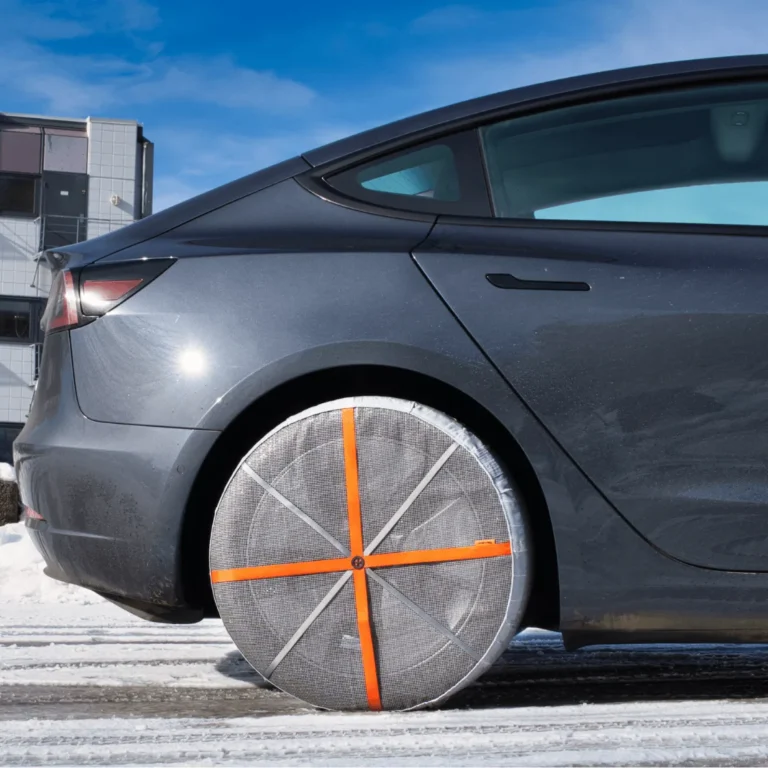
| Code 18 | Full road closure possible. Only vehicles equipped with proper winter equipment can proceed. |
When CDOT or Colorado State Patrol sets up a checkpoint, they're looking for one thing: can your tires handle the conditions? If you're at or below 3/16 inch, you're out of compliance.
How the 3/16 Inch Number Compares
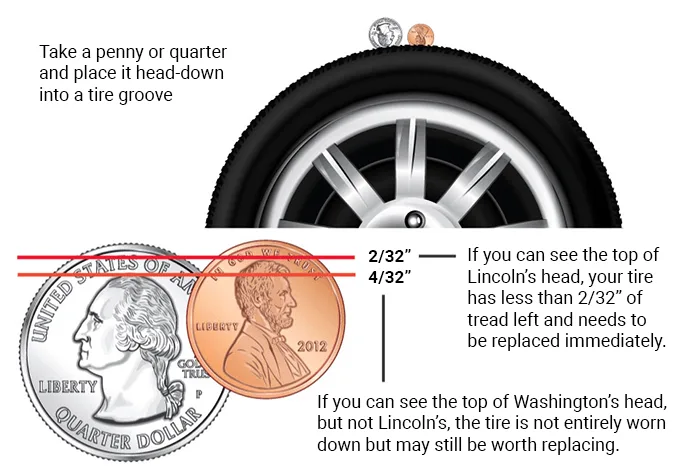
The standard minimum in most states is 2/32 inch (1.6 mm). That's what the penny test checks, if you can see the top of Lincoln's head, you're at 2/32 inch. But Colorado's winter requirement is nearly three times deeper than that.
Why? Because Colorado's mountain roads aren't like flat interstate highways. At high elevation, snow packs differently, temperatures stay lower, and stopping distances on packed snow increase dramatically.
Research from the Colorado Department of Transportation shows that tread depth below 4/32 inch significantly reduces grip on snow-covered surfaces. The 3/16 inch requirement (which is 6/32 inch) gives a real safety buffer.
What 3/16 Inch Looks Like on Your Tires
Bing (Web (fair-use with source credit))
Most people don't have a good mental picture of what 3/16 inch actually looks like on rubber. Here's a quick visual guide.
Measuring with a gauge
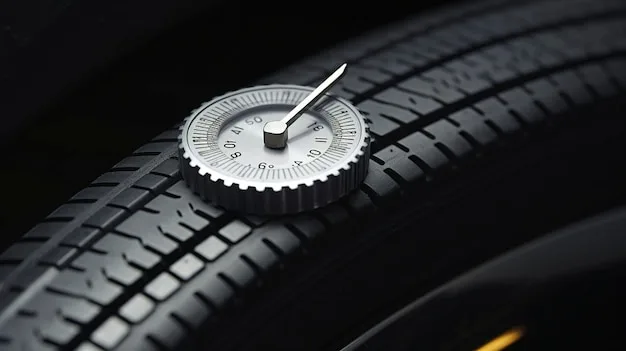
A tire tread depth gauge is the most reliable tool. It's a small metal probe with a sliding indicator. You can find one for under $10 at any auto parts store in Colorado.
To measure:
- Insert the probe into the tread groove at the shallowest spot you can find.
- Push the base flat against the tread surface.
- Read the measurement in 32nds of an inch.
Three spots per tire matter: the inner edge, the center groove, and the outer edge. Most front-wheel drive cars wear the inner edge fastest. Rear-wheel drive vehicles wear the outer edge.
You need the lowest reading to qualify.
The quarter test (not the penny test)
Here's where most drivers get confused. The penny test checks for 2/32 inch, that's the absolute minimum for any tire, even in summer. For Colorado's 3/16 inch requirement, you need the quarter test.
Insert a quarter into the tread groove with George Washington's head facing down. If the top of his head is covered by the tread, you're at approximately 4/32 inch or more. That's close to the legal line but not quite there.
If the tread reaches Washington's hairline or higher, you're at about 5/32 to 6/32 inch, which is the real safety zone.
The problem? Many Colorado drivers check with a penny, see Lincoln's head fully visible, and think they're fine. They're not.
A penny shows you're at 2/32 inch, well below the legal minimum for winter conditions in this state.
Three measurement spots that catch most people
- Inner edge: Where tire wear from misalignment shows first
- Center groove: The deepest spot on most tires, often misleadingly deep
- Outer edge: Where curb rubbing and cornering wear happen
Always use the lowest reading. If only one spot is below 3/16 inch, you're still out of compliance.
The Legal Line vs. the Smart Line
Here's the honest truth that most Colorado drivers don't hear: 3/16 inch is the legal minimum, not the recommended minimum. The two numbers are different.
| Tread Depth | Status | Real Performance |
|---|---|---|
| 2/32 inch (1.6 mm) | Illegal for winter | No grip on packed snow. Dangerous. |
| 3/16 inch (4.8 mm) | Legal minimum | Marginal grip. You'll skid more. |
| 5/32 inch (4.0 mm) | Smart minimum for all-seasons | Decent grip on fresh snow and ice. |
| 6/32 inch (4.8 mm+) | Smart minimum for winter tires | Good grip. Reliable stopping. |
| 8/32 inch+ | Excellent | Full winter capability. |
Experienced Colorado winter drivers, the ones who do I-70 every weekend for ski season, don't run 3/16 inch. They target at least 5/32 inch for all-season tires and 6/32 inch for dedicated winter tires.
Why? Because tire tread depth doesn't just affect traction in a straight line. It affects how your vehicle handles in corners, on descents, and in slush.
At 3/16 inch, you're right at the edge where hydroplaning starts on wet roads, and Colorado's mountain roads get plenty of slush.
Per NHTSA testing, stopping distance on packed snow increases by roughly 30% when tread depth drops from 6/32 inch to 4/32 inch. At 3/16 inch (6/32), you're at the low end of that curve. Dropping to 4/32 inch, which is common on tires that "pass" a quarter test, puts you in the danger zone.
The real lesson: 3/16 inch keeps you legal. 5/32 inch keeps you safe.
When the Traction Law Gets Activated
Bing (Web (fair-use with source credit))
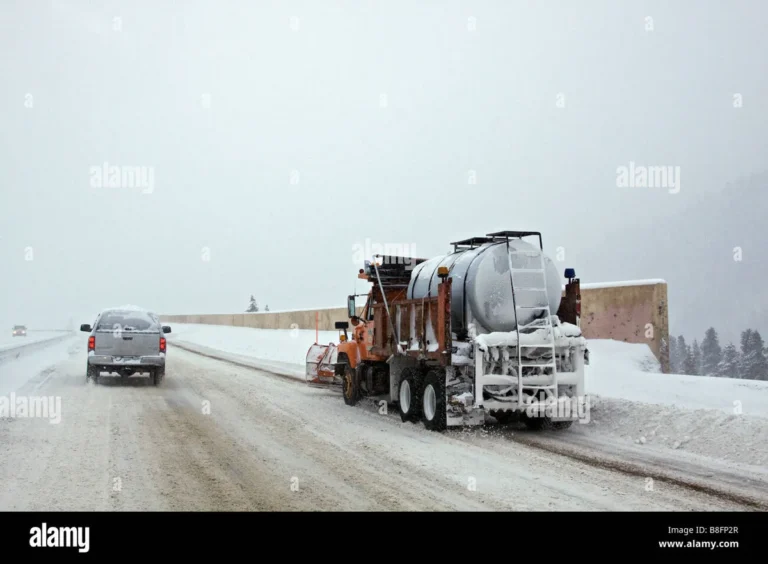
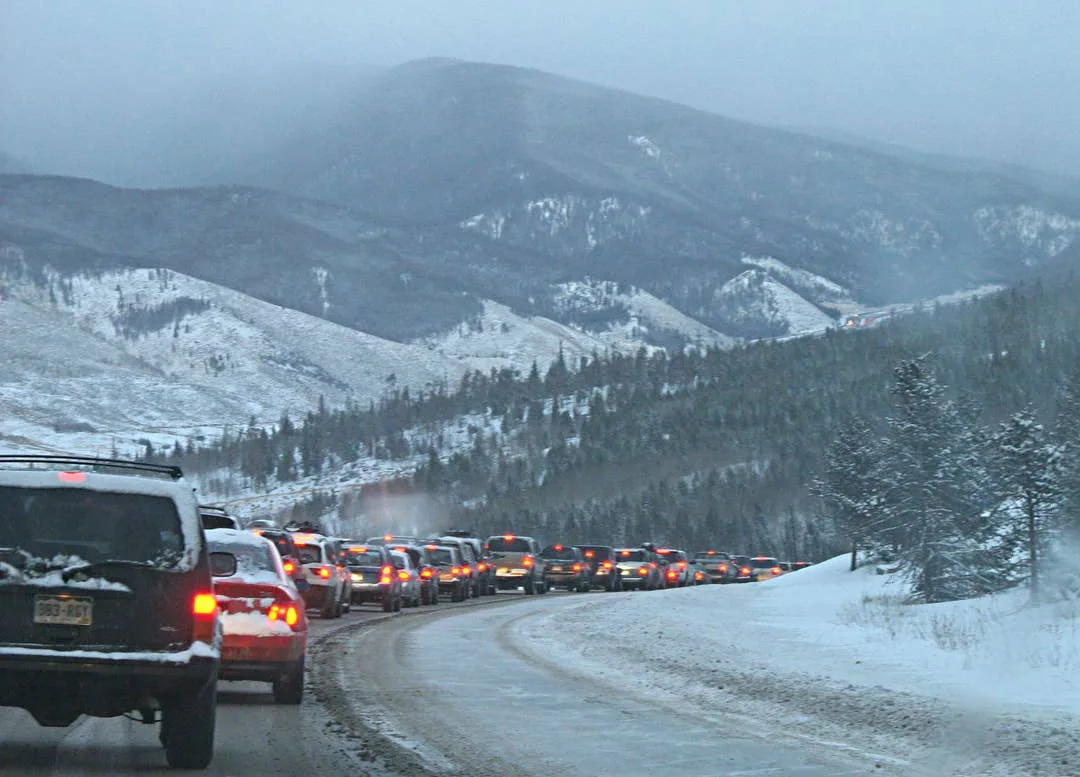
The Traction Law in Colorado doesn't run all winter. It activates when conditions are bad enough that the state needs to enforce it.
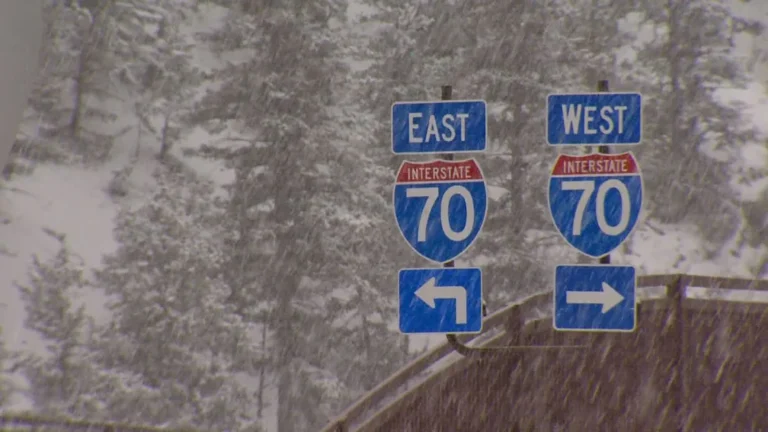
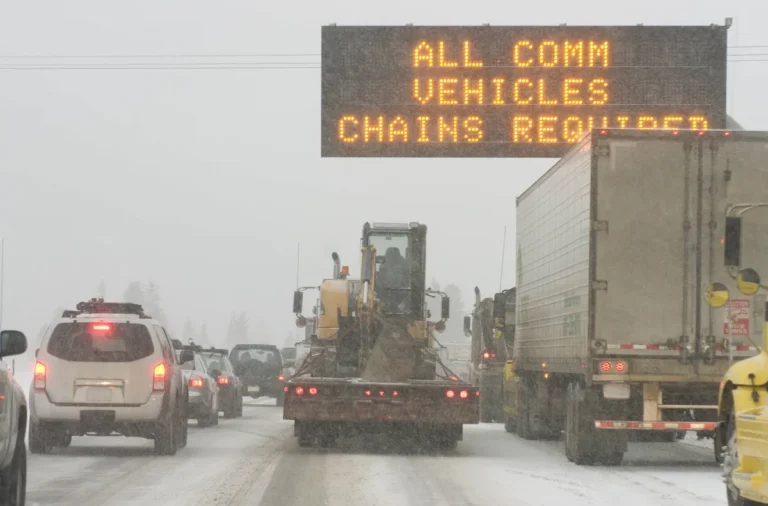
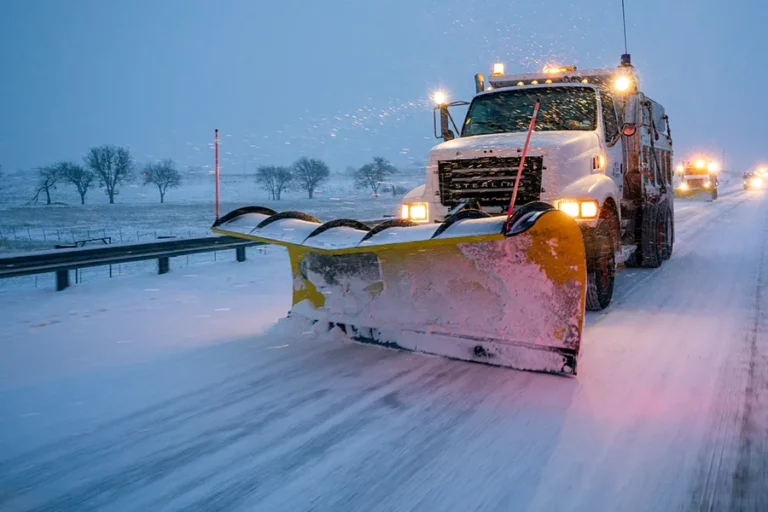
CDOT typically activates Code 15 or Code 16 on I-70 between Denver and the Eisenhower Tunnel, on US 40 over Berthoud Pass, and on US 6 over Loveland Pass. These are the routes where Colorado State Patrol sets up checkpoints and where you'll see enforcement in action.
At a checkpoint, an officer can visually inspect your tires. They're not carrying a gauge, they're looking for tread that's visibly worn, for tires that look "bald" in the center or on the edges. If your tire has wear bars showing (the small raised bars at 2/32 inch), you're almost certainly below 3/16 inch and in violation.
What happens if you're caught
The fine is per tire. If you're driving a sedan, that's four tires, $100 to $500 per violation depending on the location and severity. Colorado State Patrol can also issue points on your license, and a Traction Law violation counts as a moving violation.
The bigger cost? If your tires fail at a checkpoint, you're stuck. You can't proceed until you install chains, get new tires, or find another way through.
On I-70 during a snowstorm, that can mean hours of delay, or a tow bill from a roadside service that charges premium mountain rates.
Common Mistakes That Get Colorado Drivers in Trouble
Most Colorado winter accidents and tickets aren't from people who don't know about the law. They're from people who misunderstand one of these three common errors.
Mistake 1: Confusing the penny test with the quarter test
We've already covered this, but it's worth repeating. The penny test checks for 2/32 inch, the absolute minimum for any tire. The quarter test checks for 4/32 to 5/32 inch.
Colorado's requirement is 6/32 inch. You can't use a penny to check the 3/16 inch requirement.
The fix: Use a tread depth gauge. If you don't have one, use a quarter and measure at the shallowest spot. If Washington's head is fully visible, you're below 4/32 inch, which means you're below Colorado's requirement.
Mistake 2: Thinking "all-season" means "winter-ready"
All-season tires are designed for moderate conditions, light rain, dry roads, occasional snow. They're not rated for mountain winter driving the way dedicated winter tires or all-weather tires are.
Per tire manufacturer specifications, all-season tires typically start at 10/32 to 11/32 inch of tread. By the time they're worn to 6/32 inch (the legal line), they've lost significant snow grip. At 5/32 inch, most all-season tires are essentially summer tires in packed snow.
The fix: If you're running all-season tires in Colorado winter, aim for at least 5/32 inch remaining. If you're at 4/32 inch or below, replace them before the first serious snow hits I-70.
Mistake 3: Assuming AWD or 4WD replaces adequate tread
This one gets people killed. All-wheel drive and four-wheel drive help you accelerate, they don't help you stop or turn.
On packed snow, a rear-wheel drive car with 6/32 inch tread stops about the same distance as an AWD SUV with 6/32 inch tread. The advantage from AWD is in acceleration, not braking. If your tread is below 3/16 inch, you're losing traction in corners and on descents regardless of how many wheels are driven.
The fix: Check tread depth. Then check it again. AWD doesn't excuse worn tires.
Mistake 4: Waiting until the last minute
Colorado winters are predictable, but Traction Law activations aren't. CDOT can activate Code 15 on I-70 with 24 hours' notice. If you wait until November to check your tires, you're gambling.
The fix: Check tread depth in October, before the first serious snow. Replace tires at 4/32 inch for all-season sets, or at 6/32 inch for winter sets. Don't wait until you're at a checkpoint.
Real-World Tread Depth Scenarios
Bing (Web (fair-use with source credit))
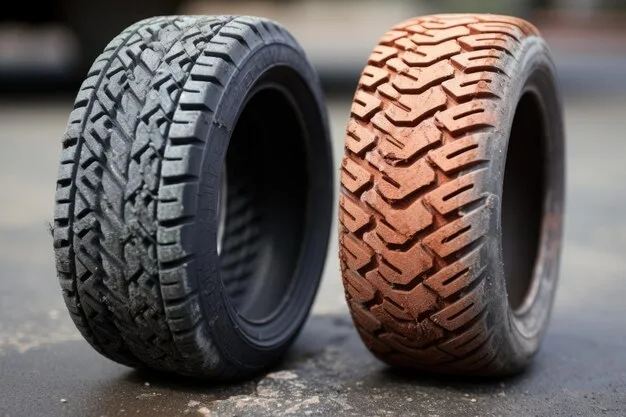
Let's put this into context with real Colorado driving scenarios.
Scenario 1: Front-wheel drive sedan on I-70
You're driving a Honda Civic with all-season tires at 5/32 inch. That's above the legal line. You hit a snow squall near the Eisenhower Tunnel.
At 5/32 inch, your tires still have enough siping (the small grooves in the tread) to channel slush. You'll make it through at slower speeds. You're fine.
Scenario 2: Rear-wheel drive truck on a mountain pass
You're driving a Ford F-150 with all-season tires at 3/16 inch. That's right at the legal line. You hit a patch of packed snow on US 40 over Berthoud Pass.
Your rear tires spin on acceleration, and the truck's rear end steps out on corners. At 3/16 inch, you're at the edge of control.
Scenario 3: AWD SUV on I-25
You're driving a Subaru Outback with winter tires at 7/32 inch. That's well above the requirement. You hit dry pavement, then slush, then ice.
Your winter tires handle all three conditions. You're in the safest position possible.
The difference? It's not just about the number. It's about the margin of error between where you are and where you need to be.
Frequently Asked Questions
How do I measure 3/16 inch on my tires?
Use a tread depth gauge. Insert the probe into the shallowest tread groove, usually at the inner or outer edge. Push the base flat against the tread.
Read the measurement in 32nds of an inch. 3/16 inch equals 6/32 inch.
Can I use a penny instead of a quarter?
No. A penny checks for 2/32 inch, which is the standard legal minimum for any tire but well below Colorado's requirement. Use a quarter.
If Washington's head is fully visible, you're below 4/32 inch.
What happens if my tires are below 3/16 inch?
You can be fined up to $500 per tire during a Traction Law activation. You may also be turned away at a checkpoint and forced to use chains or find alternative transportation.
Does AWD help if my tread is low?
All-wheel drive helps you accelerate, not stop or turn. On packed snow, vehicles with low tread depth lose braking capability regardless of how many wheels are driven. AWD does not replace adequate tread.
When should I check my tread depth?
Check in October before the first serious snow. Replace all-season tires at 4/32 inch or below. Replace winter tires at 6/32 inch or below.
Don't wait until a checkpoint.
What's the difference between 3/16 inch and 5/32 inch?
3/16 inch (6/32) is the legal minimum. 5/32 inch is the smart minimum for all-season tires used in winter. The extra 1/32 inch provides noticeably better grip on packed snow and ice.