ByMax Lee
Guide to Colorado Permanent Trailer Identification PTI Registration for Small Trailers
If you own a small trailer in Colorado, you probably want to know about the registration options. Do you need a plate every year? Or is there a one-time deal?
The Colorado permanent trailer identification PTI registration for small trailers is that one-time option. You get a permanent plate that stays with the trailer forever. No renewals.
No annual fees after the first payment.
As of 2026, the state fee for a PTI registration on a trailer under 1,000 pounds empty weight is $12.00. Add a small county processing fee, and you are done. That is cheaper than standard annual registration, but only if your trailer qualifies.
The rules depend on weight, ownership status, and whether the trailer was homemade or factory built. Let's sort out which route works for you.
Quick Answer
Colorado PTI registration gives small trailers a permanent license plate. There are no annual renewal fees. You qualify if your trailer has a GVWR under 16,000 pounds.
The exact process depends on the trailer's empty weight and your proof of ownership.
Bing (Web (fair-use with source credit))
What Is PTI and Does Your Small Trailer Qualify?
PTI stands for Permanent Trailer Identification. It is a one-time registration program run by the Colorado DMV. Instead of paying every year and replacing a sticker, you get a permanent plate issued once.
That plate stays with the trailer forever, even if you sell it.
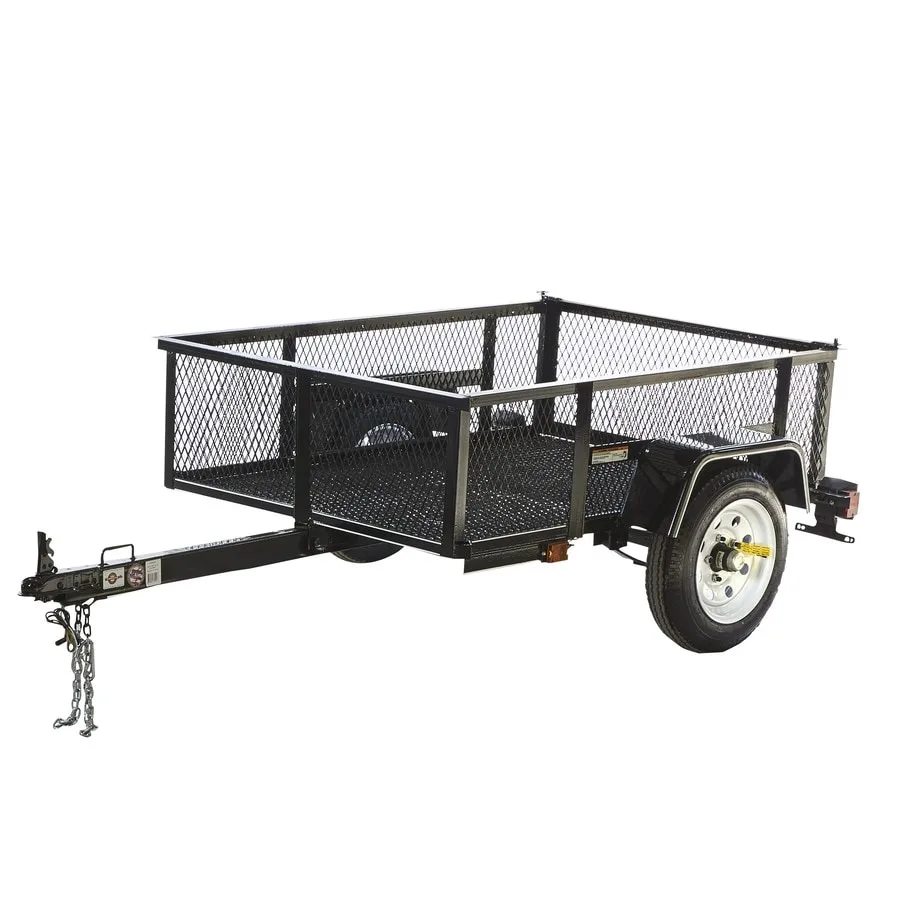
Not every trailer qualifies. The main rule is the GVWR (Gross Vehicle Weight Rating) must be under 16,000 pounds. That covers most small utility trailers, boat trailers, motorcycle haulers, and homemade builds.
If your trailer is bigger than that, you need standard annual registration.
The other key number is empty weight. That is the weight of the trailer with nothing on it. No cargo, no gear, just the trailer itself.
This weight determines your fee tier and whether you need a VIN inspection. We will get into both below.
The Key Decision: PTI vs. Standard Annual Registration
Before you fill out any forms, you need to choose between two registration options. PTI is not always the right fit for every owner.
| Registration Type | How It Works | Annual Renewal | Best For |
|---|---|---|---|
| PTI (Permanent Trailer ID) | One-time plate fee, then only a decal replacement if lost | No | Long-term owners (3+ years) or lifetime ownership |
| Standard Annual Registration | Plate issued, renew every year with fee | Yes | Short-term use, rentals, or trailers you plan to sell soon |
If you plan to keep the trailer for more than two or three years, PTI saves you money. The one-time fee is low, and you never pay again. If you plan to sell within a year or two, standard registration is cheaper upfront.
But the annual fees add up over time.
PTI is not available for trailers used in commercial interstate commerce if the GVWR exceeds 10,000 pounds. That is a different set of rules. For the average small trailer owner, PTI is almost always the better deal.
First Branch: Is Your Trailer Under 1,000 Pounds Empty Weight?
This is the first big fork in the road. If your trailer has an empty weight under 1,000 pounds, the process is simpler. You skip the VIN inspection entirely, as long as you have proper proof of ownership.
If your trailer weighs over 1,000 pounds empty, you will need a VIN inspection before you can register. That means taking the trailer to a Colorado State Patrol office, a sheriff's office, or an authorized DMV inspector. They check that the VIN on the trailer matches your paperwork and that it has not been stolen.
How do you know the empty weight? Check the manufacturer's sticker on the trailer tongue or frame. If you do not have that, take the trailer to a public scale.
Most truck stops have one. Weigh the trailer with nothing loaded. That is your empty weight.
Keep a photo of the scale receipt or the sticker. You will need it for the application.
Second Branch: Do You Have Proof of Ownership?
Now you need to show the DMV that you own the trailer. This is where many people get stuck, especially if they bought a used trailer without a title.
For a manufactured trailer (one built by a company), the standard proof is the original Manufacturer's Certificate of Origin (MCO) from the dealer if it is new. If used, you need the previous owner's Colorado title signed over to you. If the trailer was registered in another state, you need that out-of-state title and a VIN inspection to transfer it to Colorado.
| Ownership Situation | What You Need |
|---|---|
| New trailer from dealer | MCO (Manufacturer's Certificate of Origin) |
| Used trailer with title | Signed title from previous owner |
| Used trailer with no title | Bill of sale + sworn affidavit + VIN inspection |
| Homebuilt trailer | Sworn affidavit + bill of sale for materials + VIN inspection |
If you do not have a title for a used trailer, you are not out of luck. Colorado has a process for trailers bought without one. You need a detailed bill of sale from the seller, a sworn affidavit of ownership (part of the DR 2395 form), and a VIN inspection to confirm the trailer is not stolen.
It takes extra steps, but it is doable.
Third Branch: Homemade Trailer vs. Manufactured Trailer — Different Routes
This branch applies once you know your weight and ownership status. If the trailer was built by a company and has a factory VIN, you follow the standard path. Fill out the DR 2395 form, pay the fee, and receive your plate.
If your trailer is homemade, the rules change. Homemade trailers do not have a manufacturer's VIN or an MCO. You need to get a VIN assigned by law enforcement first.
The Colorado State Patrol or your county sheriff can do this. They inspect the trailer, confirm it was built by you, and assign a new VIN number.
After that, you file a sworn affidavit of ownership as part of your DR 2395 application. The affidavit states that you built the trailer yourself, using your own materials and labor. You do not need receipts for every bolt, but it helps to have a bill of sale for major components like the axle or frame.
The fee is still the same one-time $12.00 for trailers under 1,000 pounds. But the process takes longer because of the inspection step. Plan for a few extra weeks if you are building a trailer from scratch.
Step-by-Step: How to Apply for a PTI Plate and Decal
Here is the practical sequence. Follow these steps in order.
Step 1: Determine your trailer's empty weight. Check the manufacturer sticker or use a public scale. Write it down. You will need this number for the application.
Step 2: Gather your ownership documents. Find your title, MCO, bill of sale, or affidavit. If you are missing something, sort that out before you visit the DMV.
Step 3: Complete the DR 2395 form. This is the Application for Colorado Trailer Decal. You can download it from the Colorado DMV website. Fill it out completely.
Do not leave any fields blank.
Step 4: Get a VIN inspection if required. If your trailer is over 1,000 pounds empty, or if you have no title, or if it is homemade, you need an inspection. Schedule an appointment with Colorado State Patrol or your county sheriff.
Step 5: Visit your county DMV office. Bring your completed DR 2395 form, proof of ownership, and any VIN inspection paperwork. Pay the one-time fee.
Step 6: Receive your PTI plate and decal. The DMV issues them on the spot if you apply in person. Attach the plate to the rear of the trailer. Place the decal on the driver's side of the trailer tongue.
That is it. You are registered for life.
Where Does the VIN Inspection Fit In? (And When You Can Skip It)
The VIN inspection is a common point of confusion. Let's make it simple.
Wikimedia Commons / Lav Ulv from Viby J, Denmark
You do NOT need a VIN inspection if:
- Your trailer is under 1,000 pounds empty weight AND
- You have a valid title or MCO showing ownership
You DO need a VIN inspection if:
- Your trailer is over 1,000 pounds empty weight
- You bought it without a title
- It is homemade
- It was registered in another state and you are transferring it to Colorado
The inspection is free at law enforcement offices. Schedule an appointment. Drive or tow the trailer to the inspection site.
The officer checks the VIN against state records and verifies it is not stolen. They sign off on a form you include with your application.
If you cannot tow the trailer to an inspection site, some counties allow an officer to come to you. Call your local Colorado State Patrol office to ask about mobile inspections.
What You'll Pay: PTI Fees, County Fees, and Decal Costs
Here is the full breakdown of costs.
| Fee Type | Amount |
|---|---|
| PTI fee (trailer under 1,000 lbs empty weight) | $12.00 |
| PTI fee (trailer 1,001–16,000 lbs GVWR) | $25.00 |
| County processing fee (varies by county) | $2.00 – $6.00 |
| Replacement decal (if lost or damaged) | $3.00 |
| VIN inspection (law enforcement) | Free |
Wikimedia Commons / Jerry "Woody" (CC BY-SA)
The county fee is added on top of the state fee. It varies depending on where you live. Denver County tends to be on the higher end.
Rural counties are often lower. Call your local DMV office to confirm the exact amount before you go.
Compare that to standard annual registration. A small trailer under 1,000 pounds costs roughly $10 to $15 per year. Every year.
After five years, you have paid $50 to $75. With PTI, you pay $12 once. The savings grow over time.
How Long It Takes: In-Person vs. Mail-In Processing
The fastest route is in-person at your county DMV office. You walk in, hand over the paperwork, pay the fee, and walk out with your PTI plate and decal the same day. That is the ideal option if you want to use your trailer right away.
Mail-in applications take longer. You send your DR 2395 form, proof of ownership, and payment to the DMV. Processing time is 2 to 4 weeks.
The plate and decal arrive in the mail. Some counties do not accept mail-in for first-time PTI applications. Check with your specific county first.
If you need a VIN inspection, that adds time too. Appointments can be booked a few days to a few weeks out depending on the office. Factor that into your timeline.
| Processing Method | Time to Receive Plate |
|---|---|
| In-person at county DMV | Same day |
| Mail-in application | 2–4 weeks |
| With VIN inspection needed | Add 1–3 weeks depending on appointment availability |
5 Common PTI Mistakes That Will Get Your Application Rejected
Here are the most common errors people make. Avoid these and your application goes through smoothly.
Bing (Web (fair-use with source credit))
1. Using the wrong weight. Some owners confuse empty weight with GVWR. Empty weight is the trailer alone.
GVWR is the maximum loaded weight. If you put the wrong number on the form, the DMV rejects it. Use the empty weight.
2. Skipping the VIN inspection when required. Just because your trailer is small does not mean you can skip it. If you have no title or the trailer is over 1,000 pounds, you need the inspection.
No exceptions.
3. Applying for PTI on a rental or commercial trailer. PTI is for private, non-commercial use. If you rent out your trailer or use it for a business that crosses state lines, you likely need standard registration.
4. Forgetting the county processing fee. People bring $12.00 and then get surprised by the extra $4 to $6 county fee. Bring a little extra cash or a card.
5. Not checking county appointment requirements. Some Colorado counties require an appointment for DMV services. Others accept walk-ins.
Check online or call ahead. Showing up without an appointment means waiting or being turned away.
Can You Sell a Trailer with a PTI Plate? Transfer Rules Explained
Good news: the PTI plate stays with the trailer. If you sell the trailer, the new owner gets the permanent plate. They do not need to re-register it or pay another fee.
But the new owner does need to transfer the title. They must visit the DMV to put the title in their name. That involves a small transfer fee.
But the PTI plate stays active. No new registration process is needed.
This is a big selling point if you ever decide to sell. The buyer does not have to worry about annual renewals. That makes the trailer more attractive and easier to sell.
If you buy a used trailer that already has a PTI plate, confirm that the seller transfers the title to you. Then you take the title to the DMV, pay the transfer fee, and you are done. You do not need to pay the PTI fee again.
What About Trailers Brought from Another State?
If you moved to Colorado with a trailer from another state, you must switch to Colorado registration within 90 days. The process depends on whether the trailer already had a permanent plate in its home state.
Most states do not have a permanent trailer plate. If your trailer had standard annual registration, you start fresh in Colorado. You can apply for PTI just like a Colorado resident.
If the trailer already has a permanent plate from another state, you need to check with the Colorado DMV. Some states offer permanent registration (like Arizona or Montana). Colorado does not automatically honor those.
You may need to convert to Colorado PTI or standard registration.
In every case, you need a VIN inspection to transfer the out-of-state title. Bring your out-of-state title and proof of identity to the inspection. After that, follow the same steps as a Colorado owner.
Real Scenarios: Three Trailer Owners, Three Different Paths
Scenario 1: New boat trailer under 1,000 lbs. Sarah buys a new aluminum boat trailer from a dealer. She gets the MCO from the dealer. She knows the empty weight is 650 pounds.
She fills out the DR 2395 form, visits her county DMV, pays the $12.00 plus $5.00 county fee, and gets her PTI plate same day. No VIN inspection needed.
Scenario 2: Used utility trailer with no title. Mike buys a used 5×8 utility trailer from a private seller. The seller lost the title. Mike gets a detailed bill of sale and schedules a VIN inspection with the Colorado State Patrol.
He takes the inspection report and a sworn affidavit to the DMV. He pays the $12.00 fee plus county fee. He gets his PTI plate in about three weeks.
Scenario 3: Homemade trailer over 1,000 lbs. Jen builds her own off-road camping trailer. The empty weight is 1,200 pounds. She gets a VIN assigned by the sheriff's office.
She files a sworn affidavit with receipts for the axle and frame. She visits the DMV, pays the $25.00 fee (since it is over 1,000 pounds), and receives her PTI plate same day.
Each scenario has a different timeline. But all three end up with permanent registration and no future fees.
Quick Decision Guide: Which Route Should You Take?
Here is a simple decision table based on your situation.
| Your Situation | Recommended Route |
|---|---|
| Trailer under 1,000 lbs, have title | PTI |
| Trailer under 1,000 lbs, no title | PTI after VIN inspection and affidavit |
| Trailer over 1,000 lbs, have title | PTI after VIN inspection |
| Homemade trailer any weight | PTI after VIN inspection and affidavit |
| Plan to sell within 1 year | Standard annual registration may be cheaper |
| Commercial or rental use | Standard annual registration (PTI not allowed) |
If you are unsure, go with PTI. The one-time fee is low, and you never have to think about it again. That peace of mind is worth the extra paperwork.
Frequently Asked Questions
What is the difference between PTI and standard trailer registration in Colorado?
PTI is a one-time permanent plate with no annual renewal fees. Standard registration requires a yearly renewal and fee. PTI costs $12 to $25 upfront.
Standard costs $10 to $15 per year.
Do I need a VIN inspection for a small trailer in Colorado?
Not always. You skip the inspection if the trailer is under 1,000 pounds empty weight and you have a valid title or MCO. You need one if the trailer is over 1,000 pounds, lacks a title, or is homemade.
How much does PTI registration cost for a small trailer in Colorado?
The state fee is $12.00 for trailers under 1,000 pounds empty weight. It is $25.00 for trailers between 1,001 and 16,000 pounds GVWR. Add a county processing fee of $2 to $6.
Can I get a PTI plate for a homemade trailer in Colorado?
Yes. You need a VIN inspection from law enforcement first. Then file a sworn affidavit of ownership with your DR 2395 application.
The fee is the same as for manufactured trailers.
Does a PTI plate transfer to a new owner when I sell the trailer?
Yes. The PTI plate stays with the trailer. The new owner pays only the title transfer fee.
They do not need to register it again or pay a PTI fee.
How long does it take to get a PTI plate in Colorado?
Same day if you apply in person at your county DMV. Two to four weeks if you mail in the application. Factor in extra time if you need a VIN inspection first.