ByMax Lee
Guide to Colorado Trailer Towing Safety Chain and Lighting Equipment Requirements
Openverse / exit78 (PDM 1.0)
Towing a trailer down a Colorado mountain pass without proper safety chains and lighting is reckless. It's also illegal. Colorado trailer towing safety chain and lighting equipment requirements exist to prevent detached trailers and make sure other drivers see you in snow, fog, or darkness.
Violations bring fines over $100. If your trailer causes an accident, the liability gets serious fast. Here's what you need to know before you hit the road.
Quick Answer
Colorado law requires safety chains crossed under the trailer tongue. Chains must be rated for your trailer's weight. All tail lights, brake lights, and turn signals must work.
You also need a breakaway system for trailers over 3,000 lbs GVWR.
Why This Matters for Colorado Drivers
You've probably seen trailers on I-70 near the Eisenhower Tunnel. The grade is steep. The weather can flip from clear to whiteout in minutes.
A detached trailer on that stretch causes chain-reaction crashes.
The Colorado State Patrol runs regular safety checkpoints, especially during summer and fall. Officers know exactly what to look for. Chain condition.
Light function. Breakaway systems. Missing or broken gear means a citation.
Most violations come from simple oversights. Dead breakaway battery. Loose ground wire.
Chains that drag on the pavement. Every one of these is fixable with a five-minute check before you leave your driveway. If you want to keep your vehicle in solid shape, you'll find practical advice right here on our blog.
Colorado Law: What's Required by Statute
Two Colorado Revised Statutes cover your obligations. They're clear once you read the text.
C.R.S. 42-4-232 covers safety chains and coupling devices. Every trailer towed on a Colorado highway must have safety chains or cables. They must attach to both the trailer and the towing vehicle.
Chains must cross under the hitch tongue. They must be strong enough for the trailer's gross vehicle weight rating (GVWR).
C.R.S. 42-4-233 covers lighting equipment. You need two red tail lights visible from 500 feet at night. Two red stop lamps.
Turn signals. A white license plate light. Side marker lights and reflectors on each side.
Here's a quick breakdown of the essentials:
| Equipment | Requirement | Law Reference |
|---|---|---|
| Safety chains | Mandatory, crossed under hitch, rated for trailer GVWR | C.R.S. 42-4-232 |
| Tail lights | Two red, visible 500 ft | C.R.S. 42-4-233 |
| Brake lights | Two red, activate with vehicle brakes | C.R.S. 42-4-233 |
| Turn signals | Required on both sides | C.R.S. 42-4-233 |
| License plate light | White, illuminates plate | C.R.S. 42-4-233 |
| Side markers and reflectors | Amber front, red rear | FMVSS 108 |
| Breakaway system | Required for trailers over 3,000 lbs GVWR | C.R.S. 42-4-232 |
The State Patrol also enforces federal lighting standards under FMVSS 108. Those cover brightness and placement.
Safety Chain Requirements
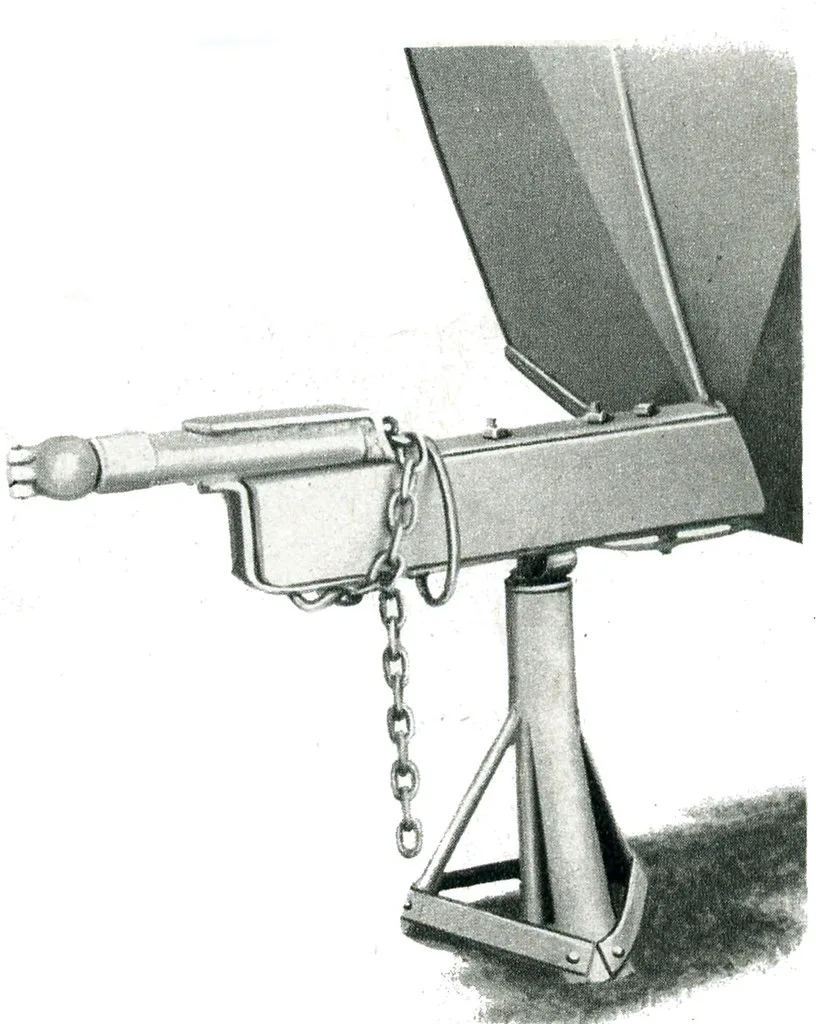
Safety chains are your backup plan. If the coupler pops off the ball, chains hold the trailer to your truck.
Cross-chaining method
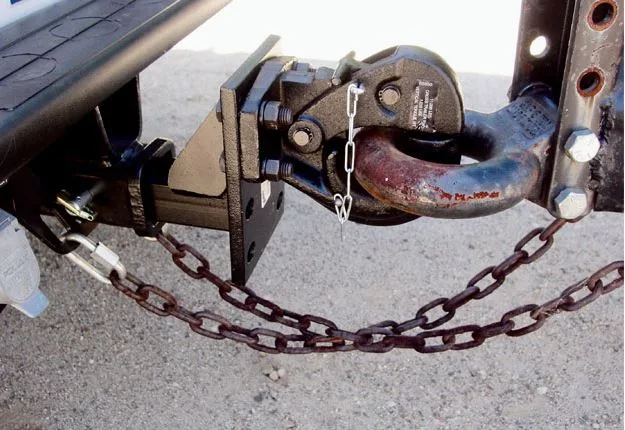
Cross the chains under the trailer tongue. This creates a cradle that catches the tongue if it drops. Do not attach them straight back.
Straight chains let the tongue hit the pavement.
Chain gauge and strength
Your chains must handle the trailer's GVWR. For most trailers under 10,000 lbs, 3/8 inch Grade 70 chain works well. Check the working load limit on the chain tag.
It should meet or exceed the trailer's GVWR.
Length
Chains need enough slack for turns. Too much slack and they drag on the road. Keep chain length at about 1.5 times the distance from the hitch ball to the trailer frame.
Adjust them so they hang with minimal slack.
Bing (Web (fair-use with source credit))
Attachment points
Attach chains to the towing vehicle's frame. Not the bumper. Not the hitch ball itself.
Most hitches have dedicated holes for chain hooks. Use a clevis hook that won't shake loose. S-hooks can slip off over bumps and are not recommended.
The risk of skipping this
A trailer that detaches on a mountain pass isn't just a ticket. It's a crash waiting to happen. Your insurance company may deny coverage if you're running non-compliant gear.
Getting it right takes two minutes and costs nothing extra.
Trailer Lighting Requirements
Your trailer needs lights that work and are visible. Here's what Colorado requires.
Tail lights
Two red tail lights on the rear. Visible from 500 feet at night. Replace burned out bulbs before you tow.
LED lights last longer and handle vibration better.
Brake lights
Trailer brake lights must come on when you hit the brakes. They need to be bright enough for the driver behind you, especially on highways. With a 4-pin connector, brake lights and turn signals share the same circuit.
Turn signals
Left and right turn signals are mandatory. They must flash amber or red. Many trailers use amber lights for better daytime visibility.
Side marker lights
Every trailer over 80 inches wide needs amber side marker lights on the front half. Red lights on the rear half. Most new trailers come with small LED strips.
Reflectors
Red reflectors on the rear. Two on each side. Amber reflectors on the front sides.
They work even if a bulb burns out.
License plate light
You need a white light on the license plate. It must be visible from 50 feet at night. Colorado specifically requires this.
Testing before you go
Use a plug-in tester or have someone watch each light. Tail lights. Brake lights.
Turn signals. License plate light. A bad ground is the most common issue.
If lights are dim or flickering, check the ground connection to the trailer frame. Clean off any rust or paint for a solid contact.
Corrosion from road salt is common in Colorado. Dielectric grease on the connector terminals prevents future headaches.
Connector Types and Wiring
Your tow vehicle sends power to the trailer through a connector. The type depends on your trailer.
4-pin flat connector
The most common for utility trailers and small boats. It handles tail lights, brake/turn signals, and ground.
- Brown: tail/running lights
- Yellow: left turn and brake
- Green: right turn and brake
- White: ground
5-pin connector
Adds one extra wire for electric brakes or a reverse lockout. Less common. The extra pin is usually blue.
6-pin round connector
Used on heavier trailers. Adds electric brake power and a reverse signal.
- Black: battery charge
- Brown: tail/running
- Yellow: left turn/brake
- Green: right turn/brake
- White: ground
- Blue: electric brakes
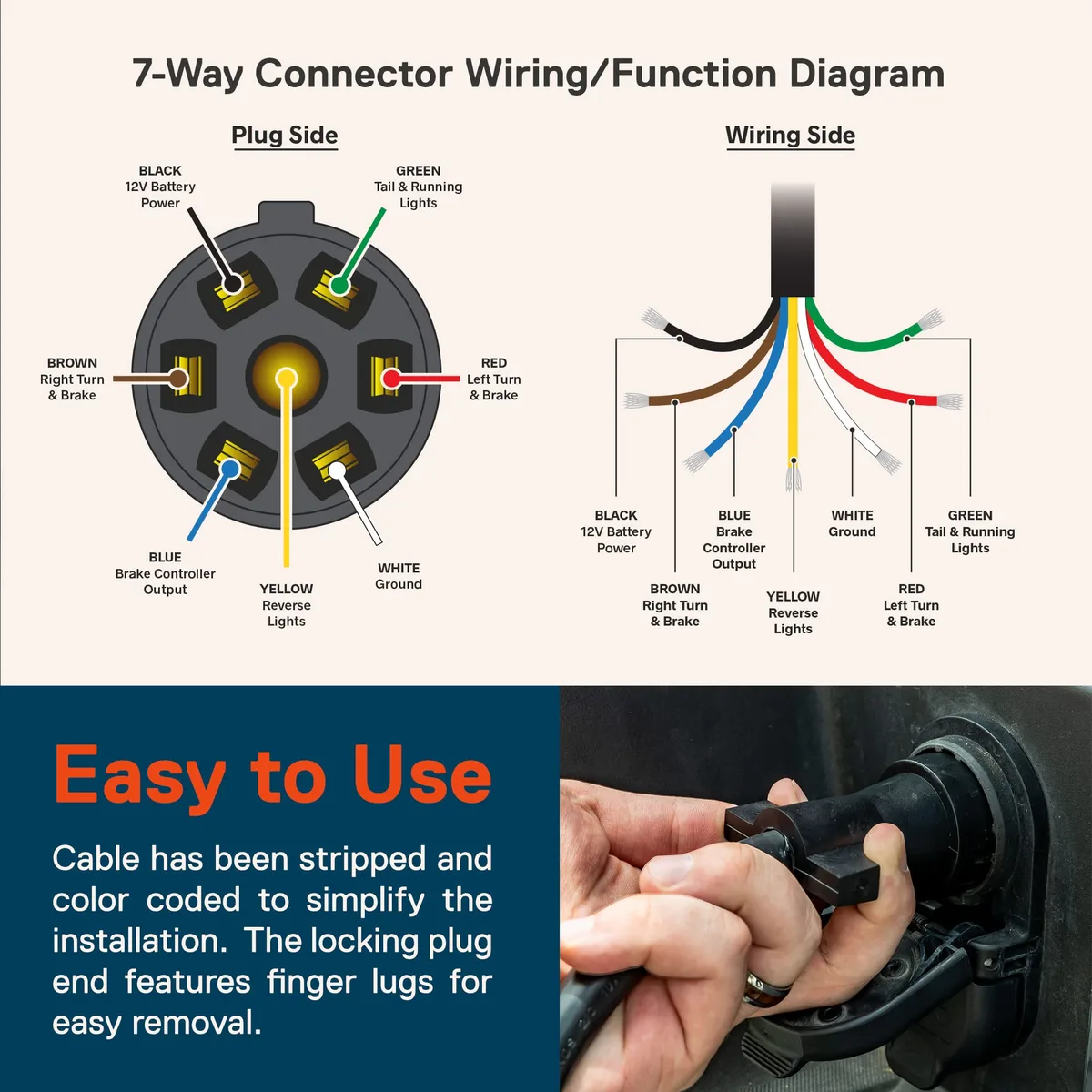
7-pin round connector
The standard for RVs, horse trailers, and large boats. Provides full functions plus brake controller connection.
- Pin 1: ground (white)
- Pin 2: tail/running (brown)
- Pin 3: left turn/brake (yellow)
- Pin 4: right turn/brake (green)
- Pin 5: electric brakes (blue)
- Pin 6: battery charge (black)
- Pin 7: reverse lights (red or purple)
Bing (Web (fair-use with source credit))
Which connector fits your setup
Most modern trucks come with a 7-pin connector. If your trailer uses a 4-pin, you can get an adapter. Make sure it's weatherproof and test all functions after plugging it in.
Adapters don't always handle brake controllers the same way.
Common wiring problems
Corroded pins cause most lighting failures. Clean them with a wire brush. Apply dielectric grease.
Loose wires inside the plug cause intermittent problems. Check each crimp connection.
If your lights work but look dim, you might have a voltage drop. Check the ground on both the vehicle and trailer side. A clean ground on bare metal fixes most dim light issues.
Upgrading your setup
If you tow a trailer with electric brakes, you need a 7-pin connector and a brake controller inside your vehicle. Colorado follows the standard that trailers over 3,000 lbs should have brakes. A brake controller is required to operate them safely.
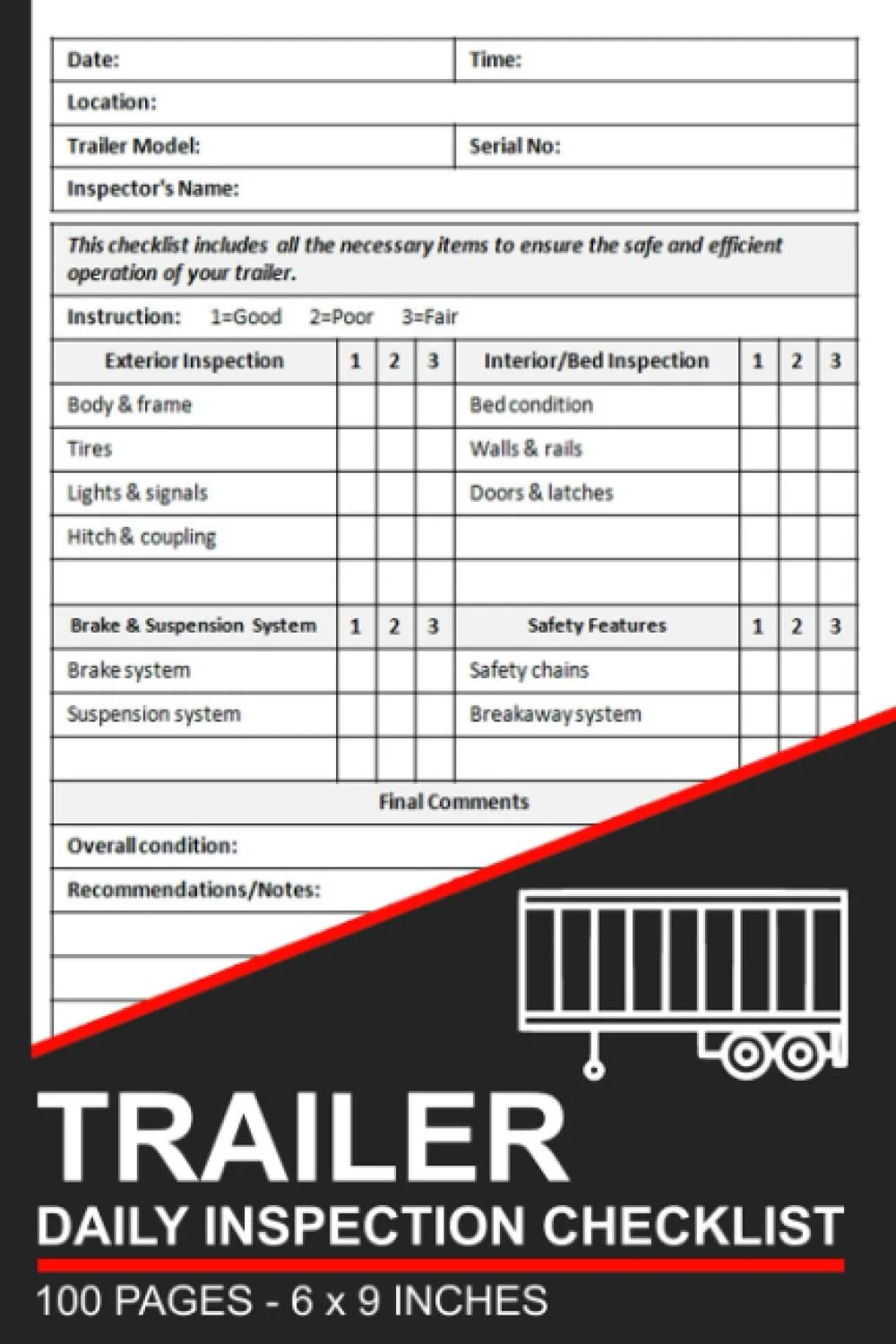
Pre-Tow Inspection: Your 5-Minute Checklist
Before you pull out of the driveway, run through this list. It takes less time than your morning coffee.
Check safety chains
Are they crossed under the hitch tongue? Are they attached to the vehicle frame? Is there enough slack to turn without binding?
Is any part dragging on the ground?
Test every light
Plug in the connector. Turn on your headlights. Walk to the back and check tail lights.
Hit the brakes. Check brake lights. Signal left.
Signal right. Check the license plate light.
Inspect the breakaway system
If your trailer is over 3,000 lbs GVWR, pull the breakaway switch pin. The trailer brakes should lock. If nothing happens, the battery is dead or the connection is broken.
Replace or fix it before you tow.
Check the hitch and coupler
Is the coupler fully locked on the ball? Is the safety pin in place? Does the hitch ball show any cracks or wear?
Is the hitch pin secured?
Look at tires and bearings
Check tire pressure. Look for cracks or bulges in the sidewalls. Spin each wheel and listen for grinding from the bearings.
Hot bearings on a long mountain grade can seize up.
Bing (Web (fair-use with source credit))
Before you pull out of the driveway, run through this list. It takes less time than your morning coffee.
Check safety chains
Are they crossed under the hitch tongue? Are they attached to the vehicle frame? Is there enough slack to turn without binding?
Is any part dragging on the ground?
Test every light
Plug in the connector. Turn on your headlights. Walk to the back and check tail lights.
Hit the brakes. Check brake lights. Signal left.
Signal right. Check the license plate light.
Inspect the breakaway system
If your trailer is over 3,000 lbs GVWR, pull the breakaway switch pin. The trailer brakes should lock. If nothing happens, the battery is dead or the connection is broken.
Replace or fix it before you tow.
Check the hitch and coupler
Is the coupler fully locked on the ball? Is the safety pin in place? Does the hitch ball show any cracks or wear?
Is the hitch pin secured?
Look at tires and bearings
Check tire pressure. Look for cracks or bulges in the sidewalls. Spin each wheel and listen for grinding from the bearings.
Hot bearings on a long mountain grade can seize up.
Bing (Web (fair-use with source credit))
Common Mistakes That Get Citations
Colorado State Patrol officers see the same errors again and again. Avoid these.
Chains not crossed
Straight chains don't catch the tongue. Officers will write you up for it. Cross them every time.
Chains dragging on the ground
Chains that scrape the pavement throw sparks and wear out fast. Shorten them or adjust the attachment point.
Dead breakaway battery
The breakaway system only works if the battery has charge. Test it before every trip. Replace the battery every couple of years.
Corroded connector pins
Green or white crust on the pins kills your lights. Clean them with a wire brush and use dielectric grease.
Buried or blocked license plate
If snow, mud, or gear covers your license plate and its light, you'll get a ticket. Keep it clean and visible.
Lights that don't work
Single bulb failures happen. That's why you test before you go. Carry spare bulbs or a spare LED light kit in your truck.
Colorado Conditions That Beat Up Your Equipment
Colorado is hard on trailer gear. Here's what you're up against.
Road salt
Salt corrodes connectors, chains, and light housings. Wash your trailer after winter trips. Reapply dielectric grease to connectors.
Mountain snow and rain
Snow packs into light lenses and reflector housings. Clear them off before you tow. Rain can short out exposed connections.
Altitude changes
Driving from Denver up to 11,000 feet puts stress on everything. Temperature shifts cause condensation inside light housings. Sealed LED lights handle this better than incandescent bulbs.
Vibration on rough roads
Trailer lights shake loose over time. Check mounting brackets for cracks. Tighten any loose screws or bolts.
Sun exposure
UV light fades reflector housings. Replace reflectors when they start looking dull. They lose effectiveness long before they break.
Maintenance Tips for Year-Round Reliability
A little regular attention keeps your trailer legal and safe.
Clean connectors monthly
Pull the plug apart. Spray contact cleaner on the pins. Wipe them dry.
Apply a thin layer of dielectric grease. Reconnect.
Test the breakaway system
Pull the pin before you store the trailer. Check the battery voltage. A fully charged breakaway battery should read around 12.6 volts.
Replace it if it's below 12.4.
Inspect chains for wear
Look for stretched links, rust pits, or bent hooks. Replace chains that show any damage. They're cheap insurance.
Lube the coupler and hitch ball
A dry coupler wears out fast. Use a hitch ball lubricant, not WD-40. Greased connections last longer and prevent noise.
Check wiring for chafing
Trailer wiring rubs against the frame over time. Look for worn insulation near the tongue and axle. Wrap any bare spots with electrical tape or replace the damaged section.
When to Hire a Pro vs DIY
Some trailer wiring jobs are easy DIY. Others are worth paying a shop.
DIY-friendly tasks
- Replacing a 4-pin connector
- Installing new tail lights
- Replacing safety chains
- Adding side marker lights
- Installing a breakaway battery
Better left to a pro
- Wiring a 7-pin connector from scratch
- Installing an electric brake controller
- Troubleshooting intermittent electrical problems
- Replacing a trailer's main wiring harness
- Installing a trailer lighting system on a vehicle that didn't come with one
Shops charge around $75 to $150 per hour. A full wiring install on a truck might run $200 to $400. That's less than the cost of a single towing citation or a fender bender.
If you do it yourself
Use heat-shrink connectors, not electrical tape. Run wiring through protective loom. Secure the loom to the trailer frame with zip ties.
Test every function before you consider the job done. For specific tools like nozzles or a good pressure washer setup, you can check our guide on recommended PSI levels.
Quick Reference: What to Keep in Your Truck
Stash these items in your glove box or tool kit. They'll save you time and stress.
- Spare 4-pin to 7-pin adapter
- Dielectric grease packet
- Wire brush or sandpaper
- Test light or multimeter
- Spare bulbs (if using incandescent lights)
- Zip ties and electrical tape
- Hitch pin and clip (spare)
- Gloves for handling greasy chains
If you use a pressure washer to clean your trailer or truck, using the right nozzle for detailing makes a difference. And if your wash water leaves spots, a water softener can help prevent mineral buildup on your paint and lights.
Frequently Asked Questions
Do I need safety chains on a small utility trailer in Colorado?
Yes. Colorado law requires safety chains on every trailer towed on a highway, regardless of size. Even a lightweight utility trailer must have chains crossed under the tongue.
What happens if my trailer lights stop working while towing?
Pull over as soon as it's safe. Check the connector for corrosion or a loose connection. If you can't fix it on the side of the road, get the trailer off the highway.
Towing without lights is illegal and dangerous.
How often should I test my breakaway system?
Test it before every trip. Pull the pin with the trailer connected to your vehicle. The trailer brakes should lock.
If they don't, the battery is dead or the switch is faulty. Replace the battery at least every two years.
Can I use zip ties to secure my trailer wiring?
Zip ties are fine for holding wiring away from moving parts. Do not use them as a permanent substitute for proper connectors or clamps. Use UV-resistant zip ties for outdoor durability.
Does Colorado require a brake controller for trailer brakes?
If your trailer weighs over 3,000 lbs GVWR and has electric brakes, you need a brake controller inside your vehicle. It's required by law and necessary for safe stopping on mountain grades.
Are LED trailer lights legal in Colorado?
Yes. LED lights are legal and often brighter and more durable than incandescent bulbs. Make sure they are DOT-approved and meet FMVSS 108 for brightness and color.