A Connecticut supplemental motor vehicle tax bill for mid-year registrations catches almost every new resident and recent car buyer off guard. You register a vehicle after October 1st, and months later a tax bill arrives from a town you might not even live in anymore. The notice looks official, the due date is tight, and the amount feels arbitrary.
Most people assume it's a mistake or a scam.
Connecticut General Statutes §12-71b mandates this tax for any vehicle registered between October 2nd and July 31st. The assessment hits 70 percent of the manufacturer's suggested retail price, then applies your town's mill rate for the months you actually owned the car. As of 2026, mill rates across the state's 169 municipalities range from roughly 11 mills in Greenwich to over 45 mills in Hartford.
Let's break down why this bill exists and what you actually owe.

The Surprise Bill: Why Mid-Year Car Registrations Trigger a Tax
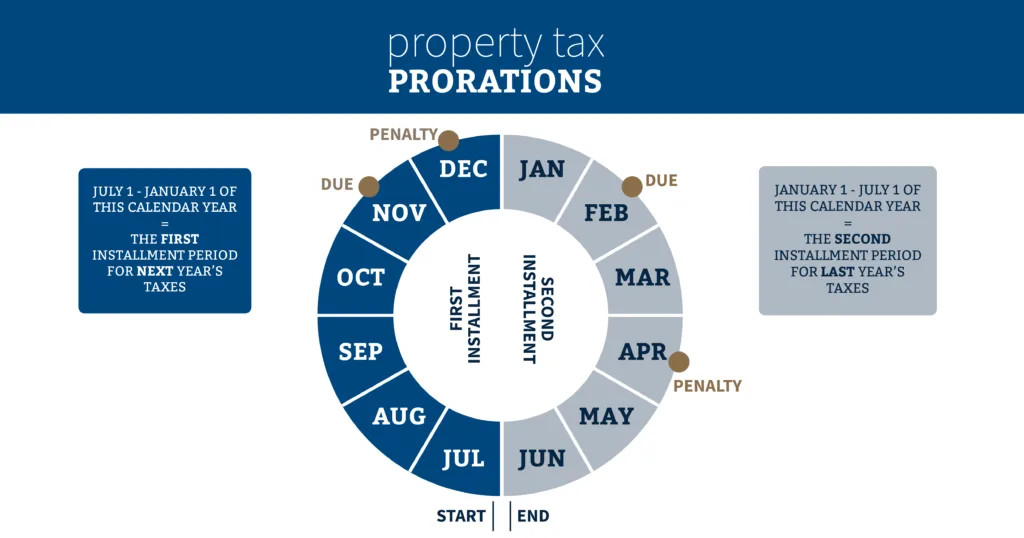
Connecticut taxes vehicles as personal property, same as business equipment or unregistered watercraft. The annual Grand List locks in every vehicle garaged in the state as of October 1st. If your car wasn't on that list, because you bought it later, moved in later, or leased it later, the town misses a full year of revenue.
The supplemental tax closes that gap.
The bill comes from the town where the vehicle was garaged on the registration date, not where you live today. DMV registration data feeds directly to municipal tax assessors. They generate a supplemental list each December, and bills typically hit mailboxes in January.
You get one shot to pay before interest starts accruing.
New residents get hit hardest. You move to Stamford in November, register your 2022 Honda CR-V, and six weeks later a tax bill arrives from Stamford. You never got a bill in your old state.
That's the system working as designed. The tax covers November through September, the remainder of the fiscal year.
Leased vehicles create another wrinkle. The leasing company holds title, but you're the registered owner. Connecticut taxes the lessee.
The bill comes to your address, but the assessment uses the vehicle's full MSRP, not your lease payoff amount. Many lessees assume the dealer handles it. They don't.
Quick Answer: Do You Actually Owe This?
Yes, you owe the Connecticut supplemental motor vehicle tax bill for mid-year registrations if you registered a vehicle after October 1st. The tax is legally mandated under CGS §12-71b. It applies to purchases, leases, and new-resident registrations.
The bill is prorated for the months you owned the vehicle. Payment is required before you can renew your registration. Ignoring it triggers an 18 percent annual interest rate and a DMV registration block.
How the CT Supplemental Motor Vehicle Tax Works
The process starts with the Grand List. Every October 1st, each town's assessor snapshots every taxable vehicle garaged in their jurisdiction. That list determines the regular July tax bill.
Vehicles entering the system after that date miss the snapshot entirely.
The October 1st Grand List Cutoff
October 1st is the only date that matters. Register on September 30th? You're on the regular Grand List.
Your bill comes next July with everyone else's. Register on October 2nd? You're off the list.
You'll get a supplemental bill in January instead. There is no grace period, no partial inclusion, no exceptions.
The assessor uses DMV registration records to build the supplemental list. They pull the VIN, registration date, and garaging address. That data determines which town bills you and how many months you owe.
The registration date, not the purchase date, controls the proration.
The 70% MSRP Assessment Rule
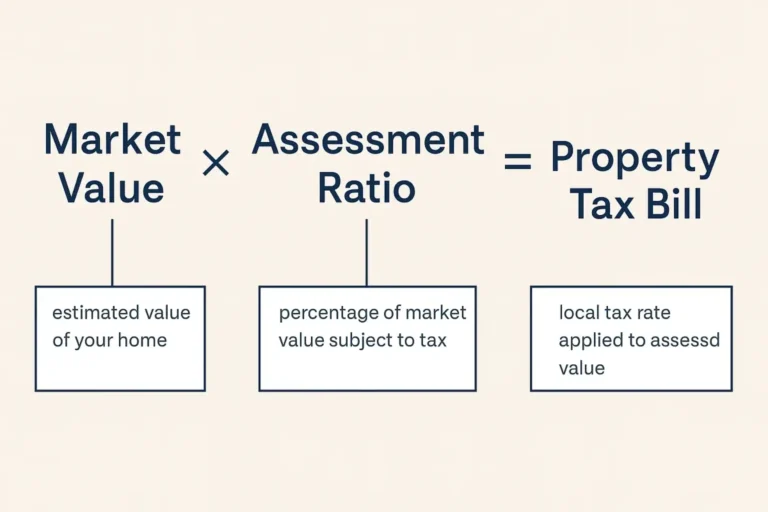
Connecticut assesses motor vehicles at 70 percent of the manufacturer's suggested retail price. This is not the sale price, not the trade-in value, and not the private-party price. It's the full MSRP from the factory window sticker, including destination charge and factory options.
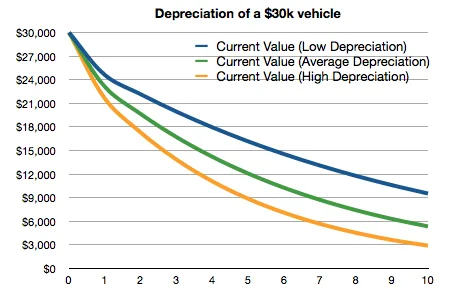
The assessor applies a depreciation schedule based on model year. A 2024 vehicle might start at 100 percent of MSRP for year one. A 2020 vehicle drops to roughly 60 percent.
The schedule is uniform statewide, set by the Office of Policy and Management. Your town cannot change the assessment ratio or the depreciation table.
Let's say you bought a 2023 Toyota Camry with a $28,000 MSRP in December 2024. The assessor takes 70 percent of $28,000 ($19,600), applies the year-two depreciation factor (typically 85 percent), and lands at $16,660 assessed value. That number stays fixed for the supplemental bill.
The Real Cost: Mill Rates, MSRP, and Prorated Math
Your actual dollar amount depends on three variables: assessed value, your town's mill rate, and the number of taxable months. The formula is straightforward. Assessed value times mill rate divided by 1,000 equals annual tax.
Divide by 12, multiply by months owned, and you have your bill.
| Town (Example) | Mill Rate | Annual Tax on $20k Assessed | Monthly Tax | 10-Month Bill (Mar–Dec) |
|---|---|---|---|---|
| Greenwich | 11.0 | $220 | $18.33 | $183.30 |
| Stamford | 26.5 | $530 | $44.17 | $441.70 |
| Hartford | 45.0 | $900 | $75.00 | $750.00 |
The proration counts the registration month as a full month. Register March 28th? You owe for March through September, seven months.
Register March 2nd? Same seven months. There is no daily proration.
Most towns issue the supplemental bill with a January 1st due date. You typically have until February 1st to pay without interest. After that, 1.5 percent monthly interest (18 percent annual) applies from the original due date.
Some towns offer a 30-day grace period. Check your specific collector's office.
Step-by-Step: Verifying and Paying Your Supplemental Bill
Don't just write a check. Errors happen. VIN mismatches, wrong towns, and double-billing for the same vehicle across two municipalities are common.
Follow these steps before you pay.
- Confirm the garaging address. The bill should reflect where the vehicle was parked on the registration date. If you moved before registering, the old town might still have you in their system. If you moved after, the new town might not have updated yet.
- Verify the VIN and vehicle details. Match the bill to your registration certificate. Year, make, model, and VIN must align. A single digit error in the VIN can pull the wrong MSRP.
- Check the months taxed. Count from your registration month through September. If the bill shows more months, dispute it immediately.
- Review the assessment calculation. Find your vehicle's MSRP online. Apply 70 percent. Apply the state depreciation factor for your model year. The result should match the assessed value on the bill within a few dollars.
- Pay the correct collector. Payment goes to the town tax collector, not the DMV, not the state. Online portals vary by municipality. Some use a shared platform like QDS or Invoice Cloud. Others only accept mail or in-person.
- Save your receipt. You need proof of payment if the DMV system doesn't update automatically. A screenshot or PDF confirmation works.
If you sold the vehicle before the bill arrived, you still owe for the months you owned it. The tax follows the registration, not the title transfer. The new owner gets their own bill when they register.
Legal Risks: DMV Registration Blocks and Delinquency Interest
Ignoring a Connecticut supplemental motor vehicle tax bill for mid-year registrations creates a cascade of expensive problems. The town tax collector will apply an 18 percent annual interest rate, adding 1.5 percent to your balance every single month you miss. That interest accrues from the original due date, not the date you finally open the mail.
Worse, the municipality flags your record in the DMV database.
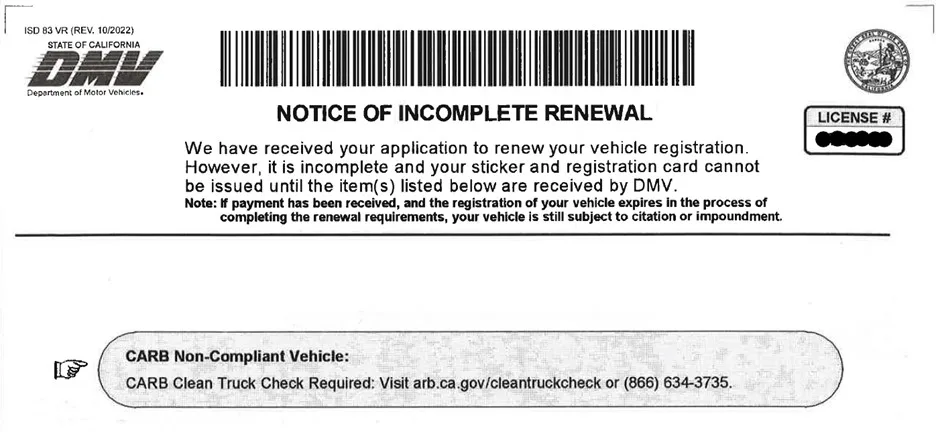
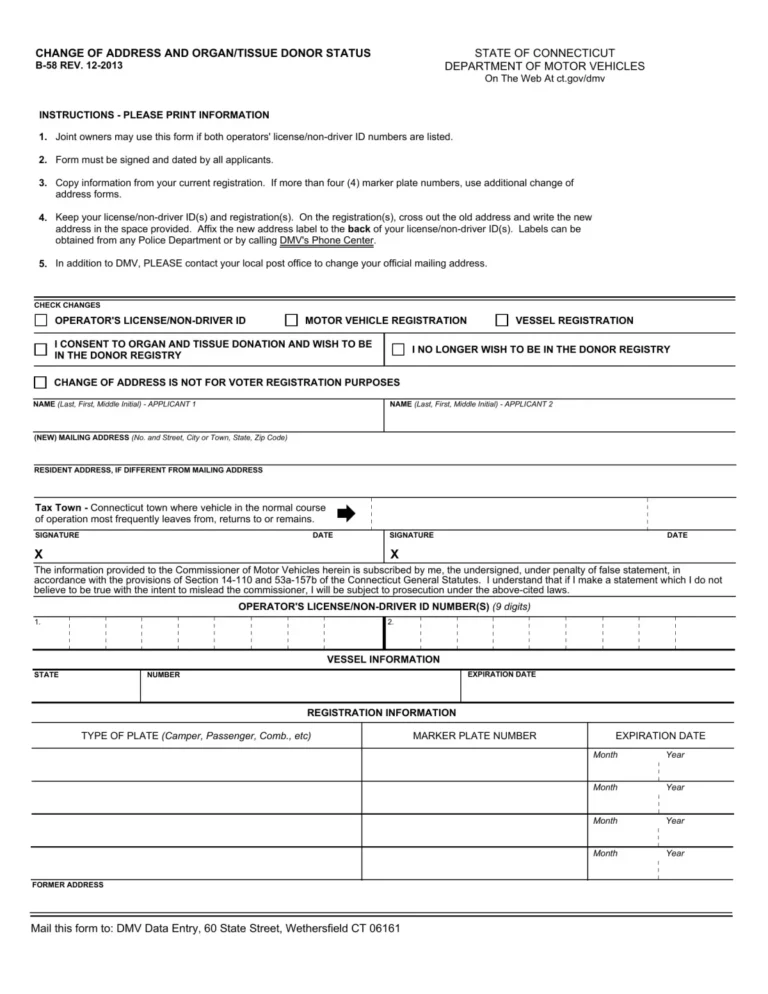
A DMV registration block stops you from renewing your plates entirely. You cannot renew online, by mail, or in person until the tax collector clears the hold. Just as keeping your DMV address current prevents missed notices, paying this bill promptly prevents a locked registration.
If you drive with expired plates due to a tax block, you risk fines or impoundment. The Connecticut DMV enforces these holds strictly, with no exceptions for financial hardship.
Costly Mistakes with Mid-Year Registration Taxes
People make the same predictable errors with these supplemental bills every year. The biggest mistake is assuming the bill is a scam because it arrives months after registration. Towns send these out in January for the prior year's registrations.
It looks official because it is official.
Another common error involves moving between towns. If you lived in Hartford when you registered but moved to New Haven before the bill arrived, you might pay New Haven by mistake. The tax belongs to the garaging town at registration time, not your current address.
Paying the wrong municipality does not transfer automatically. You have to request a refund from the wrong town and pay the correct one, all while interest ticks away.
Lessees frequently assume the dealership or leasing company handles the property tax. In Connecticut, the lessee is the registered owner and owes the tax directly. The bill goes to your home, not the corporate office.
Do not wait for the dealer to step in. They will not.
Real Scenarios: Who Gets This Bill and Why
Three specific groups trigger a Connecticut supplemental motor vehicle tax bill for mid-year registrations. New residents moving into the state after October 1st get one immediately. They register their out-of-state car, enter the DMV database, and the local assessor captures them on the supplemental list.
Residents who buy a new or used vehicle after October 1st get the bill next. Even if you live in the same town for decades, purchasing a car after the Grand List cutoff forces a supplemental assessment. You will not see a regular July bill for that vehicle until the following year.
Finally, lessees signing a new lease mid-year trigger the same process. The leasing company holds title, but the DMV registers the vehicle to you. The tax assessor bills the registered user.
Whether you bought, leased, or moved, the system treats your entry point the same way.
Expert Tips: Navigating the Board of Assessment Appeals
You cannot appeal a Connecticut supplemental motor vehicle tax bill for mid-year registrations without paying it first. This is the "pay first, appeal later" rule under state law. If you skip payment to protest the amount, interest accrues and the DMV blocks your registration anyway.
The Board of Assessment Appeals handles valuation disputes, not mill rate complaints. You can only argue that the assessed value is wrong, usually because the assessor used the wrong MSRP or model year. File your appeal in February or March.
Most towns require the application by March 20th.
Bring documentation to the hearing. Print the original MSRP sticker, the manufacturer specs, and your registration card. Show exactly where the assessor's data diverges from reality.
Per the Connecticut Office of Policy and Management, assessors must use standard valuation tables, but data entry errors happen. If the board agrees, the town issues a refund for the overpayment.
Supplemental vs. Annual: How Your Bills Compare
Understanding the difference between your two potential bills prevents confusion. The supplemental bill covers a partial year. It runs from the month you registered through September of that same fiscal year.
The annual bill covers a full 12 months, running from October through September.
| Feature | Supplemental Bill | Annual Bill |
|---|---|---|
| Timeframe | Registration month to September | October 1st to September 30th |
| Due Date | January 1st (typically) | July 1st (typically) |
| Trigger | Mid-year purchase, lease, or move | On the October 1st Grand List |
| Assessment | Same 70% MSRP rule | Same 70% MSRP rule |
You will never get both bills for the same vehicle in the same cycle. If you get a supplemental bill in January, you will not get an annual bill in July for that same car. The next July bill comes a full year later, covering the complete 12-month span.
This rhythm matches emissions compliance deadlines in other states, where schedules roll forward based on your initial test date.
FAQs on Connecticut Car Tax Bills
What happens if I never received the supplemental tax bill?
You still owe the money. Connecticut law holds you responsible for the tax even if the mail never reaches your door. Interest starts accruing right after the statutory deadline.
Call your town tax collector immediately to request a copy and pay the balance.
Can I get an extension to pay my Connecticut car tax?
Most towns offer zero extensions. A few municipalities grant a brief grace period of 30 days, but state law mandates that 18 percent annual interest applies after the official due date. Pay on time to avoid those extra charges.
Do I have to pay the supplemental bill if I sold the car right away?
Yes. The tax covers the exact months you held the active registration. The new owner receives their own supplemental bill based on their purchase date.
Why is my assessed value higher than what I paid for the car?
Assessors use 70 percent of the Manufacturer's Suggested Retail Price, not your actual purchase price. MSRP includes destination charges and factory options. Even if you negotiated a great deal, the state calculation ignores your final sale price entirely.
How do I update my address so the bill goes to the right place?
Update your address with the DMV before you move. The DMV feeds your garaging address directly to the local tax assessor.
Final Verdict: Pay First, Appeal Later
The Connecticut supplemental motor vehicle tax bill for mid-year registrations is an unavoidable reality. You cannot ignore it. You cannot negotiate it away.
The system operates on strict timelines and strict math.
Pay the bill the day you receive it. This protects your registration status and stops interest from piling up. If the assessed value looks wrong, gather your MSRP documentation and file an appeal with the Board of Assessment Appeals by March 20th.
You get your refund later if you win.
Do not let a surprise tax bill turn into a DMV registration block. Responsible ownership means keeping your paperwork straight. Pay first, appeal later, and keep your plates legal.