The Connecticut 70 percent assessment ratio for motor vehicle property tax determines how much of your car's value actually gets taxed. Most owners assume the town taxes the full market value. That assumption is wrong.
The law caps the taxable base at seventy percent of fair market value. Missing that detail can cost you hundreds of dollars a year.
Connecticut General Statutes § 12-71c locks this ratio in place statewide. Every municipality must apply the same seventy percent multiplier to the NADA valuation. As of 2026 the standard condition for most vehicles is average trade-in value.
That number drops your tax base significantly compared to clean retail pricing. Let us walk through exactly how it works.
Quick Answer
Connecticut taxes motor vehicles at seventy percent of fair market value. The assessor uses NADA average trade-in value for most cars. That assessed value gets multiplied by your local mill rate.
The result is your annual tax bill. The ratio is fixed by state law and cannot be changed by towns.
Why Getting the 70 Percent Ratio Wrong Costs You Money
Many taxpayers confuse fair market value with assessed value. They see the NADA retail price and panic. The tax bill uses a lower number.
That confusion leads to two costly mistakes. First some owners skip the appeal process thinking the bill matches full value. Second others overpay because they never verify which NADA category the assessor used.
A wrong category can add thousands to the assessed value. That error compounds across every mill rate dollar.
Towns cannot adjust the seventy percent ratio. It is set by statute. The only variables are the NADA value and the local mill rate.
If you do not check the NADA value you are trusting the assessor blindly. Assessors handle thousands of vehicles. Mistakes happen.
A single condition code error can shift your bill by fifty dollars or more. Multiply that over several years and the loss is real.
The One Formula Every Connecticut Car Owner Needs to Know
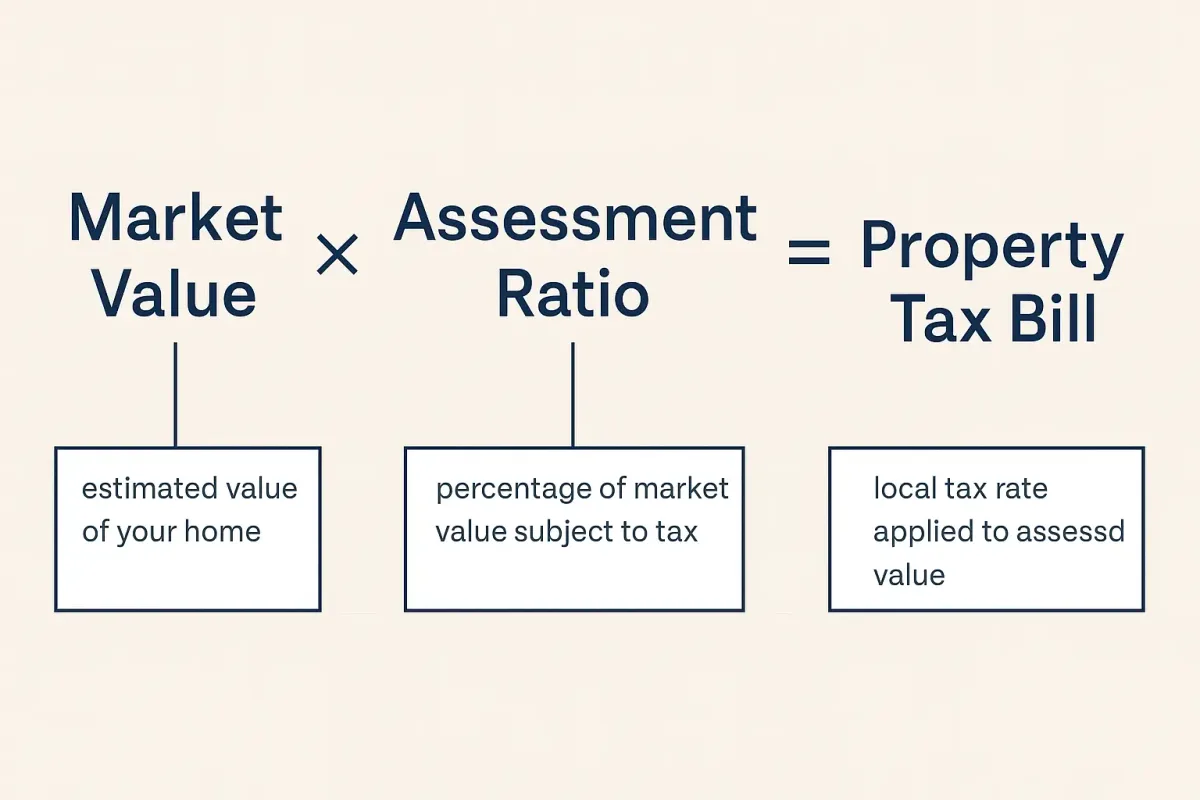
The formula is simple. Fair market value times zero point seven equals assessed value. Assessed value times mill rate divided by one thousand equals tax due.
Write it down. Keep it handy. Every July bill follows this exact math.
| Component | Source | Example |
|---|---|---|
| Fair Market Value | NADA Guide | $20,000 |
| Assessment Ratio | State Law (70%) | 0.70 |
| Assessed Value | Calculation | $14,000 |
| Mill Rate | Town Budget | 32.5 mills |
| Annual Tax | Calculation | $455 |
Plug in your numbers. Verify each step. The NADA value comes from the October first snapshot.
The mill rate is set each spring. The ratio never changes. Master this formula and you will never guess at your bill again.
How the Connecticut 70 Percent Assessment Ratio Actually Works
The ratio acts as a statutory discount on your vehicle value. The legislature chose seventy percent to create uniformity across all one hundred sixty nine municipalities. Before this law towns used different ratios.
Some taxed at fifty percent. Others at one hundred percent. The current standard levels the playing field.
Fair Market Value vs. Assessed Value: The 70% Drop
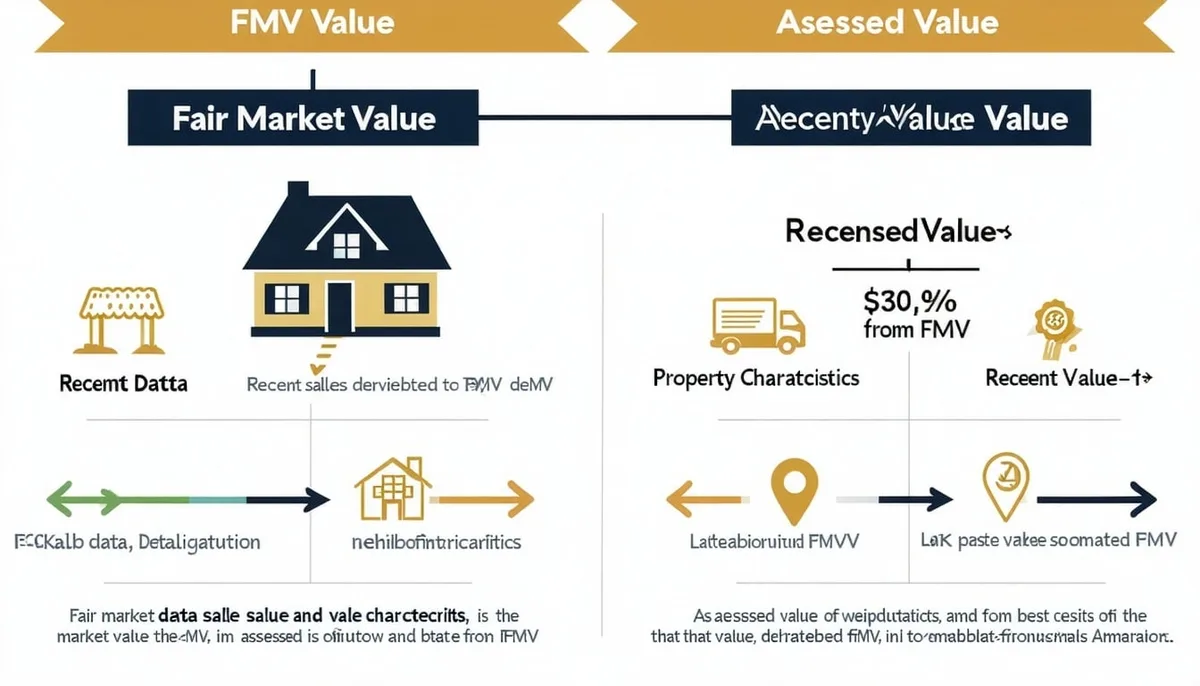
Fair market value represents what a willing buyer pays a willing seller. The assessor finds this number in the NADA guide. Assessed value is simply that number reduced by thirty percent.
A car valued at twenty thousand dollars becomes fourteen thousand dollars for tax purposes. That six thousand dollar reduction is automatic. You do not apply for it.
You do not qualify for it. It applies to every registered vehicle in the state.
Where Your Vehicle's Base Value Comes From (NADA Guides)
The Office of Policy and Management mandates the NADA Official Used Car Guide. Assessors must use the edition published nearest to October first. They cannot use Kelley Blue Book.
They cannot use Edmunds. They cannot use dealer asking prices. The NADA guide is the sole legal standard.
Average Trade-In vs. Clean Retail: The 2023 Rule Change
Prior to 2023 assessors used clean retail value for newer vehicles. That category reflects a dealer lot price with reconditioning. The law changed.
Now average trade-in is the default for most model years. Trade-in value reflects what a dealer pays at auction or on a trade. It is typically fifteen to twenty percent lower than clean retail.
This shift lowered assessments for thousands of owners. Check which category your town used. If they applied clean retail to a 2020 model they overvalued your car.
Calculating Your Motor Vehicle Tax Bill Step-by-Step
Start with the NADA average trade-in value for your exact vehicle on October first. Multiply by zero point seven. That is your assessed value.
Find your town's current mill rate. Multiply assessed value by mill rate. Divide by one thousand.
The result is your tax due.

Why Your Local Mill Rate Matters Just as Much as the 70% Ratio
The seventy percent ratio is fixed. The mill rate varies wildly. Hartford might charge seventy four mills.
Greenwich might charge eleven mills. Same car. Same assessed value.
Vastly different bills. A fourteen thousand dollar assessed value generates one thousand thirty six dollars in Hartford. It generates one hundred fifty four dollars in Greenwich.
The ratio did not change. The mill rate did. You cannot control the ratio.
You cannot control the mill rate. You can only verify the NADA value.
- Locate your vehicle in the NADA guide using the October first edition
- Confirm the average trade-in value for your trim and mileage
- Multiply that value by zero point seven
- Retrieve your town's mill rate from the assessor website
- Multiply assessed value by mill rate and divide by one thousand
- Compare the result to your July tax bill
If the numbers match you are done. If they do not match you have grounds for appeal.
Common Valuation Errors That Inflate Your Car Tax
Assessors process thousands of vehicles every year. Mistakes happen. The most common error is applying the wrong NADA condition category.
If your town uses clean retail instead of average trade-in, your fair market value jumps instantly. That inflated base multiplied by the seventy percent ratio yields a higher assessed value. You pay the difference.
Mileage adjustments cause the second biggest problem. NADA values change based on specific mileage ranges. Assessors sometimes apply standard mileage instead of your actual odometer reading.
High mileage lowers the fair market value. Ignoring it keeps the value artificially high.
Trim level mix-ups are equally costly. An LX model assessed as an EX model carries a higher NADA price. These small data entry errors compound over years.
Fighting winter road salt protects your car, but it will not change the NADA value. Keeping the finish spotless does not lower your tax, but verifying the trim level does. Always cross-reference the assessor's data against your actual registration.
Real-World Examples of the 70 Percent Ratio in Action
Let us run the numbers on a 2020 Toyota Camry XSE. The NADA average trade-in value sits at twenty thousand dollars. Apply the seventy percent ratio.
The assessed value becomes fourteen thousand dollars. If you live in Hartford at seventy four mills, your tax bill is one thousand thirty six dollars.
Now move that exact same car to Greenwich. The mill rate drops to eleven mills. The assessed value stays fixed at fourteen thousand dollars.
The tax bill falls to one hundred fifty four dollars. The ratio did not change. The location did.
Consider a high mileage variant. That same Camry with sixty thousand extra miles drops to a fifteen thousand dollar trade-in value. The seventy percent ratio creates a ten thousand five hundred dollar assessed value.
In Hartford, the tax drops to seven hundred eighty seven dollars. Proper vehicle upkeep maintains your car, but verifying your mileage saves real cash.
Deadlines and Legal Rights for Motor Vehicle Tax Appeals
You have strict legal rights to challenge an incorrect assessment. Connecticut law guarantees every vehicle owner a path to appeal. You must act fast.
The window closes quickly. Missing it means paying the inflated bill for an entire year.
The February 20th Deadline You Cannot Miss
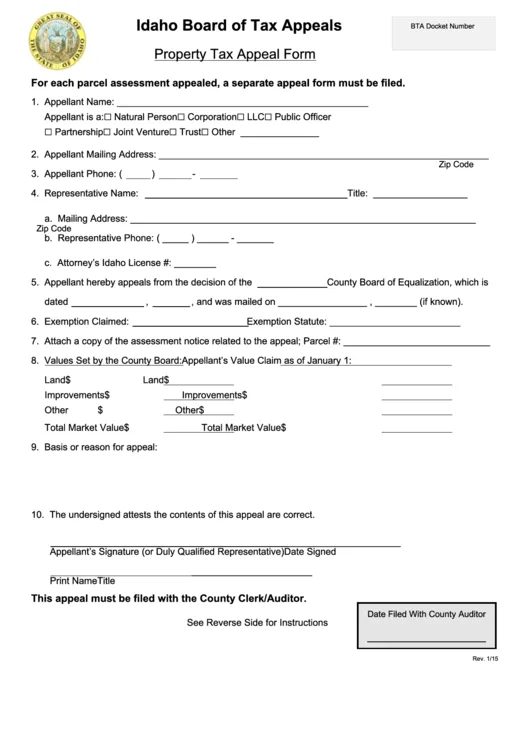
February twentieth is the hard deadline to file an appeal with your local Board of Assessment Appeals. This date rarely changes. If you miss it, you lose your right to challenge that year's bill.
You cannot appeal in March. You cannot appeal in June. The statute provides no flexibility.
File your application early. Gather your NADA printouts, your mileage records, and your registration documents. Submit them to the town clerk before February twentieth.
The board will schedule a hearing. You present your evidence. They vote.
If they side with you, the assessor corrects the value. Per the Connecticut Office of Policy and Management, this local board is your first and best remedy.
How to Verify Your Assessment Before the Bill Arrives
Do not wait for the July bill to shock you. Check your assessed value in December. Towns publish the grand list by January thirty first.
This list shows every vehicle and its assessed value. Search your name or your address. Find your car.
Pull the corresponding NADA guide edition. The Connecticut General Statutes dictate exactly which publication the assessor must use. Compare the listed assessed value against your own calculation.
Divide their assessed value by zero point seven. Does that fair market value match the NADA average trade-in? Does it reflect your actual mileage?
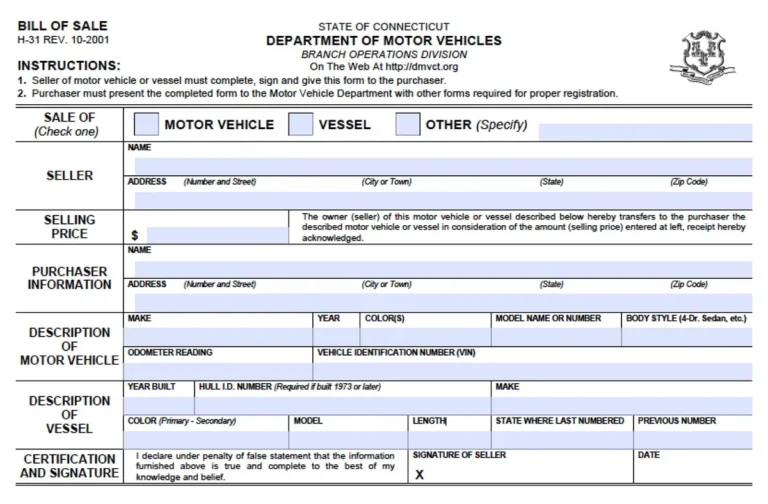
If the numbers diverge, start preparing your appeal evidence immediately. Managing DMV paperwork requires attention to detail. Tax appeals demand the same precision.
Collect your proof early. The earlier you spot an error, the more time you have to build a strong case for the board.
How Connecticut's Motor Vehicle Tax Compares to Real Estate Tax
Motor vehicles and real estate share the seventy percent assessment ratio historically. However, recent legislation changes the real estate landscape. Many Connecticut towns are phasing in a one hundred percent assessment ratio for homes.
This shift increases residential property tax bases significantly.
Motor vehicles remain locked at seventy percent. The legislature intentionally separated the two asset classes. Cars depreciate rapidly.
Homes generally appreciate. Taxing a depreciating asset at one hundred percent would burden middle class drivers unfairly. The seventy percent ratio offers a buffer against rapid value loss.
If you own both a home and a car in the same town, watch your real estate ratio closely. Your house assessment might climb toward one hundred percent over the next few years. Your car assessment will stay at seventy percent.
State registration requirements tie your vehicle tax to that fixed percentage. Your real estate tax floats with municipal policy. Keep these distinct systems separate in your financial planning.
Connecticut Motor Vehicle Property Tax FAQs
What happens if I sell my car before October 1st?
If you sell, junk, or donate your vehicle before October 1st, you owe no tax for that year. You must cancel your registration with the Connecticut DMV and return the plates. The assessor will then remove the vehicle from the next grand list.
Can I appeal my motor vehicle tax bill after the February 20th deadline?
No. The February 20th deadline is strictly enforced by state law. If you miss the filing window with the Board of Assessment Appeals, you must pay the full bill for that year.
You can only challenge the valuation the following year.
Does the 70 percent ratio apply to leased vehicles?
Yes. Leased vehicles are subject to the same property tax rules as owned vehicles in Connecticut. The lessee typically pays the tax bill directly to the municipality.
The seventy percent assessment ratio applies identically to the NADA value of the leased car.
Will adding aftermarket modifications increase my assessed value?
Generally, no. Assessors rely strictly on the standard NADA guide valuations for base trim and factory options. Aftermarket stereo systems or custom wheels usually do not factor into the fair market value calculation.
The tax office ignores most personal modifications.
Why did my tax bill go up even though my car is older?
Your tax bill can rise if your town increased its mill rate. The assessed value might drop as the car depreciates, but a higher mill rate can easily offset that decrease. Used car market inflation can also increase the NADA value of older models.
Your Action Plan for Managing Connecticut Car Taxes
Managing your motor vehicle tax requires a proactive approach. You cannot change the seventy percent ratio or the local mill rate. You can only control how accurately your vehicle is valued and how promptly you respond to errors.
First, locate your vehicle in the NADA guide every October. Confirm the average trade-in value matches your specific trim and mileage. Second, check the grand list in December to verify the assessed value matches your calculation.
If the numbers diverge, prepare your appeal evidence immediately.
Third, file an appeal with the Board of Assessment Appeals before February 20th if you spot a discrepancy. Fourth, pay your bill on time in July to avoid DMV registration blocks. Delinquent taxes trigger immediate registration suspensions.
Keeping up with your emissions testing schedules ensures your registration stays valid alongside your tax compliance.
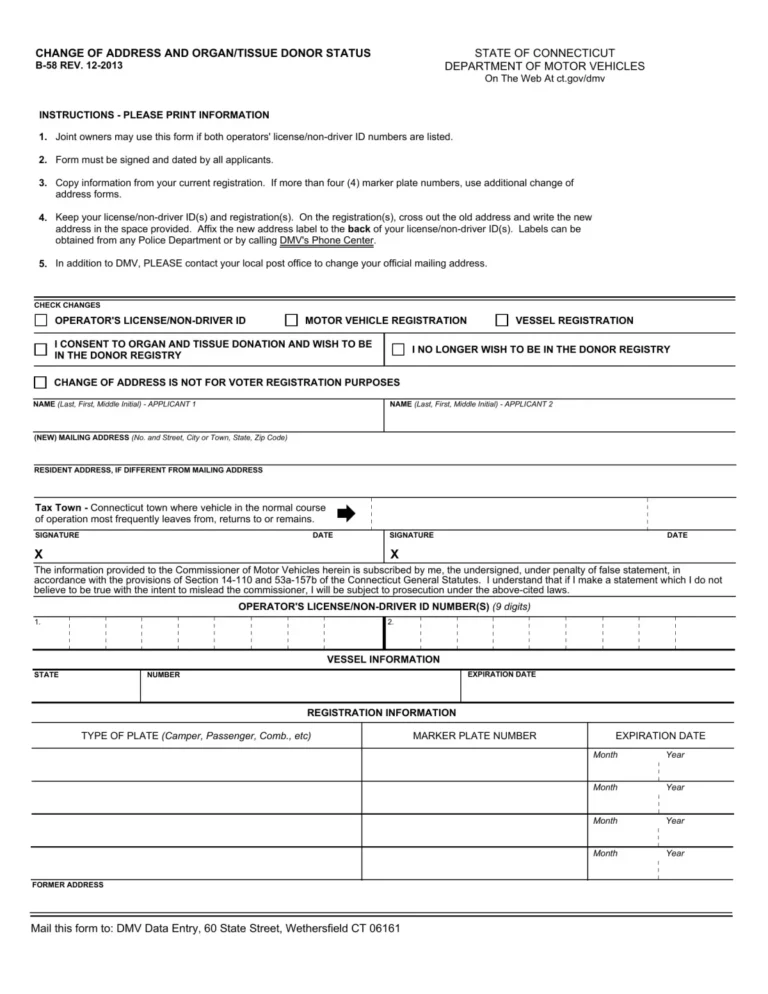
Fifth, notify the DMV promptly if you move or sell your car. Updating your DMV address quickly prevents tax bills from going to the wrong town. Protecting your car with proper winter salt removal preserves its physical life, but verifying its tax assessment protects your wallet.
For more state-specific vehicle ownership tips, visit our main blog. Take these steps every year and you will never overpay your Connecticut car tax.