Getting a title and registration for a mobile home or RV in Florida isn’t a one‑size‑fits‑all process. The Florida mobile home and RV registration and titling requirements split depending on whether you own a manufactured home or a recreational vehicle, and getting that distinction wrong can cost you.
A concrete example: a mobile home built after June 15, 1976 must have a HUD certification label just to start the titling process. If that label is missing, you’re looking at delays that can stretch months and cost hundreds in engineering fees. Get it right from the start, and you’ll skip the headaches that catch most new owners.
Quick Answer
You must title and register a mobile home or RV with the FLHSMV. Mobile homes get a one‑time $7.50 registration fee. RVs pay annual weight‑based fees.
Lost HUD labels or missing VIN inspections are common blockers. Start by determining your vehicle type. Then follow the correct application process through your county tax collector.
Why a Mistake Here Can Cost You Thousands
The path you choose affects your annual expenses and your ability to sell later. A mobile home incorrectly titled as a vehicle might not qualify for certain loans. An RV registered in the wrong weight class can lead to fines or a lost registration.
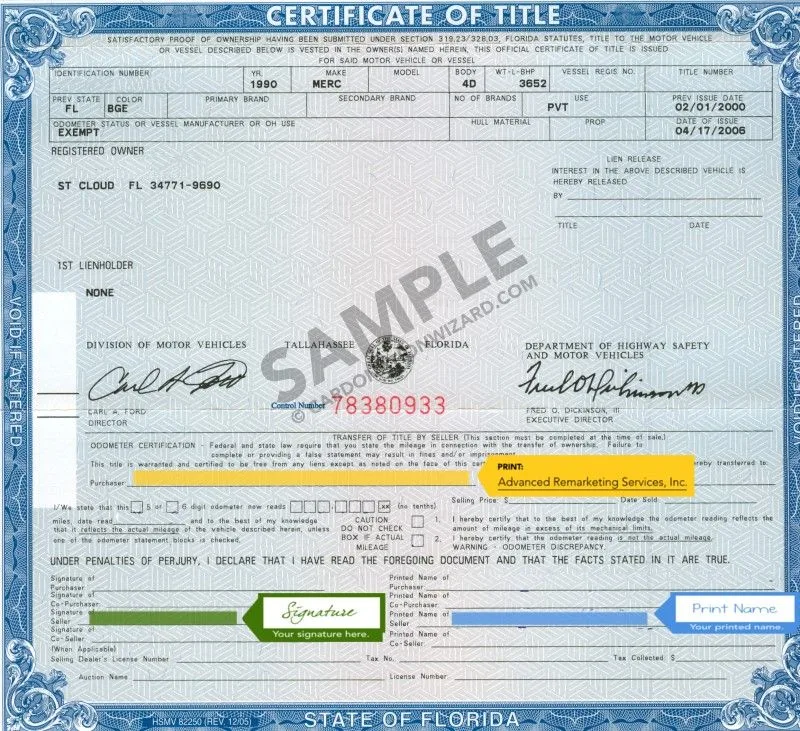
Forgetting to transfer a title into your name within 30 days triggers late fees.
Worst case, a missed step like a missing HUD label or an unreleased lien can stop a sale cold. That means months of lot rent or storage fees while you wait for paperwork.
This is why understanding the fork between mobile homes and RVs, and the specific rules for each, isn’t just admin work. It’s financial protection.
The Critical Fork: Mobile Home vs. RV – Why It’s Not Just Semantics
Florida law draws a clear line. A mobile home (manufactured home) is built on a permanent chassis and designed for residential occupancy. An RV is built with a chassis and drivetrain (motorhome) or designed to be towed and used for temporary travel.
That sounds simple, but the nuance matters.
If it’s an RV, you always go through the standard vehicle titling process. You get a title, you register it annually, and you pay fees based on weight plus a municipal property tax in most counties.
If it’s a mobile home, you have two paths. You can title it as a vehicle with permanent registration for a one‑time $7.50 fee. Or you can “de‑title” it and have it treated as real property under a deed.
That second path can lower your registration costs but changes your financing and tax situation.
Then there are park model RVs. They look like tiny mobile homes but are built to RV standards, often under 400 square feet. Florida allows them to be registered as RVs, not mobile homes.
This is a common point of confusion.
If you’re not sure which one you have, check the VIN or the HUD label. A HUD label tells you it’s a manufactured home. No HUD label, and it’s likely an RV.
| Feature | Mobile Home (Manufactured Home) | RV (Motorhome, Travel Trailer, Fifth Wheel) |
|---|---|---|
| Primary use | Long‑term residence | Temporary / travel |
| Title type | Personal property (vehicle) OR real property (deed) | Vehicle only |
| Registration | One‑time $7.50 (if titled as vehicle) | Annual, weight‑based |
| HUD label required | Yes (if built after 1976) | No |
| Municipal property tax | Not applicable as vehicle | Collected with registration |
Mobile Home Titling and Registration in Florida
This area trips up most people. Let’s go through the three big subtopics.
Permanent Registration – The One‑Time $7.50 Fee
If you keep your mobile home titled as a vehicle, you pay a one‑time registration fee of $7.50. That’s it for the annual registration sticker. You do not renew it each year.
Don’t confuse registration with property taxes. Even with permanent registration, you still owe annual personal property tax on the mobile home assessed by your county. That tax is separate and billed locally.
But you avoid the annual motor vehicle renewal that RVs have to do.
This path makes sense when the home sits in a mobile home park on rented land. The title proves ownership of the structure, but you don’t own the land.
The De‑Titling Route: Converting to Real Property
If you own the land your mobile home sits on, you can convert it from a vehicle title to real property. That means filing with the county property appraiser, removing the FLHSMV title, and adding it to your land deed.
Benefits: you may avoid the annual personal property tax (land tax only makes up the bill), and you can qualify for traditional mortgages. It can also increase resale value as real estate.
Drawbacks: once de‑titled, you cannot move the home without re‑titling it as a vehicle. That’s a whole new process. Also, selling is more involved than a simple title transfer.
Mistake to avoid: do not de‑title if you still have a lien. You must have a clear title first. Confirm with your county tax collector that the conversion is processed correctly to avoid double taxation.
When a Missing HUD Label Stops Everything
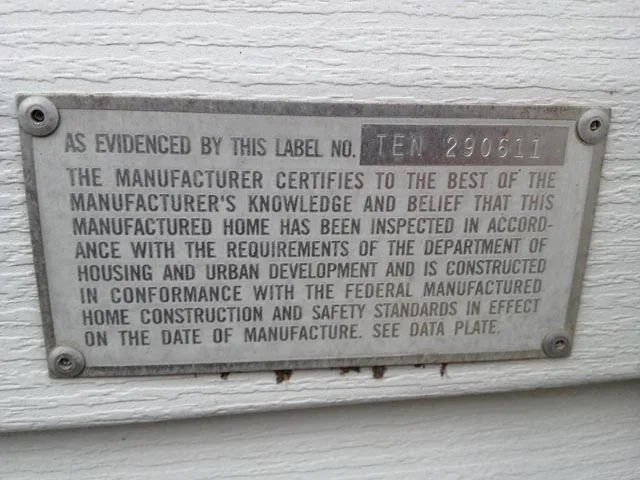
If your mobile home was built after June 15, 1976 (the HUD code effective date), it must have two labels: a HUD certification label on the outside and a data plate inside. Without them, you cannot get a Florida title.
Lost the labels? You have options. Request a replacement label from the manufacturer, but that requires the VIN and original model info.
If the manufacturer no longer exists, you may need to hire a licensed engineer to inspect and certify. That can cost hundreds to over a thousand, but it’s the only way.
If the home is pre‑1976, it’s not subject to HUD. You need proof of ownership and curb weight verification.
Always verify those labels before buying a used mobile home in Florida. It could be the difference between an easy transfer and a stalled application.
RV Titling and Registration in Florida
RVs are treated more like cars. The process is cleaner, but there are still traps.
Motor Homes, Travel Trailers, and Fifth Wheels – Different Rules
All RVs go through the same titling system, but the registration fees depend on GVWR. Motorhomes have their own engine and are registered like any other motor vehicle. Travel trailers and fifth wheels are towed and registered as trailers, which usually have lower fees.
When towing a travel trailer, you also need to follow safety chain and lighting equipment rules. Florida requires breakaway switches on trailers over 3,000 lbs, so check that gear before you head out.
How GVWR Determines Your Fees
Your annual registration fee is based on the gross vehicle weight rating from the manufacturer. The brackets are on the FLHSMV website. As of 2026, approximate fees are:
| Weight | Estimated Fee |
|---|---|
| 0–2,499 lbs | $27.15 |
| 2,500–3,499 lbs | $32.40 |
| 3,500–4,999 lbs | $43.85 |
| 5,000 lbs or more | $45.90 |
Plus base registration and other state fees, typically $10 to $15. For a travel trailer under 3,500 lbs, you’re looking at around $45 to $55 total.
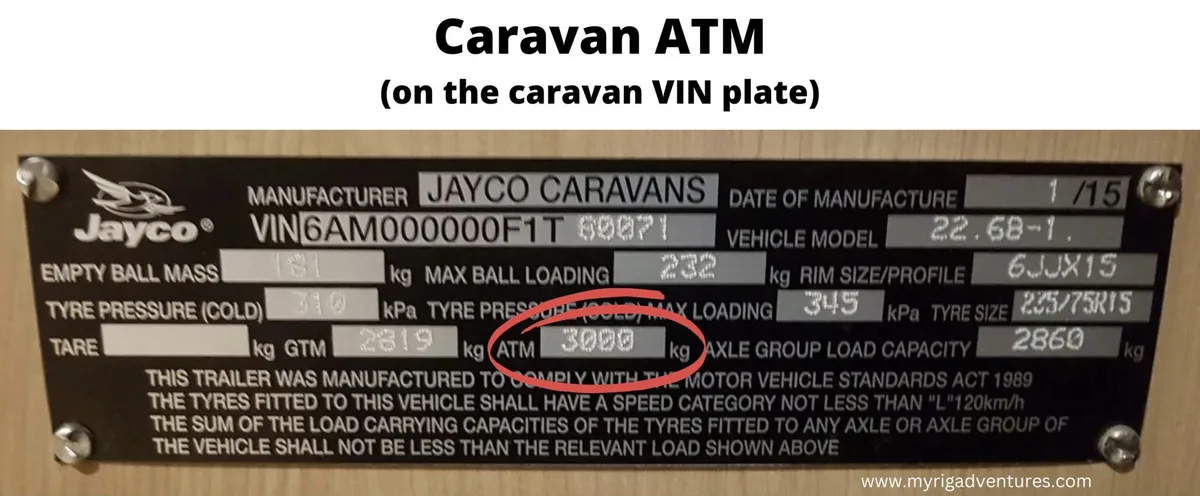
Your GVWR is printed on the VIN plate. Use that number, not the dry weight.
Municipal Property Tax on Motor Vehicles – What It Means for Your RV
Here’s an added cost that surprises new residents. Florida charges a municipal property tax on most vehicles, including RVs, at registration time. It’s a small percentage of the vehicle’s assessed value collected by your county.
It varies, but expect maybe 0.5% to 1% of value added to your annual bill.
For a $30,000 motorhome, that could mean $150 to $300 extra per year. This tax is not optional. Check your county tax collector’s fee estimator online before buying an RV.
Step‑by‑Step: How to Apply for Title and Registration
The process depends on how you got the mobile home or RV. Let’s cover the three most common scenarios.
New Purchase from a Dealer
When you buy from a dealer, they typically provide the Manufacturer’s Certificate of Origin (MCO) for a new unit. For a used unit from a dealer, you get a title from the previous owner.
Your job is to go to any county tax collector’s office (or mail in) with:
, Application for Certificate of Title (HSMV 82040)
, Application for Registration (HSMV 83146)
, MCO or signed title
, Bill of sale
, Proof of insurance (for motorized RVs)
, Payment for sales tax (6% state + up to 1.5% county discretion)
The dealer may collect sales tax and apply for the title for you. Ask before you leave the lot. If they don’t, you must go to the tax collector within 30 days to avoid a $10 late fee.
Out‑of‑State Transfer (Snowbirds and New Residents)
New residents have 30 days to get a Florida title and registration. If you’re a snowbird staying more than 90 consecutive days in a calendar year, you are considered a resident and must register.
Documents needed:
, Out‑of‑state title
, VIN inspection form (HSMV 82042) completed by law enforcement or tax collector
, Proof of insurance
, Application forms 82040 and 83146
, Payment of use tax (6% plus county) if the vehicle wasn’t taxed in your previous state at that rate
For a mobile home coming from another state, you also need HUD label verification. The inspector will check the VIN and the HUD label. If the label’s missing, start the replacement process before you can title.
Private‑Party Sale
This is the most mistake‑prone scenario. Before you hand over money, confirm the seller has a clear title in their name. If there’s a lien, get a lien release from the bank.
Without it, the Florida title will show the lien, and you’ll have trouble selling later.
What you need:
, Certificate of Title, signed and dated by seller
, Bill of sale (recommended)
, Application for title (HSMV 82040)
, Application for registration
, Odometer disclosure if the RV is a motor vehicle and under 10 years old
, VIN inspection if the title is from another state or the VIN looks wrong
, Lien release if applicable
, Payment for title fee ($75.25 as of 2026) plus registration fees and sales tax
Always verify the VIN on the title matches the physical VIN on the unit. A mismatch can stop the entire transfer.
Florida‑Specific Fees, Taxes, and Penalties You’ll Actually Pay
The numbers add up fast if you’re not prepared. Sales tax is the biggest chunk. You’ll pay 6% of the purchase price to Florida and up to 1.5% more to your county.
For a $15,000 travel trailer, that’s $900 to $1,125 right there.
Then come the fixed fees. The title transfer fee is $75.25. Registration for an RV depends on its GVWR.
For a 4,000‑lb travel trailer, expect around $45 to $55 annually. A mobile home’s permanent registration costs $7.50 exactly once.
Miss the 30‑day deadline and you get a $10 late penalty. That’s small, but the bigger risk is being pulled over without current plates. Fines for no registration start around $30 and can climb.
| Fee or Tax | Typical Amount (as of 2026) |
|---|---|
| Sales tax (state + county) | 6% to 7.5% of purchase price |
| Title transfer fee | $75.25 |
| RV annual registration | $27 to $46 depending on GVWR |
| Mobile home permanent registration | $7.50 one‑time |
| Late filing penalty | $10 |
| Municipal property tax (RVs only) | 0.5%–1% of assessed value per year |
You’ll also need a VIN inspection for out‑of‑state units. That’s free if a tax collector does it, or a small fee from a law enforcement agency. Total up your costs before you go to the office so you’re not stuck at the counter.
Common Mistakes That Can Derail Your Application
HUD Label Issues on Older Mobile Homes
If your manufactured home was built after June 15, 1976, the HUD label is non‑negotiable. Buy a used mobile home without checking for that label and you could own a structure you cannot title.
If the label is gone, you have two options. Track down the manufacturer for a replacement data plate. Or hire a Florida‑licensed engineer to inspect and certify.
That inspection costs $400 to $1,200 depending on the complexity. Always ask for the HUD label before you sign a purchase agreement.
Misstating the GVWR
The GVWR printed on the VIN plate is the number Florida uses for registration fees. Do not guess. Do not use the dry weight.
One owner listed 2,500 lbs instead of 3,500 lbs and got a notice for underpayment plus a $25 fee.
The VIN plate is usually on the driver‑side frame of a travel trailer or near the door of a motorhome. Take a photo. Use that number on the application.
Lien Release Not Filed Before Transfer
A lien on a title stops the transfer cold. If you buy a mobile home or RV and the seller’s bank hasn’t filed a release, you cannot get a clean title in your name.
Before you pay, request a lien release letter from the seller. Verify it’s been recorded with the state. If the lien is old and the lender is out of business, you may need a court order.
That can take months. The safest route is to do the transaction at the tax collector’s office, where a staffer can check the title status instantly.
Lost Title – The Bonded Process
Losing the title doesn’t mean you’re stuck forever. You can apply for a bonded title using form HSMV 82201. You’ll need a surety bond worth 1.5 times the vehicle’s value.
After three years, the bond drops off and you get a standard title.
This process works for mobile homes and RVs alike. It’s slower and more expensive than a standard transfer, but it’s a legal solution.
Legal Compliance and Safety Risks
Insurance Requirements for Both Asset Types
Motorhomes must have liability insurance similar to a car. Florida minimum is $10,000 personal injury protection and $10,000 property damage. Travel trailers and fifth wheels usually don’t need insurance to register, but any tow‑behind worth over a few thousand dollars should have coverage.
Mobile homes titled as vehicles need property insurance if they’re financed. Bank rules often require comprehensive coverage. Without it, a storm loss is entirely out of pocket.
Moving a Mobile Home – Permits and Title Checks
You can’t just hook up a mobile home and drive away. Florida requires a transport permit from the FLHSMV. You need a current title and registration to get that permit.
The hauler must follow specific routing and flagging rules.
If the title shows a lien, you need the lienholder’s permission to move it. Ignoring that can be considered theft in some cases.
Biennial Emissions Testing (Do RVs Need It?)
Florida does not have a safety or emissions inspection program for most private vehicles. RVs are not subject to emissions testing anywhere in the state. The only areas with testing are Miami‑Dade, Broward, and Palm Beach counties, and only for model years older than two years.
Even then, the law exempts vehicles with GVWR over 14,000 lbs, which covers many larger motorhomes. You won’t need a smog check for your RV or mobile home.
The “Move It” Law and How It Affects RV Owners
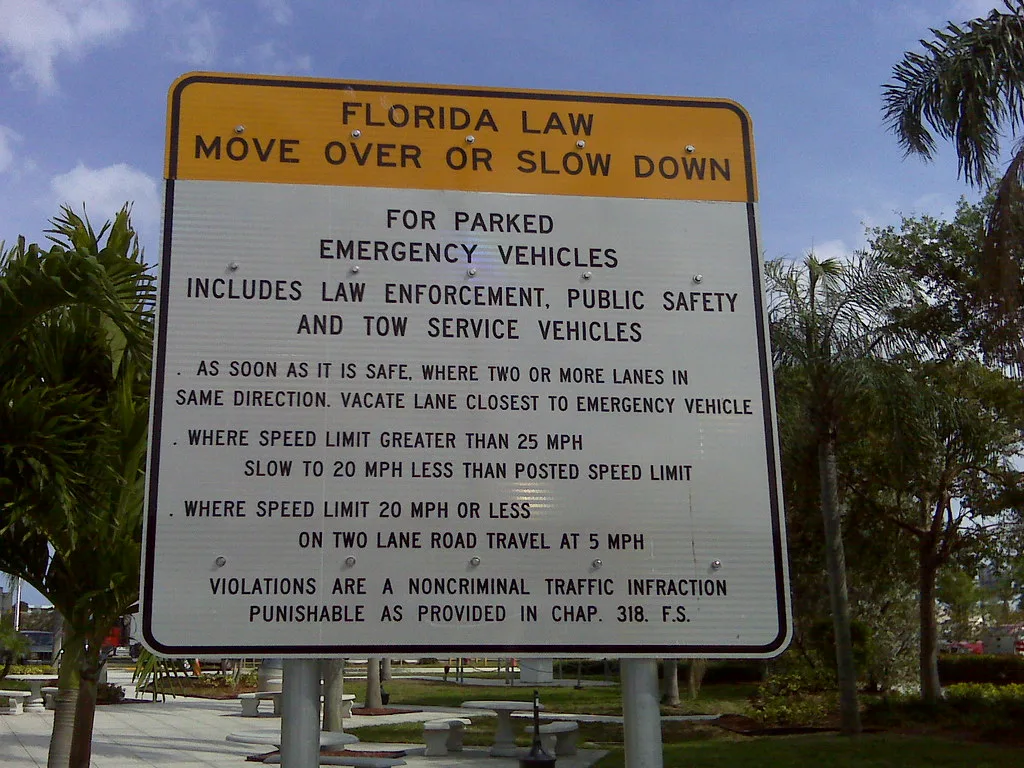
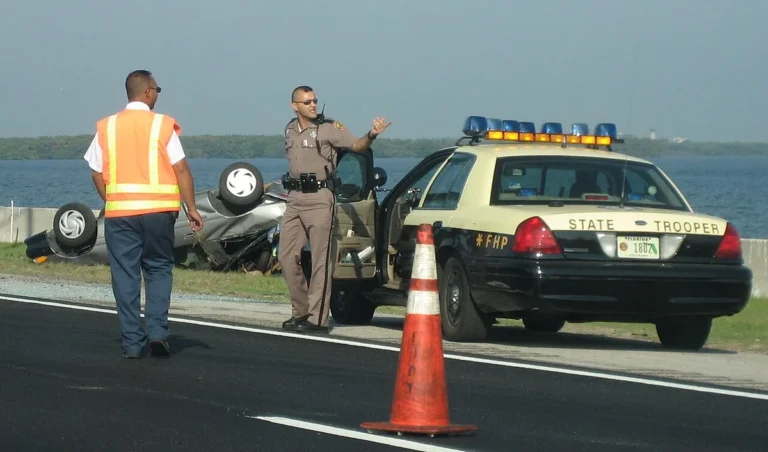
If you’re in a minor accident with no injuries or fatalities, you must move your vehicle out of the traffic lane. For a small RV, that’s doable. For a large motorhome, it’s harder.
But the law still applies.
The “Move Over” law also requires you to change lanes or slow down for any stopped emergency vehicle. RV drivers with large blind spots need to stay extra alert. A failure here can mean a citation and points on your license.
When to Call a Pro – And Who to Call
Some situations are too complex or too risky to handle alone. If you have a missing HUD label on a mobile home you already own, call a manufactured‑home engineer who works with title issues. If a lien release is lost or the lender no longer exists, a lawyer who handles Florida vehicle title work can petition the court.
For routine transfers, the county tax collector’s staff can answer questions. But they cannot give legal advice. If you’re inheriting a mobile home or dealing with a disputed ownership, an attorney is worth the fee.
A title service company can also walk the paperwork through for you. They charge $100 to $300 on top of state fees. That’s cheap compared to the cost of a rejected application.
Verified Summary: Your Next Steps Based on Your Situation
Your path depends on what you own and where you are starting.
- Buying a new mobile home or RV from a Florida dealer. Let the dealer handle the title and registration. Confirm they submit it within 30 days. Keep the temporary tag in your records.
- Buying used from a private seller. Check the HUD label (mobile home) or VIN plate (RV) first. Get a lien release if there’s one. Do the transfer at the tax collector together.
- Moving to Florida from another state. You have 30 days. Get a VIN inspection, bring your out‑of‑state title, and pay the use tax. Don’t wait until the last week.
- De‑titling a mobile home on your own land. Confirm the title is clear. File with the county property appraiser. You’ll give up the ability to move it easily, but you may gain tax benefits.
- Lost your title? Apply for a bonded title using HSMV 82201. Get a surety bond. Three years later you get a standard title with no lien notation.
For any step you’re unsure of, visit your county tax collector’s office in person. They process these applications daily and can catch errors before they become problems. That’s the most valuable pro advice of all.