ByMax Lee
Guide to California Vehicle Impoundment Rules for Driving With Suspended License
Getting your car impounded in California for driving with a suspended license is one of those situations that turns a bad day into a financial nightmare. The California vehicle impoundment rules for driving with suspended license are strict, expensive, and leave almost no wiggle room. Even if you didn't know your license was suspended.
As of 2026, the law mandates a minimum 30-day hold on your vehicle. The average cost to get it back runs between $1,200 and $2,800 depending on where you're towed and how fast you act. Most drivers don't realize the clock starts ticking the second the tow truck hooks up.
Not when you finally reach the DMV.
This isn't a situation where a polite conversation with an officer will fix things. The law is written to be punitive. It's designed that way to discourage people from driving after their privilege has been taken away.
If you're already in this spot, or worried you might be, you need to know exactly what's coming.
Quick Answer
If you're caught driving with a suspended license in California, your vehicle gets impounded immediately for a mandatory 30-day hold. You must pay towing fees, daily storage charges, and a release fee before your car can leave the lot. Only a licensed driver can retrieve the vehicle.
The total cost averages $1,500. No exceptions for emergencies.
Why Getting Your Car Impounded in California Is a Bigger Problem Than You Think
Most people assume an impound is just an expensive tow. Something you pay, grumble about, and move on. That's not how California handles driving with a suspended license.
The Vehicle Code section 14602.6 doesn't give an officer discretion to tow your car. It requires impoundment for a full 30 days. It doesn't matter if you're driving your own car, a friend's, or a rental.
What makes this worse is that the 30-day hold starts the moment your car hits the tow yard. Not when you show up with money or a valid license. You're paying for every single day your car sits there.
Even if you get your license reinstated on day two.
The real problem is that most people don't discover their license is suspended until they're already pulled over. Maybe you forgot to pay a traffic ticket. Maybe you missed a court date.
Maybe a DUI from years ago triggered an automatic suspension you never knew about. It doesn't matter to the officer. Your license shows as suspended in the system, and your car is gone.
What Actually Happens When You Get Pulled Driving on a Suspended License
The moment the officer runs your license and sees the suspension flag, everything changes. You're not getting a warning. You're not getting a fix-it ticket.
The officer has the legal authority, and in most cases the department policy, to order an immediate tow.
Here's the sequence that plays out:
- The officer confirms your license status through the DMV database. If it's suspended, the stop is over.
- They call a tow truck. Usually one of the private companies on the city's rotation list. You don't get to choose who.
- Your car gets taken to an impound lot that could be miles away from where you live.
- You're left at the roadside with your belongings. You cannot drive the car away. Even if you have someone who could legally drive it. Not yet.
The officer will also issue a citation under California Vehicle Code 14601 (driving with a suspended license). That's a separate criminal charge, not just a vehicle issue. It carries up to six months in county jail and fines that can hit $1,000 on top of everything else.
First-time offenders rarely serve jail time. But the charge stays on your record and makes insurance very expensive for years.
The 30-Day Mandatory Impound: How It Works and Why It's Rarely Flexible
California law under Vehicle Code 14602.6 establishes a 30-day impoundment period for anyone caught driving on a suspended license. This is a hard minimum. Not a suggestion.
Not a starting point for negotiation.
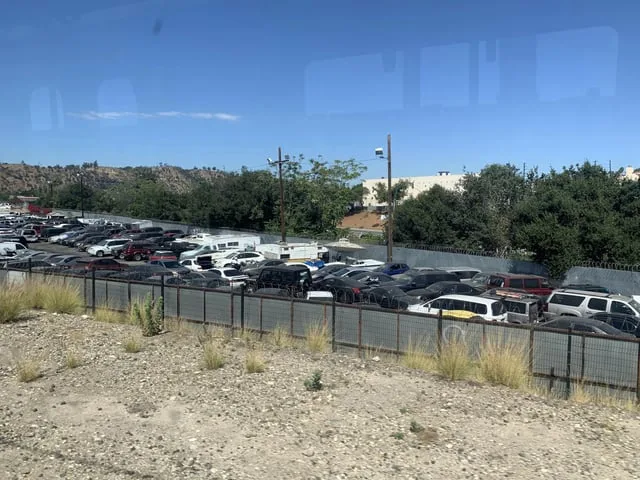
The 30 days run from the date of impoundment. Not from the date you fix the underlying suspension issue. If you get your license reinstated on day three, your car still sits for the remaining 27 days.
You're paying storage for all of them.
There are exactly two ways this gets shortened, and both are rare.
Hardship release. Some counties allow an early release if you can prove the car is absolutely necessary for work, medical treatment, or school. You need documentation. Employer letters, doctor's notes, class schedules.
The decision is made by a judge or a hearing officer, not the tow yard.
Clerical error. If the DMV suspended your license by mistake, wrong person or wrong record, you can get an immediate release. This requires proof and usually a visit to the DMV in person.
For everyone else, it's 30 days. No early exit. No reduced fee.
No exceptions for single parents, essential workers, or people who just made a mistake.
How Much It Really Costs to Get Your Car Back
This is where most people realize they're in trouble. The costs don't just add up. They stack on top of each other, and the total can easily exceed what your car is worth.
| Fee Type | Typical Range | Notes |
|---|---|---|
| Towing charge | $200 to $450 | Flat rate from roadside to impound lot |
| Daily storage | $40 to $75 | Charged for every 24-hour period |
| Administrative release fee | $150 to $300 | Required by police or DMV before release |
| 30-day total | $1,500 to $3,000 | Low end: small town, fast action. High end: metro area, slow response |
If your car sits for the full 30 days, the storage alone can run $1,200 to $2,250 before you add the towing and release fees. For a car worth $4,000, that's more than half its value just to get it back.
The storage fee clock starts the minute the tow truck drops your car at the lot. It does not pause for weekends, holidays, or when the DMV is closed. You're paying for every single day, and the longer you wait, the worse the math gets.
Who Can Retrieve Your Car and What Paperwork You Absolutely Need
This is the rule that trips up more people than anything else. You cannot drive your own car out of the impound lot. Even if you've paid every fee and have your release authorization in hand.
The moment you try to drive away on a suspended license, you're committing another violation. The tow yard will not let you. The law does not allow it.
Only a person with a valid, non-suspended driver's license can retrieve the vehicle. That person must be the registered owner, or an authorized agent with written permission from the owner.
You will need three things to complete the release.
- Proof of identity. A valid California driver's license or ID card for the person picking up the car.
- Proof of ownership. The vehicle's registration document or title. If you're not the owner, you need a notarized letter of authorization.
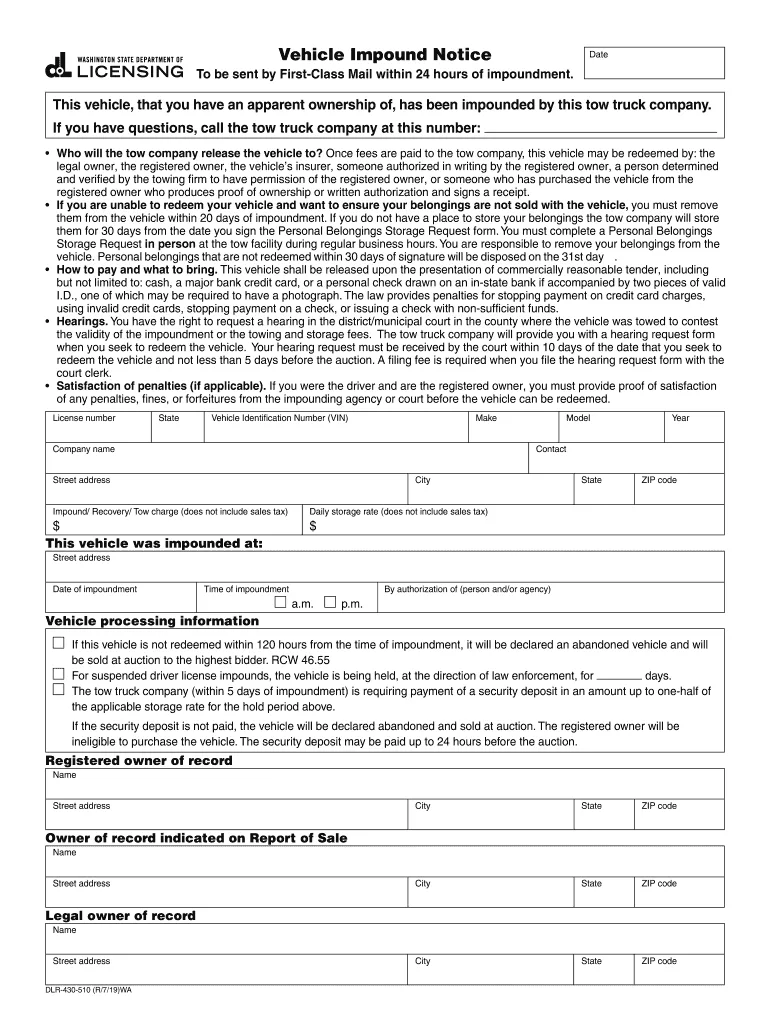
- Release authorization. A form signed by the police agency or DMV that ordered the impound. Usually a Vehicle Release Form, CHP 415 or equivalent. Must be presented to the tow yard before they release the car.
If you cannot find a licensed driver to retrieve your car, your options are limited. You can hire a tow truck to take it directly from the impound lot to your home or a repair shop. The driver must be licensed and the tow company must have your authorization.
You can sell the car while it's still in impound. Some tow yards will facilitate a sale if you sign a release of interest, but you'll lose most of the value to fees. You can let it go to lien sale.
If you don't pay within 30 days, the tow yard can apply for a lien and sell the car to recover their costs. You get nothing.
Most people in this situation choose the first option. Pay a friend or family member with a valid license to drive it out. You'll still pay the fees, but at least you're not stuck with a car you can't legally move.
Does Every California County Handle Impound the Same Way?
You'd think a state law would mean uniform treatment, but California counties have real differences in how they apply the 30-day impound rule. Some jurisdictions are stricter than others. Knowing which one you're in can save you days and hundreds of dollars.
In Los Angeles and San Francisco, the police departments typically enforce the full 30-day hold without exceptions. You'll need a formal hearing to get any kind of early release, and those hearings are booked weeks out. In smaller counties like Riverside or San Bernardino, the CHP and local sheriffs are more willing to approve a hardship release if you show up in person with proper documentation.
The key difference is who signs the release authorization. In some cities, the police department handles it directly. In others, you have to go through the DMV or the county courthouse.
That adds time, and time is money when your car is sitting in a lot.
| County | Typical Release Authority | Hardship Release Availability |
|---|---|---|
| Los Angeles | LAPD or CHP | Rare, requires court hearing |
| San Francisco | SFPD | Rare, DMV approval needed |
| Sacramento | CHP | Moderate, in-person review |
| San Diego | SDPD | Moderate, documentation required |
| Riverside | CHP or Sheriff | Common, same-day approval possible |
If you live in a county with a more lenient policy, your best move is to get the paperwork started the same day the car is impounded. Every hour you wait is another day of storage fees you'll have to pay.
Hardship Release: Can You Shorten the 30-Day Hold?
Yes, but the bar is high. A hardship release allows you to get your car back before the 30 days are up. Only if you can prove that the vehicle is essential for your daily life and that keeping it impounded would cause you significant harm.
The California Vehicle Code doesn't define hardship clearly. Each county sets its own standard. Generally, you need to show one of these three things.
Employment necessity. You have no other way to get to work, and your job is at risk. A letter from your employer is required.
Medical necessity. You have regular medical appointments or need the car for a family member's care. A doctor's note is required.
Educational necessity. You're a student with no alternative transportation, and missing classes would affect your enrollment. A school official's letter is required.
You cannot get a hardship release just because the fees are expensive. Everyone's fees are expensive. The hardship has to be about your ability to function, not your wallet.
Even if you qualify, you'll still need to pay all the towing and storage fees up to the point of release. And you'll still need a licensed driver to pick up the car. The hardship release only shortens the impound period.
It doesn't erase the financial hit.
The Criminal Side: Misdemeanor Charges and What They Mean for You
Driving with a suspended license in California is not just a vehicle violation. It's a criminal offense, and the charge carries real consequences that follow you long after the impound is over.
Under Vehicle Code 14601, driving with knowledge of a suspended license is a misdemeanor. The penalties include up to six months in county jail, fines up to $1,000, probation for up to three years, and an additional one-year license suspension extension.
If you didn't know your license was suspended, the charge drops to an infraction under 14601.1. That's still a fine, but no jail time and no criminal record. The difference is huge, but proving you didn't know is difficult.
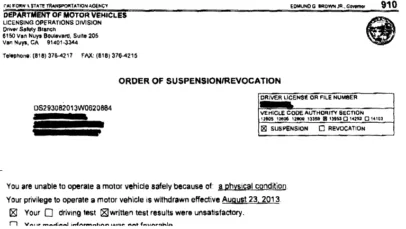
The DMV sends suspension notices to your registered address. If you didn't update your address, the law assumes you received it.
California's three-year rule also applies here. If you have previous convictions for driving on a suspended license within the past three years, the penalties escalate. A second offense within three years can mean a mandatory minimum jail sentence of 10 days.
A third offense can hit 30 days or more.
Most people in this situation don't serve jail time. But the misdemeanor conviction shows up on background checks for jobs, rental applications, and professional licenses. If you're in a field that requires a clean record, this can be a serious problem.
6 Common Mistakes That Make a Bad Situation Worse
Most people who get their car impounded make one or more of these mistakes. They turn a costly situation into an outright disaster.
1. Waiting too long to start the release process. Every day you wait adds storage fees. If you wait a week to sort out your license, you've already added $350 to $500 in charges.
Start the process immediately.
2. Trying to drive the car out of the lot yourself. Even if you've paid every fee and have the release authorization, driving on a suspended license from the lot is a new violation. The tow yard will not let you.
You need a licensed driver.
3. Ignoring the lien sale notice. If you don't pay within 30 days, the tow yard can sell your car to recover their costs. You lose the vehicle and still owe the difference if the sale doesn't cover the full balance.
Don't ignore the paperwork.
4. Not updating your address with the DMV. The DMV sends suspension notices to your last registered address. If you moved and didn't update it, you have no legal defense that you didn't know.
The law assumes you received it.
5. Assuming a friend can just pick it up without paperwork. The tow yard needs proof of ownership and authorization. If your friend shows up without your registration or a notarized letter, they'll be turned away.
You'll have to start over.
6. Paying the tow yard without getting the police release first. Some tow yards will take your money and then tell you they can't release the car without a police authorization. You end up paying twice.
Always get the release form from the police or DMV before you pay any storage fees.
What Happens If You Can't Afford to Retrieve Your Car
This is the worst-case scenario, and it happens more often than you'd think. If you don't have the money to pay the towing, storage, and release fees, or if you can't find a licensed driver to retrieve the car, the tow yard has a legal path to take ownership of your vehicle.
Under California law, a tow yard can file for a lien sale after 30 days of nonpayment. The process works like this.
- The tow yard sends you a notice of intent to sell.
- You have 15 days to respond or pay.
- If you don't respond, the yard applies for a lien sale through the DMV.
- The DMV reviews the application and approves it if all fees are documented.
- The car is sold at auction, and the proceeds go to the tow yard.
You get nothing. You still owe the difference if the car sells for less than the total fees. For a car worth $3,000 with $2,800 in fees, you might break even.
For a car worth $1,500 with $2,200 in fees, you'll owe the balance.
Some people try to sell their car while it's still in impound by signing a release of interest. That's legal, but you'll typically get less than market value. The buyer has to deal with the tow yard's fees.
Most lien sales result in the owner getting zero profit and losing the car entirely.
If you're close to this point, your best option is to call a legal aid service or a traffic attorney. Some attorneys can negotiate a reduced release fee or get the impound period shortened. It's not free, but it's usually cheaper than losing the car.
When You Should Talk to a Lawyer and When You Can Handle It Yourself
Most people don't need a lawyer for the impound itself. The tow yard and the police follow a standard process. You can handle the paperwork on your own if you know what you're doing.
But there are two situations where an attorney is worth the money.
Situation one: you're facing criminal charges. If the officer cited you under 14601, knowing suspension, you're looking at a misdemeanor that can affect your record. An attorney can often negotiate a plea to the infraction version. That keeps you out of jail and off a criminal record.
Situation two: you need a hardship release and the county is being difficult. Some counties require a court hearing to approve a hardship release. An attorney can get that hearing scheduled faster and present your case in the best light.
For everything else, you can handle it yourself. Call the police agency that ordered the impound. Get the release authorization.
Hire a tow truck to take your car to a friend's house if you can't drive it. The system is designed to be navigable without representation.
Your Next Steps: A Clear Action Plan If Your Car Gets Impounded
If you're reading this because it just happened, here's what to do right now.
Step one. Find out which police agency ordered the impound. It will be on the citation or the tow yard's paperwork. Call them and ask for the release authorization form.
Step two. Check your license status online with the DMV. If it's suspended because of a ticket you forgot to pay, pay it. If it's suspended because of an SR-22 lapse, file a new one.
Fix the underlying issue immediately.
Step three. Find a licensed driver who can go to the tow yard with you. Prepare your registration and identification. Do not go alone if you are still suspended.
Step four. Pay the fees. Use a credit card if you have to. Cash is fine but risky.
Do not let the car sit unpaid for more than a week.
Step five. Get the car to a safe location. Then deal with your license suspension separately. The car is only half the problem.
The criminal citation is the other half and needs its own attention.
If you follow this sequence, you'll spend less money and lose less time than if you wait and hope. The impound does not get cheaper with time. It only gets more expensive.
Frequently Asked Questions
How long does my car stay impounded in California?
Your car stays impounded for a minimum of 30 days. That's the law under Vehicle Code 14602.6. The 30 days start when the car is towed, not when you fix your license.
In some counties, you can get a hardship release to shorten it.
Can I get my car back before the 30 days are up?
Yes, but only with a hardship release. You need to prove the car is essential for work, medical care, or school. You'll need an employer letter, a doctor's note, or a school official's letter.
The decision is made by a judge or hearing officer.
What happens if I can't afford to pay the impound fees?
If you don't pay within 30 days, the tow yard can sell your car through a lien sale. You lose the vehicle and still owe any difference if the sale doesn't cover the fees. Call a legal aid service or a traffic attorney before that happens.
Can a friend pick up my car from the impound lot?
Only if that friend has a valid driver's license and proper authorization. You need a notarized letter or proof of ownership. The tow yard will check identification and the release form.
They will not release the car without it.
Does having a suspended license affect my insurance?
Yes. A 14601 conviction is a misdemeanor on your record. Insurance companies see it as high risk.
Your rates will go up, and some companies may drop you entirely. You'll likely need an SR-22 filing for three years to get coverage.
What is the difference between 14601 and 14601.1?
Vehicle Code 14601 is for driving with knowledge of a suspended license. It's a misdemeanor with jail time possible. Vehicle Code 14601.1 is for driving without knowing your license was suspended.
It's an infraction with a fine but no jail. Proving you didn't know is the hard part.