ByMax Lee
Guide to California Abandoned Vehicle Abatement Program and Removal Process
If you've got a car sitting on your street that hasn't moved in weeks, or one dumped on your own property, you're probably wondering what the California abandoned vehicle abatement program and removal process actually looks like. It's not as simple as calling a tow truck and walking away. The system does work, but only if you follow the right steps.
The key distinction comes down to where the vehicle sits. Public property follows a 30-day legal timeline. Private property requires the owner's permission or a separate lien sale process through the DMV.
As of 2026, these rules remain consistent, though local enforcement varies by city. Let's break down what qualifies and how to handle each scenario.
Quick Answer
The California abandoned vehicle abatement program and removal process lets local law enforcement tag, hold, and remove vehicles that have sat on public property for 72 hours or more. Report the car to your police non-emergency line. An officer inspects it.
A 30-day notice goes on the windshield. After that, the city can authorize a tow. On private property, you need the owner's consent or go through a DMV lien sale.
No cost to you on public property.
Why accuracy matters with abandoned vehicles
Getting this wrong can cost you real money. One wrong move, like calling a private tow company without a police report, and you could be on the hook for storage fees. Worse, you could face legal trouble for unauthorized removal.
California law is clear: you don't get to decide when a car counts as abandoned. The law sets the rules. Those rules change depending on whether the vehicle sits on a public street, a private driveway, or land you own.
Before you do anything, you need to know which category you're dealing with. That single detail determines everything that comes next.
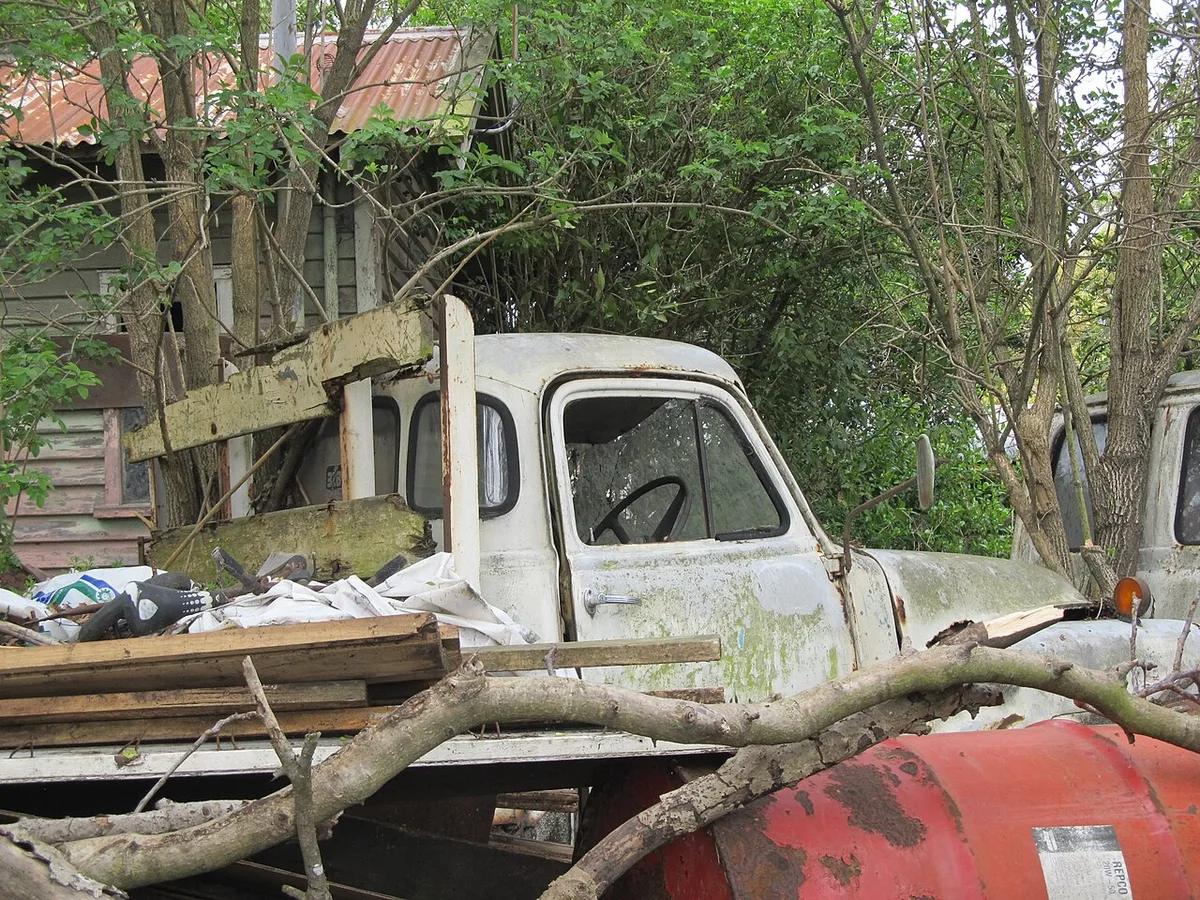
Wikimedia Commons / Riley from Christchurch, New Zealand (CC BY)
The core legal definition: what actually counts as abandoned
This is where most people trip up. They assume "abandoned" means any car that looks neglected or hasn't moved in a while. California's Vehicle Code has a tighter definition.
Under Vehicle Code Section 22523, a vehicle is legally abandoned on public property when it has been left sitting for 72 hours or more without being moved. On private property without the owner's consent, the same law applies. The clock starts the moment you discover it, provided you can prove you didn't authorize it being there.
What doesn't count as abandoned:
- A car parked legally on a public street that gets moved every few days
- A vehicle on your own driveway that belongs to a tenant or family member
- A car with current registration and no visible damage, even if it looks dirty
What does count:
- Missing major parts like an engine, transmission, or wheels
- Expired registration for more than six months
- No license plates at all
- Flat tires and clearly inoperable condition
- A vehicle that hasn't been moved in more than 72 hours on a public street
The officer who responds makes this call on the spot. If the car looks like it could be driven away, they'll note the date and time and return. If it genuinely can't move under its own power, that's a stronger case for abatement.

Wikimedia Commons / Department of Defense. American Forces Information Service. Defense Visual Information Center. 1994
Public vs. private property: the big fork in the road
This single distinction determines your entire path forward. You need to know which one you're dealing with before you make a single call.
If the vehicle is on public property
This includes streets, alleys, public parking lots, and any land owned by the city or county. Even if the car is parked right in front of your house, it's on public property as long as it's on the street side of the curb.
Your process here:
- Call your local police non-emergency line. Don't call 911. Look up the number for your city's traffic or parking enforcement division.
- Provide the exact location, make, model, color, and plate number. If there's no plate, give the VIN from the windshield.
- An officer will come inspect. This can take a few days in busy cities. They'll check if the car meets the legal criteria.
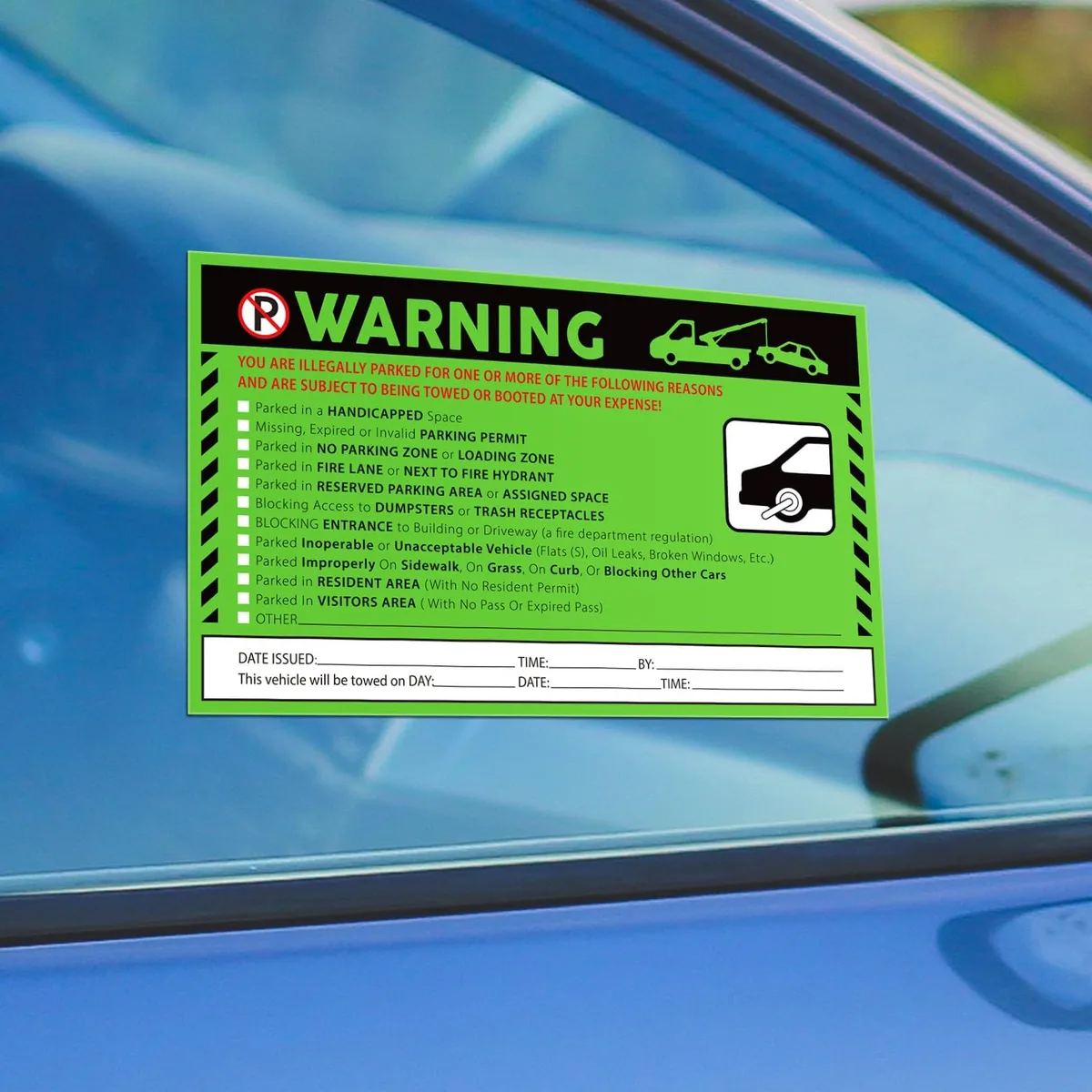
- A 30-day notice goes on the windshield. This orange or yellow sticker is the official start of the waiting period.
- After 30 days, the city can authorize removal. Only then does a licensed tow company get the go-ahead.
You do not pay for this process. The city absorbs the cost.
If the vehicle is on private property
This is where people make expensive mistakes. A car sitting in your driveway, on your lawn, or in a parking spot you own does not give you the right to remove it.
California law says you cannot have a vehicle towed from private property without the registered owner's consent. Even if it's on your land. Even if you're paying the mortgage.
Your options here are more limited:
- Track down the owner. If you can find them, ask them to move it. Simple, but rarely works.
- File a police report. If the car was truly left without your permission, some police departments will help. Most won't for private property.
- Go through a DMV lien sale. This is the legal way to take ownership. It requires certified mail, a 30-day waiting period, and paperwork.
If you skip these steps and call a tow company directly, you're exposing yourself to liability. The owner can sue you for the value of the vehicle plus storage fees.
The 30-day waiting period: why it exists and how it works
This waiting period frustrates everyone, but it's there for a reason. It gives the owner a fair chance to come claim their property before it gets permanently removed.
Once the officer tags the car with the date and time, here's what happens:
- Day 1: The sticker goes on the car. The officer records the VIN, plate, and location.
- Day 7-10: The owner typically has time to notice the sticker. Many cars get moved during this window.
- Day 20-25: If the car hasn't moved, the city starts preparing the removal order.
- Day 30: The authorized tow company can come take it.
If the owner shows up during this window, they can simply drive the car away. No fees, no penalties. The system is designed to avoid conflict.
If they don't show up, the car goes to a storage lot. After 10 days, it either heads to auction if it has value or to a scrap yard if it's a true junker.
The reason this timeline exists is simple: California wants to avoid vigilante towing. You can't just decide a car is abandoned and have it gone the next day. The law protects both sides.
Costs and fees: who pays for what
This is the part most people get wrong. Let's be clear about who pays.
| Scenario | Who pays | Typical cost |
|---|---|---|
| Car on public property, abatement process | City or county | $0 to you |
| Car on public property, you call a private tow | You | $150-300 plus $50-100 per day storage |
| Car on your private property, owner consents | Owner | Towing plus storage |
| Car on your private property, lien sale | You up front | $75-150 for DMV fees |
| Car on your private property, no consent | You if sued | Potentially thousands |
The safest path by far is public property abatement. You pay nothing. The city handles the paperwork and the tow.
The most expensive mistake is calling a private tow company without authorization. They'll charge you for the tow, then hold the car for storage fees. That adds up fast.
If you're dealing with a car on your own property, your best bet is to check with your local police department first. Some cities offer a voluntary abatement program for private property. Most don't.
But it's worth one phone call before you start spending money.
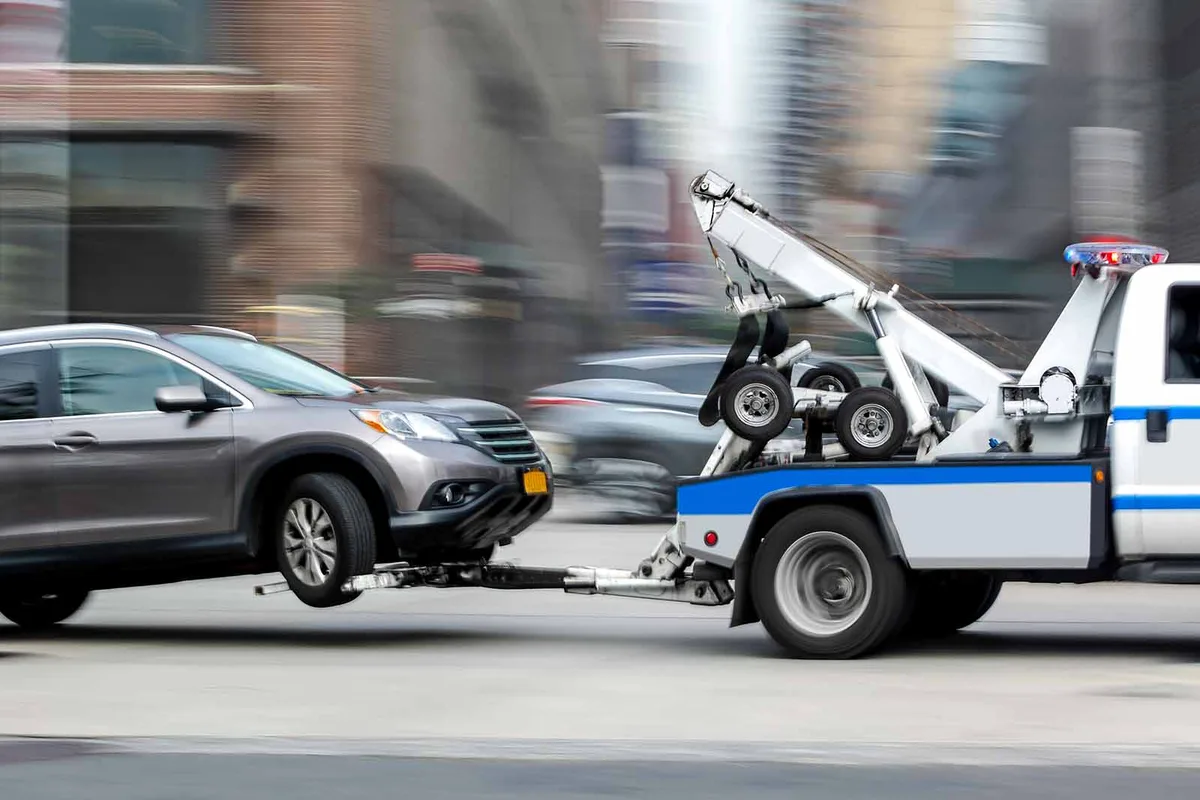
Bing (Web, fair-use with source credit)
Common mistakes that cost you time and money
Let's run through the ones people repeat most often. Skip these and you'll save yourself a headache.
Mistake 1: Thinking "abandoned" means "annoying"
A car that's parked funny but still has current plates and isn't missing parts isn't abandoned. It's just parked badly. You don't get to call for removal just because you don't like how it looks.
Mistake 2: Calling a tow company without a police report
This is the big one. Tow companies in California won't touch a car without a police authorization number or a signed release from the owner. If you try, you're just paying for storage with no end in sight.
Mistake 3: Assuming the 30-day rule applies everywhere
It does. The 30-day waiting period is state law. It doesn't matter how fast your city is.
The car has to sit for 30 days with a sticker on it before anything happens.
Mistake 4: Trying to sell the car yourself
You can't just put a "free car" sign on it or sell it for scrap. California requires you to go through the DMV or the police first. Otherwise, you could be on the hook for theft.
Mistake 5: Ignoring the private property rules
This is where people get sued. You own the land, but you don't own the car. You cannot have it removed without the owner's consent.
That's true even if it's been sitting for months.
When to call the police vs. when to call the DMV
This is a practical split that trips people up. You need to know which agency handles which part of the problem.
Call the police when the car is on public property and hasn't moved in 72 hours. They handle the inspection, the sticker, and the 30-day wait. They also handle cases where the car might be stolen or involved in a crime.
Call the DMV when you own the property and the car is sitting there without your permission. The DMV handles the lien sale process. That's the paperwork that lets you take ownership of the car legally.
The rule of thumb: if the car is on a street you don't own, call the police. If it's on land you do own, call the DMV for the lien sale forms.
The police won't help you with private property removal in most cases. They'll tell you it's a civil matter. The DMV won't help you with a car on a public street.
They don't handle towing.
The first question you ask yourself is simple: whose land is this sitting on?
The lien sale option for private property
If you own the land and the car won't move, the lien sale is your legal way out. It takes longer than you'd like, but it works.
Here's how it goes step by step:
Step 1: Find the owner. Check the VIN through the windshield. Write it down. You can run a VIN check online or take it to the DMV in person.
Step 2: Send a certified letter. The DMV requires you to notify the registered owner by certified mail. You tell them the car is on your property and they have 30 days to claim it.
Step 3: Wait the full 30 days. No shortcuts here. If the owner doesn't respond, you can move to the next step.
Step 4: File the lien sale paperwork with the DMV. This costs around $75 to $150 in fees. You'll need to provide proof that you sent the certified letter and proof that the owner didn't respond.
Step 5: Get a release from the DMV. Once approved, you can sell the car or have it towed. The tow company will want to see that release before they touch it.
The whole process takes about 45 to 60 days from start to finish. It's not fast, but it's the only legal way to handle a car on your property without the owner's permission.
If you skip these steps and just call a tow company, the owner can come back and sue you. The tow company will also refuse to take it without the DMV paperwork. Don't cut corners here.
Real scenarios: what this looks like in practice
Let's make this concrete with a few common situations.
Scenario 1: A car appears on your street
You live in a neighborhood with street parking. A car shows up one day with flat tires and no plates. It sits for three weeks.
No one moves it.
Your move: call the police non-emergency line. Give them the location and plate number. An officer comes, tags it, and the 30-day clock starts.
You do nothing else. After 30 days, the city takes it.
Scenario 2: A tenant leaves a car in your driveway
You're a landlord. A tenant moves out and leaves a junker in the driveway. They're not answering your calls.
Your move: check the VIN. Look up the registered owner through the DMV. Send a certified letter to the last known address.
Wait 30 days. If no response, file the lien sale paperwork. Then you can sell it or scrap it.
Scenario 3: A neighbor's car keeps shifting spots
Your neighbor has a car that technically moves every few days, but it's always on the street. They roll it forward a few feet every 48 hours. It's clearly not abandoned, but it's annoying.
Your move: nothing. The car isn't abandoned under California law. Moving every 48 hours keeps it legal.
The police won't tag it until it sits for 72 hours straight.
Scenario 4: A car is dumped on your commercial lot
You own a business with a parking lot. Someone left a car there and it's been two months. Customers are complaining.
Your move: this is private property. You can't just tow it. Check if the car was reported stolen first.
If not, go through the lien sale process or call the police to see if your city has a commercial property abatement program. Most don't, so the lien sale is your best bet.
Where local ordinances differ across California
Here's a detail most people miss: the state law sets the floor, but your city can add more rules on top.
California Vehicle Code says 30 days for the sticker and 72 hours for the public property threshold. But some cities have their own programs that move faster.
For example:
- Los Angeles has a dedicated abandoned vehicle abatement unit. They respond faster than most cities. But they also have stricter rules about what qualifies.
- San Francisco requires you to report through their 311 system. They don't take phone calls. You have to submit online.
- Sacramento uses the same 30-day rule, but their enforcement is slower. Cars sit longer because officers have more ground to cover.
- Smaller cities like Santa Barbara or Bakersfield often respond within 24 hours. They have fewer cars to deal with.
The takeaway: check your local city website before you assume anything. What works in one city might not work in the next.
Legal warnings: what you cannot do
This section is short but important. There are things that will get you in trouble.
You cannot have a car towed from public property without the 30-day sticker process. If you call a private tow company and they take it, you're breaking the law.
You cannot sell a car that's on your property without going through the DMV lien sale. You don't own it just because it's on your land.
You cannot move a car that's legally parked on a public street. Even if it's ugly. Even if it's been there for a month.
If it has current registration, it's not abandoned.
You cannot remove the orange sticker yourself. That sticker is official notice. Taking it off is a violation.
You cannot ignore a vehicle that's on your property and hope it goes away. It won't. The longer it sits, the more you're on the hook for storage if the owner shows up later.
The safest approach is always the slow one. Follow the legal timeline. Don't rush.
The system is designed to protect everyone, including you.
Expert tips for a smooth outcome
You can speed things up without breaking any rules. A few smart moves make the whole process less painful.
Tip 1: Take photos from day one. Snap the car's position, the plate, and any damage. Date-stamp them. If the owner later claims you moved it, you have proof.
Tip 2: Keep a written log. Note every time you walk past. Write down dates and details. This helps the officer see the pattern.
Tip 3: Talk to your neighbors. Someone else might know who owns the car. A quick conversation can save you weeks of waiting.
Tip 4: Check for stolen vehicle reports. Run the VIN through the National Crime Information Center (NCIC) database. If the car is stolen, the process changes completely.
Tip 5: Don't confront the owner directly. If you know who left it, don't argue. Let the police handle it. Confrontations turn civil disputes into legal ones.
Tip 6: Use your city's online reporting tool. Many California cities let you file a report on their website. You skip the phone call and get a record number faster.
Tip 7: Be patient with the 30 days. It feels long. But every time someone tries to shortcut it, they end up paying more. The waiting period is your protection.
Frequently Asked Questions
What's the first thing I should do if I see an abandoned car?
Call your local police non-emergency line. Give them the location, make, model, and plate number. Don't call 911.
Let them start the inspection process.
Can I have the car towed from my own property?
Not without the owner's consent or a DMV lien sale. California law protects the vehicle owner even when the car is on your land. Follow the lien sale steps.
How long does the whole process take?
About 30 days for public property. Forty-five to sixty days for a private property lien sale. Both timelines are set by California Vehicle Code.
Do I have to pay anything?
No, if the car is on public property through the abatement program. Yes, if you call a private tow company or go through the lien sale on your own land.
What if the car has no plates?
Give the VIN from the windshield to the police. They can run it through DMV records. No plates slow things down but don't stop the process.
Can the owner sue me for removing their car?
Yes, if you didn't follow the law. That's why the abatement program exists. It protects you by creating a paper trail.
Bing (Web (fair-use with source credit))