ByMax Lee
Guide to Colorado Diesel Emissions Opacity Testing Requirements for Heavy Duty Trucks
If you own or operate a heavy duty diesel truck in Colorado, the state's opacity testing requirements are something you will eventually face. Fail the test and your registration renewal stops. Worse, roadside enforcement can hit you with fines or put your truck out of service.
The rules are specific and they change depending on your truck's model year and where you drive.
The test measures visible smoke using an opacimeter. It follows the SAE J1667 snap-idle protocol. As of 2026, Colorado's limits are enforced by the Colorado Department of Public Health and Environment (CDPHE) along with the Colorado State Patrol.
If you want to keep your truck legal and on the road, you need to know the test procedure, the limits, and how to prepare.
Why This Matters — Real Penalties, Real Costs, Real Deadlines
Opacity testing is not a minor nuisance. It is tied directly to your ability to register your truck and operate legally in Colorado. If your truck fails, the DMV will not renew your registration until you provide a passing certificate.
The stakes are real.
- Fines. Roadside enforcement can issue civil penalties for excessive smoke. These range from a few hundred dollars up to several thousand for repeat or intentional violations.
- Out of service orders. The Colorado State Patrol can place your truck out of service on the spot if it emits visible smoke that exceeds legal limits.
- Registration suspension. Without a passing test, your registration lapses. Driving with expired registration adds more fines and potential impoundment.
- Lost revenue. Every day your truck sits because of a failed test or a repair delay costs you money. For owner-operators, downtime hits hard.
The CDPHE Air Pollution Control Division runs the state's diesel inspection program. They set the opacity limits, certify test stations, and track compliance.
Quick Answer — What the Opacity Test Measures and What Pass/Fail Looks Like
The opacity test measures visible smoke from your exhaust. A pass means your truck's smoke stays below the legal limit for its model year. A fail means you need repairs and a retest.
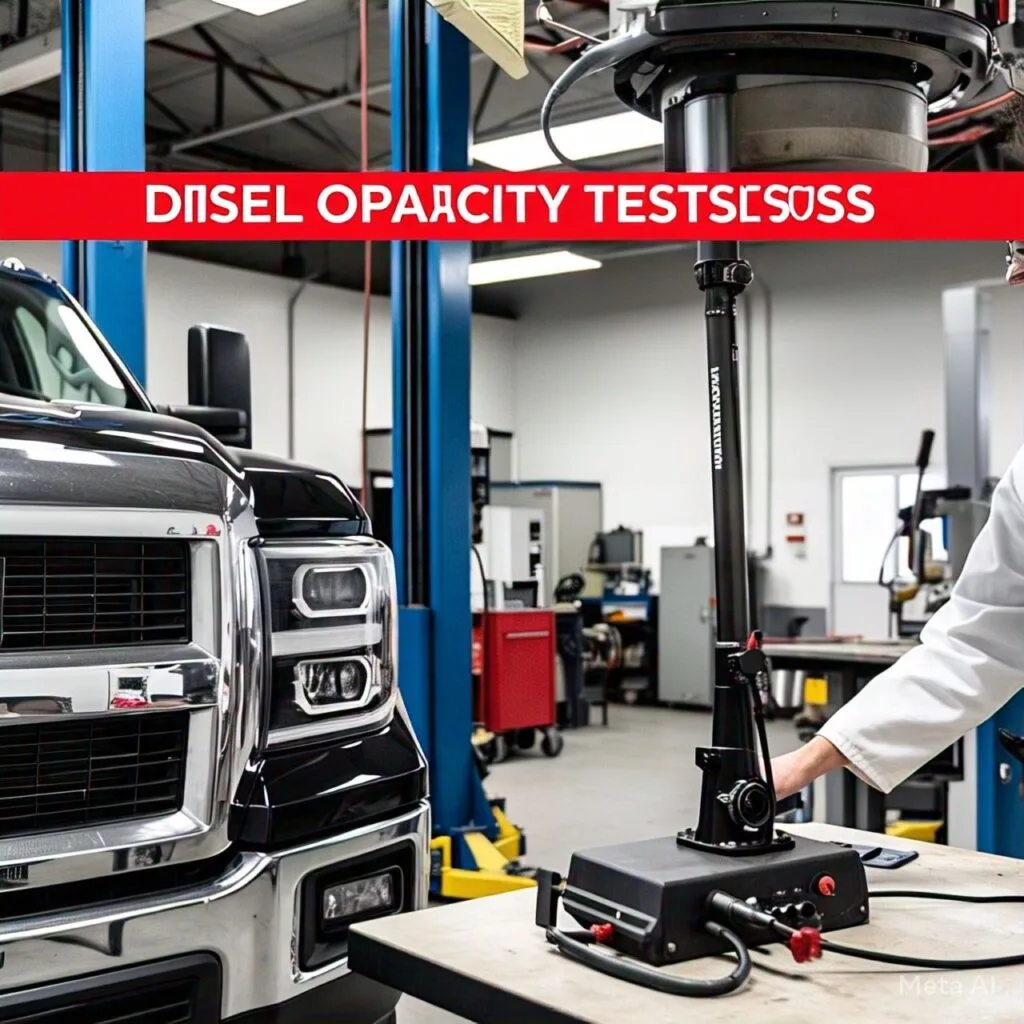
A technician uses an opacimeter. The device shines a light through your exhaust plume and measures how much light gets blocked. More blockage means more smoke.
The reading is a percentage of opacity.
During a snap-idle test, the tech rapidly accelerates your engine to its governed speed and lets it drop back to idle. This happens three times. The peak opacity from those three snaps is what counts.
A pass means your peak opacity is below the limit for your model year. A fail means it is above.
Who Must Test — Which Trucks, Which Model Years, Which Counties
Not every diesel truck in Colorado needs an opacity test. The rules target heavy duty commercial vehicles.
Vehicles that must test:
- Heavy duty diesel trucks with a GVWR over 14,000 pounds
- Model year 1975 and newer
- Trucks registered in Colorado's non-attainment areas
- Trucks that operate in those areas, even if registered elsewhere
Where the requirement applies:
Colorado's diesel program focuses on the Denver Metro area and the North Front Range. That includes counties like Adams, Arapahoe, Boulder, Broomfield, Denver, Douglas, Jefferson, Larimer, Weld, and parts of El Paso.
If your truck is registered outside these areas but you regularly drive into them, you still need to comply. The Colorado State Patrol can stop you anywhere in the state for a roadside smoke check.
Who is exempt:
- Trucks older than model year 1975
- Farm plated vehicles used primarily for agriculture
- Historical vehicles with collector plates
- Trucks registered outside Colorado that do not regularly operate in non-attainment areas
Exemptions have strict conditions. If you claim a farm plate exemption but use the truck for commercial hauling, you can still be cited.
How the Snap-Idle Test Works — The Exact Procedure
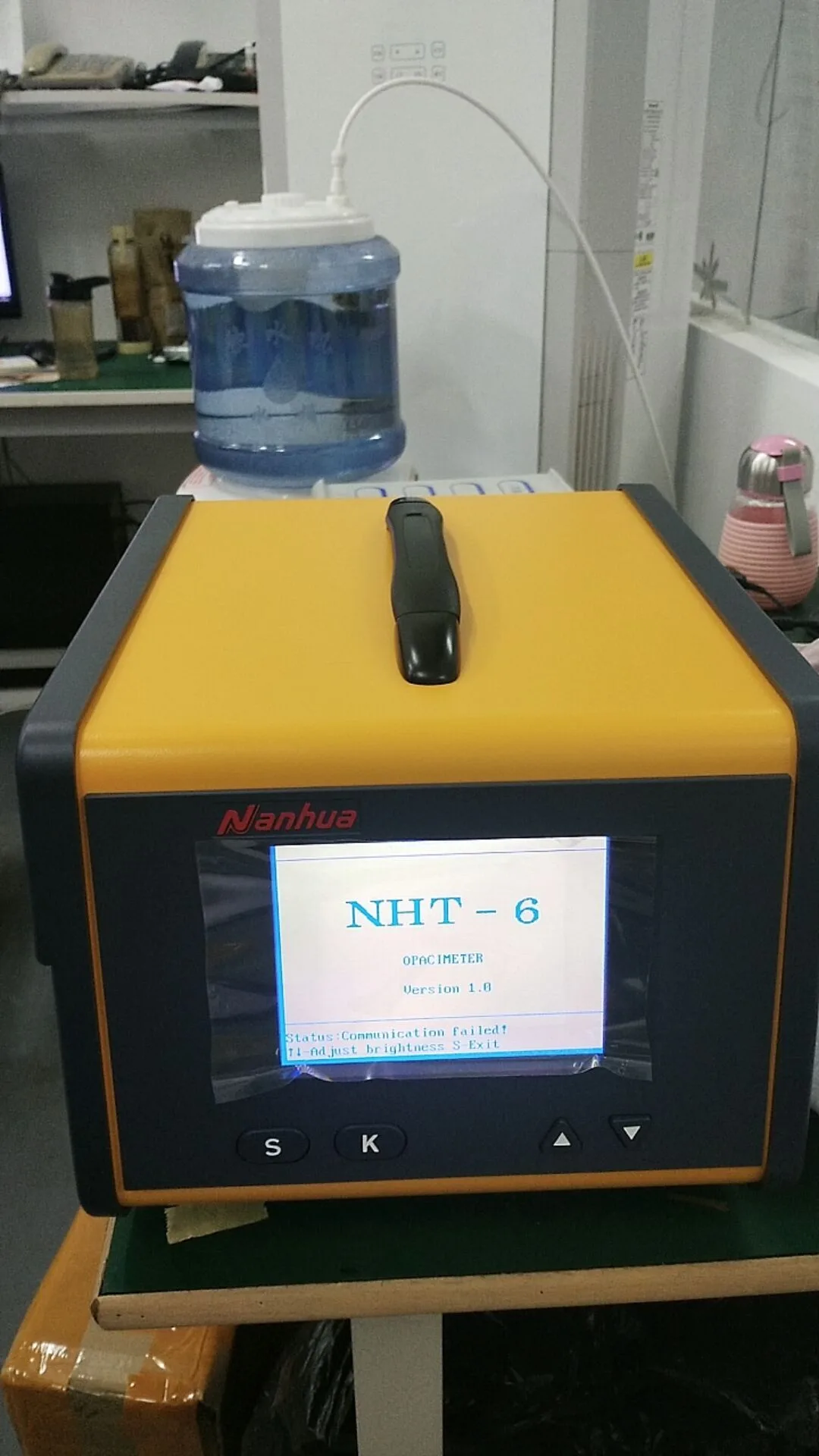
The test follows the SAE J1667 standard. This is the industry protocol for measuring diesel smoke opacity during a snap-idle maneuver.
Before the Test
Your truck must be fully warmed up. The engine oil temperature needs to be at least 140 degrees Fahrenheit (60 degrees Celsius). A cold engine produces more smoke and will likely fail.
The technician will:
- Check the engine for visible leaks or damage
- Confirm the truck is in safe operating condition
- Position the opacimeter probe in the exhaust pipe
- Make sure the transmission is in neutral or park
Do not shut off the engine once you arrive. Let it idle while you check in.
The Snap-Idle Procedure
The technician starts with the engine at normal low idle. Then they floor the accelerator as fast as possible. The engine revs up to its governed high idle speed.
Once it hits that limit, they release the pedal and the engine drops back to idle.
That is one snap.
The procedure repeats three times. Each snap must reach the engine's governed speed. If the engine does not reach that speed, the snap is invalid and gets repeated.
What Gets Recorded
The opacimeter measures opacity continuously during each snap. It captures the peak value. The highest peak from any of the three snaps is the final reading.
The test takes about 10 to 20 minutes total.
What Affects Your Results
Several factors can cause a failure:
- Cold engine temperature
- Clogged air filter
- Dirty fuel injectors
- Turbocharger issues
- Worn piston rings
- Fuel quality problems
Address these before you show up for the test.
Colorado Opacity Limits by Model Year
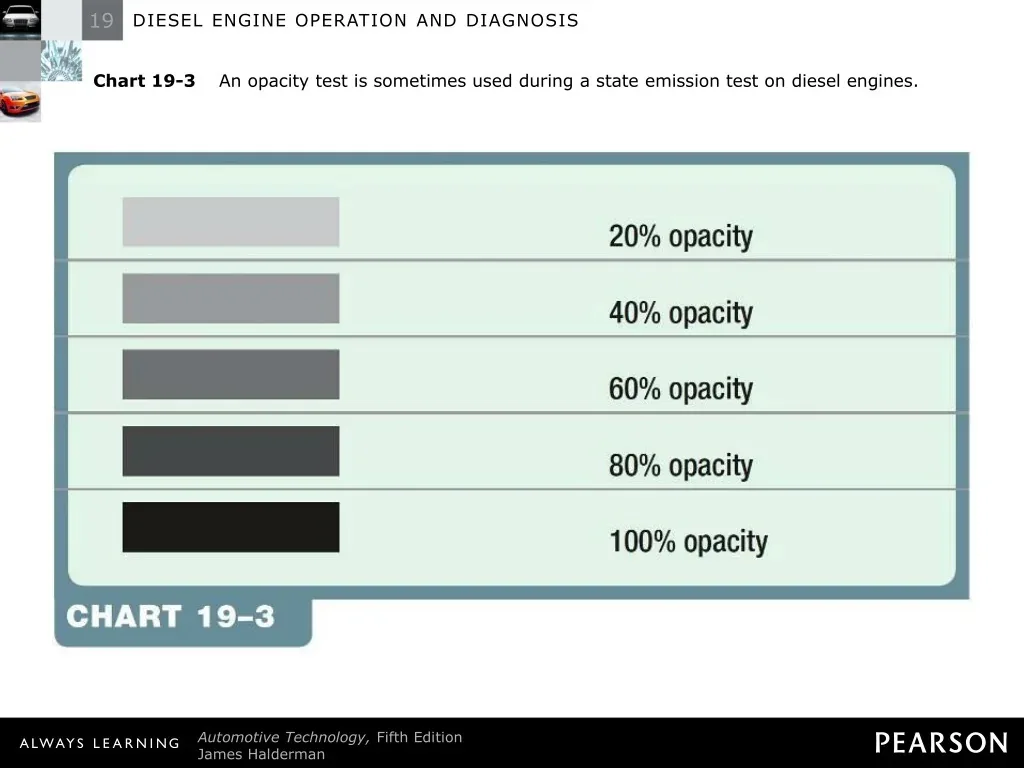
The limit your truck needs to meet depends on its model year. Colorado follows federal EPA standards and adds its own enforcement. Here are the limits as of 2026.
| Model Year Range | Opacity Limit (Peak %) |
|---|---|
| 1975 to 1990 | 55% |
| 1991 to 1996 | 40% |
| 1997 and newer | 20% |
These limits apply during the snap-idle test. They do not reflect steady-state operating conditions. A truck that looks fine at highway speed may blow smoke during rapid acceleration and fail.
Trucks built before 1975 are exempt from the opacity test. However, they cannot emit visible smoke for more than a few seconds. Roadside enforcement can still cite them under Colorado's general visible smoke law.
Newer trucks with diesel particulate filters (DPF) should have no trouble meeting the 20 percent limit. A properly functioning DPF removes nearly all visible soot. If your newer truck fails, suspect a DPF issue, a clogged regeneration cycle, or a tampered emission control system.
Check your truck's model year and know the limit before you go to a test station. Call a certified Colorado diesel test station and ask them to confirm the limit for your specific VIN.
Certified Test Stations — Where to Go and What to Bring
Colorado has about 200 to 300 certified diesel test stations. Most are located along the Front Range. You can find a list on the CDPHE website.
What to bring:
- Your truck's registration
- Payment for the test fee
- A valid driver's license
What to expect:
The test fee ranges from $20 to $50. Some stations charge a reduced fee for retests. Call ahead to confirm pricing and availability.
Stations are independent businesses. They are certified by CDPHE to perform diesel opacity tests. Not all emissions stations for gasoline vehicles handle diesel trucks.
Make sure you go to one that is certified for heavy duty diesel.
Pre-Test Checklist — Cheap Fixes That Keep You from Failing
A little preparation can save you a failed test and a retest. Here is what to check before you go.
- Warm up the engine. Drive the truck for at least 20 minutes before the test. Cold engines produce more smoke.
- Replace the air filter. A clogged air filter restricts airflow and increases smoke. This is cheap and easy.
- Check for fuel leaks. Leaky injectors or fuel lines can cause excess smoke.
- Inspect the turbocharger. Boost leaks or worn turbo seals increase smoke output.
- Run a bottle of diesel fuel additive. A quality cetane booster or injector cleaner can help clean the fuel system.
- Check engine oil level. Overfilled oil can be drawn into the combustion chamber and cause smoke.
These fixes are not expensive. They can make the difference between a pass and a fail.
A little preparation can save you a failed test and a retest. Here is what to check before you go.
- Warm up the engine. Drive the truck for at least 20 minutes before the test. Cold engines produce more smoke.
- Replace the air filter. A clogged air filter restricts airflow and increases smoke. This is cheap and easy.
- Check for fuel leaks. Leaky injectors or fuel lines can cause excess smoke.
- Inspect the turbocharger. Boost leaks or worn turbo seals increase smoke output.
- Run a bottle of diesel fuel additive. A quality cetane booster or injector cleaner can help clean the fuel system.
- Check engine oil level. Overfilled oil can be drawn into the combustion chamber and cause smoke.
These fixes are not expensive. They can make the difference between a pass and a fail.
Failed the Test — Here Is What Happens Next
If your truck fails, do not panic. You have options.
Step 1: Get the report. The station will give you a fail report. It includes the opacity reading and the standard limit.
Step 2: Get it repaired. Take the truck to a diesel mechanic. Common repairs include injector service, turbo rebuild, air filter replacement, or fuel system cleaning.
Step 3: Get a retest. You have 30 days from the fail date to retest and pass. Many stations offer a reduced retest fee. Bring your fail report and proof of repairs.
Step 4: Appeal if needed. If you believe the test was conducted improperly, you can file an appeal with CDPHE. This is rare, but it exists.
Check your vehicle maintenance routine regularly to avoid surprises at the test station.
Roadside Enforcement — How Colorado State Patrol Checks Your Truck
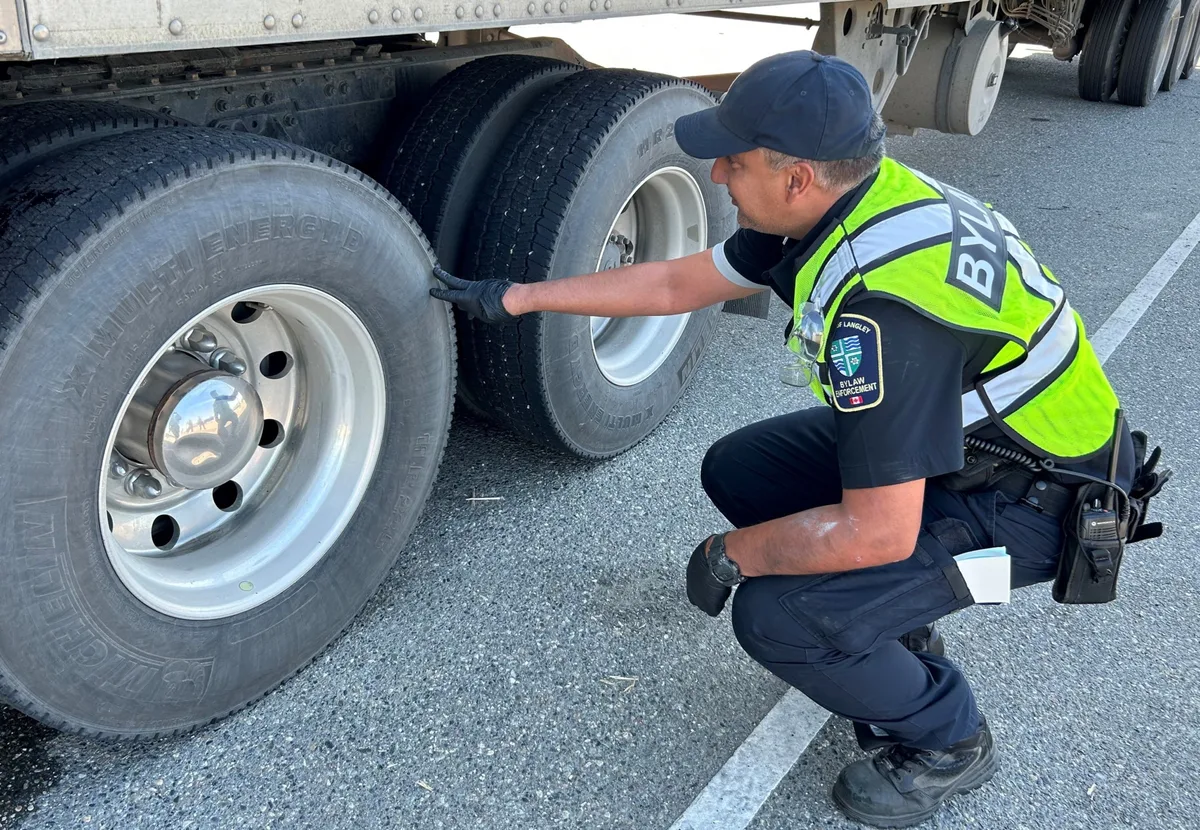
The Colorado State Patrol can check your truck for excessive smoke any time. They do not need a warrant. They can pull you over during a routine traffic stop or at a commercial vehicle inspection point.
What they look for:
- Visible smoke that exceeds legal limits
- Tampered emission control systems
- Defeat devices that bypass emissions equipment
The roadside test:
The officer may perform a snap-idle test on the spot using a portable opacimeter. If your truck fails, they can issue a citation and place the truck out of service.
Penalties:
- First offense: fine up to $500
- Repeat offenses: fines up to $5,000
- Intentional tampering: fines up to $10,000 per violation
Keep your truck in good repair. Even a small amount of visible smoke can get you pulled over.
Common Causes of Opacity Failure — What Mechanics See Most
Diesel mechanics in Colorado see the same issues over and over. If your truck fails, chances are it is one of these.
- Worn fuel injectors. They cause incomplete combustion and excess smoke.
- Clogged air filter. Simple fix, common cause.
- Turbocharger issues. Boost leaks or worn seals increase smoke.
- Worn piston rings or cylinder liners. This allows oil to enter the combustion chamber.
- Incorrect injection timing. This can cause incomplete burn.
- Dirty or low-quality fuel. Water or contaminants in fuel cause smoke.
Start with the easy checks. Air filter, fuel additives, and a good warm-up. If those do not work, see a mechanic.
Cost Breakdown — Test Fees, Repairs, and Retest Expenses
| Item | Cost Range |
|---|---|
| Initial opacity test | $20-$50 |
| Retest (within 30 days) | $10-$30 |
| Air filter replacement | $15-$50 |
| Fuel injector cleaning | $150-$400 |
| Turbocharger rebuild | $500-$2,000 |
| Fuel system cleaning | $100-$300 |
| Diesel additive | $10-$30 |
Repairs can add up. But catching a problem early is cheaper than waiting for a failure on the road.
Legal Pitfalls — Tampering, Defeat Devices, and Penalties
Tampering with your truck's emission control system is illegal under the Clean Air Act. Colorado enforces this aggressively.
What counts as tampering:
- Removing or disabling a DPF
- Installing a tuner that blocks emissions equipment
- Using software to bypass engine controls
- Disconnecting EGR valves
Penalties:
Fines can reach $10,000 per violation. Repeat offenders face higher fines and potential criminal charges.
The Colorado State Patrol looks for these violations during roadside inspections. If they find evidence of tampering, they can issue a citation on the spot.
The smart move: Leave your emissions equipment intact. A properly maintained truck will pass the test. Tampering creates more problems than it solves.
Exemptions and Edge Cases — Farm Plates, Historical Tags, and Out-of-State Trucks
Farm plates. Trucks registered as farm vehicles in Colorado are exempt from opacity testing if used primarily for agriculture. But if you use the same truck for commercial hauling, you lose the exemption.
Historical tags. Collector vehicles with historical plates are exempt. These trucks are usually over 25 years old and used for shows or parades.
Out-of-state trucks. If your truck is registered in another state and you only pass through Colorado occasionally, you are not required to test. But if you operate regularly in non-attainment areas, you must comply.
Check with CDPHE before you assume an exemption applies. The penalties for guessing wrong are steep.
Real Scenario — A Fleet Manager Walked Through a Failed Test
A fleet manager in Weld County brought in a 1999 heavy duty dump truck for its annual opacity test. The truck had 180,000 miles on the original injectors.
The test station ran the snap-idle test three times. The peak reading came back at 38 percent. The limit for a 1999 truck is 20 percent.
Fail.
The manager had the injectors cleaned and replaced the air filter. They also ran a bottle of fuel additive through the system. The truck passed the retest with a reading of 12 percent.
Total cost: $350 for the injector cleaning, $25 for the filter, and $20 for the additive. The retest fee was $15. Total downtime: two days.
The lesson: catch the problem early. A little preventive work saves a lot of time and money.
Frequently Asked Questions
What is an opacity test for a diesel truck?
An opacity test measures how much visible smoke your diesel truck emits. A technician uses a device called an opacimeter during a snap-idle maneuver. The peak reading is compared to the legal limit for your truck's model year.
How much does a diesel opacity test cost in Colorado?
The test fee ranges from $20 to $50 at certified stations. Retests are often cheaper, around $10 to $30. Call ahead to confirm pricing.
What happens if my truck fails the opacity test?
You have 30 days to repair the problem and get a retest. The station gives you a fail report. You need proof of repairs when you come back for the retest.
Are farm trucks exempt from opacity testing in Colorado?
Farm plated trucks used primarily for agriculture are exempt. But if you use the truck for commercial hauling, you lose that exemption. Check with CDPHE for your specific situation.
Can the Colorado State Patrol give me a ticket for visible smoke?
Yes. The State Patrol can pull you over for excessive visible smoke at any time. They can use a portable opacimeter at the roadside.
Fines start at a few hundred dollars.
How can I prepare my truck for an opacity test?
Warm up the engine fully. Replace the air filter. Check for leaks.
Run a fuel additive. These simple steps can help you pass on the first try.