ByMax Lee
Guide to Colorado Emissions Repair Waiver Requirements and $75 Repair Threshold
Your car just failed Colorado's emissions test. The repair estimate looks steep. You've heard something about a waiver and a $75 threshold, but the details are fuzzy.
Can you renew your registration without spending a fortune?
Yes, but only if you follow the rules exactly. As of 2026, Colorado's Air Care program lets you apply for a cost waiver after spending at least $75 on emissions-related repairs. The application fee runs another $50.
That beats a thousand-dollar catalytic converter replacement. The catch is you need to document everything and meet strict eligibility criteria. Here is what you need to know before spending a dime.
Quick Answer
Colorado offers a cost waiver for failed emissions tests. You must spend $75 on qualifying repairs. You must retest and fail again.
You must apply within 90 days. The waiver lets you renew your registration for one cycle. The application fee is $50.
Document every dollar with itemized receipts.
What the $75 Threshold Actually Means
The $75 figure is the minimum you must spend on emissions-related repairs before you qualify for a waiver. It is not a fee you pay the state. It is money you spend at a repair shop on parts and labor that directly address why your car failed the test.
Think of it as a threshold, not a cap. You can spend more than $75. You just cannot spend less.
The waiver exists because Colorado recognizes that some vehicles have emissions problems that are expensive or impossible to fully fix. The state does not want to force you into an endless repair loop.
The $75 threshold only applies after you fail the emissions test. You cannot do preventive maintenance and then claim the waiver. The repairs must happen after the failure and must target the specific failure codes on your Vehicle Inspection Report (VIR).
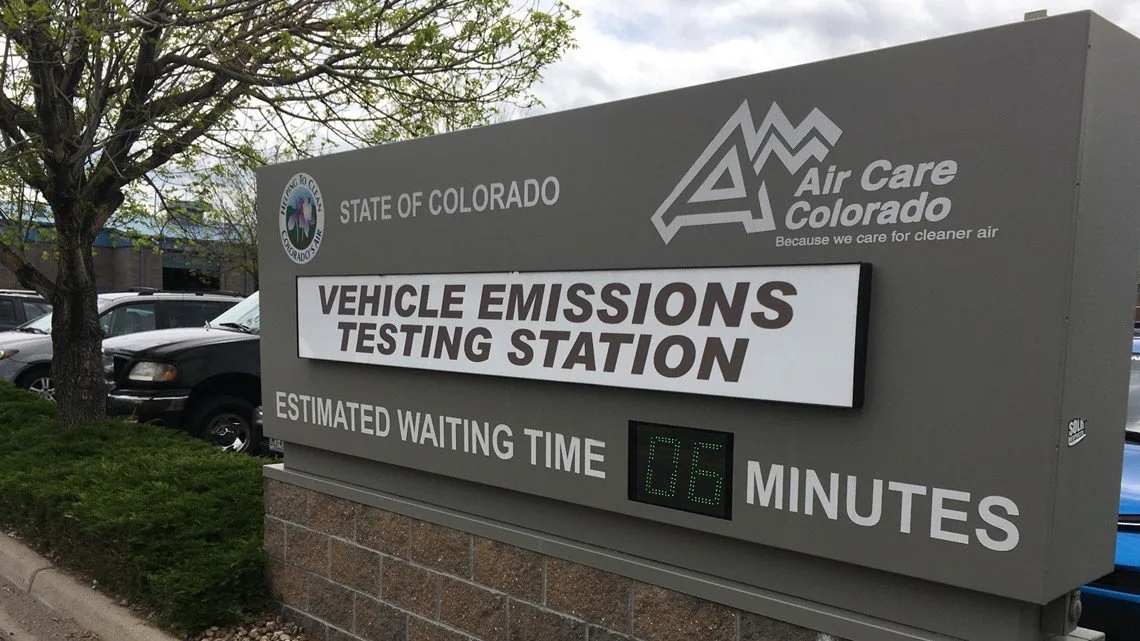
The program is managed by Air Care Colorado under the Colorado Department of Public Health and Environment. The rules are set by the Air Quality Control Commission. Both agencies expect strict compliance.
Skipping a step means starting over.
Bing (Web (fair-use with source credit))
Who Qualifies for the Cost Waiver
Not every vehicle or owner qualifies. Here is who can use it and who should look elsewhere.
Who qualifies
- Vehicles registered in an Air Care Colorado testing county (Adams, Arapahoe, Boulder, Broomfield, Denver, Douglas, Jefferson, Larimer, and parts of Weld County)
- Gasoline vehicles from model year 1982 and newer
- Diesel vehicles from model year 1997 and newer (with some weight exceptions)
- Vehicles that failed the initial test and a retest after repairs
- Vehicles with a valid failed VIR from a certified test station
Who does not qualify
- Vehicles that passed any portion of the test (you must fail overall)
- Vehicles flagged as gross polluters
- Vehicles that have already used a waiver in the current registration cycle
- Vehicles with tampered emission control systems
- Vehicles that had repairs done before the initial test
The waiver is only available once per vehicle per registration period. You cannot stack waivers year after year. Each cycle requires a fresh test, fresh repairs if needed, and a fresh application.
What Counts Toward the $75 Minimum
This is where most people get tripped up. You cannot just spend $75 on any car repair and expect the waiver. The state is specific about what qualifies.
Qualifying expenses
| Expense type | Does it count? | Notes |
|---|---|---|
| Emissions-related parts (O2 sensors, catalytic converter, EGR valve, PCV valve, spark plugs, ignition coils) | Yes | Must be directly related to the failure code on your VIR |
| Labor from a qualified repair facility | Yes | Shop labor charges count toward the $75 minimum |
| Diagnostic fees | Yes | If the shop charges to read your codes and it leads to repairs |
| Parts purchased and installed by a shop | Yes | Parts cost plus labor combined must hit $75 |
Non-qualifying expenses
| Expense type | Does it count? | Notes |
|---|---|---|
| Oil change | No | Routine maintenance, not emissions-related |
| Tire replacement | No | Zero connection to exhaust or fuel system |
| Brake repair | No | Safety item, not emissions |
| Air filter (unless specifically failing) | Rarely | Only if the failure code relates to air intake |
| DIY parts purchased by you | No | No labor charge means you likely cannot hit $75 |
| Repairs done before the test | No | Must happen after the failure to count |
The repairs must address the specific failure. If your car failed for a bad oxygen sensor, you cannot spend $75 on spark plugs and claim the waiver. The retest will show the same failure, and the waiver will be denied.

Bing (Web (fair-use with source credit))
Step-by-Step: How to Apply for a Cost Waiver
The process has five stages. Missing any one means your application gets rejected.
Step 1: Get your initial test failure report
Go to any Air Care Colorado test station. Pay the test fee (currently $25 for most gasoline vehicles). If your vehicle fails, you will receive a Vehicle Inspection Report.
This report lists the specific failure codes. Keep this report. You cannot get a waiver without it.
Step 2: Find a qualified emissions repair facility
Air Care Colorado maintains a directory of qualified emissions repair facilities. These shops are certified to perform emissions work and understand the waiver documentation requirements. A general repair shop may still do the work, but a qualified facility knows how to write receipts that meet the state's standards.
Stick with shops on that list.
Step 3: Make qualifying repairs and save receipts
This is the most critical step. Have the shop diagnose the failure codes from your VIR. Authorize only emissions-related repairs.
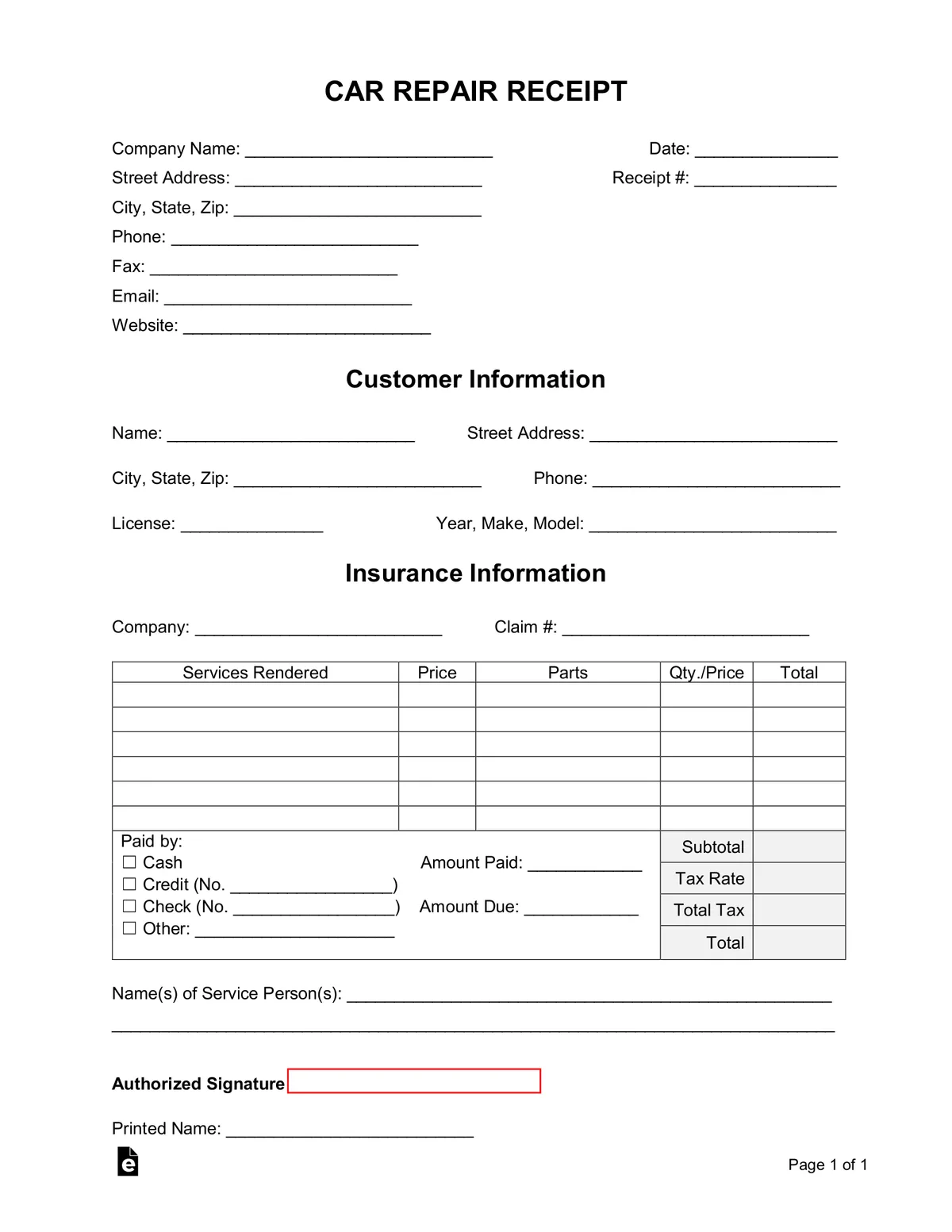
Ask for an itemized receipt that includes the shop name and address, date of service, parts replaced with part numbers, labor hours and hourly rate, and total cost. The receipt must show a minimum of $75 in qualifying work. Keep the original document.
Step 4: Return for the required retest
After the repairs, go back to any Air Care Colorado test station. Pay the retest fee (usually $25 again). You must fail this second test to qualify for the waiver.
Yes, you read that right. The repairs must not bring the vehicle into compliance. If your car passes, you do not need the waiver.
If it fails, you are on track. Keep this second failing VIR as well.
Step 5: Submit the waiver application
Download the Air Care Colorado Waiver Application form from the program website. Fill it out completely. Attach the initial failing VIR, the retest failing VIR, the itemized repair receipt showing $75 or more in qualifying work, and payment for the waiver application fee (currently $50).
Mail the package or submit it in person. Processing takes a few weeks. Once approved, take the waiver certificate to the DMV to renew your registration.
The 90-Day Window: Why Timing Matters
You have 90 days from the date of the initial failed test to complete the entire process. The clock starts the moment the test station prints your first VIR. Exceed that window and your application is automatically denied.
Start the same day you get the failure report. Ask the shop upfront if they can finish within two weeks. Schedule the retest immediately after repairs.
Submit your application the same day you get the second VIR.
If you miss the deadline, your only options are to keep repairing until the car passes or explore the vehicle retirement program. Neither path is cheaper or easier.
Gross Polluter Designation: When the Waiver Won't Help
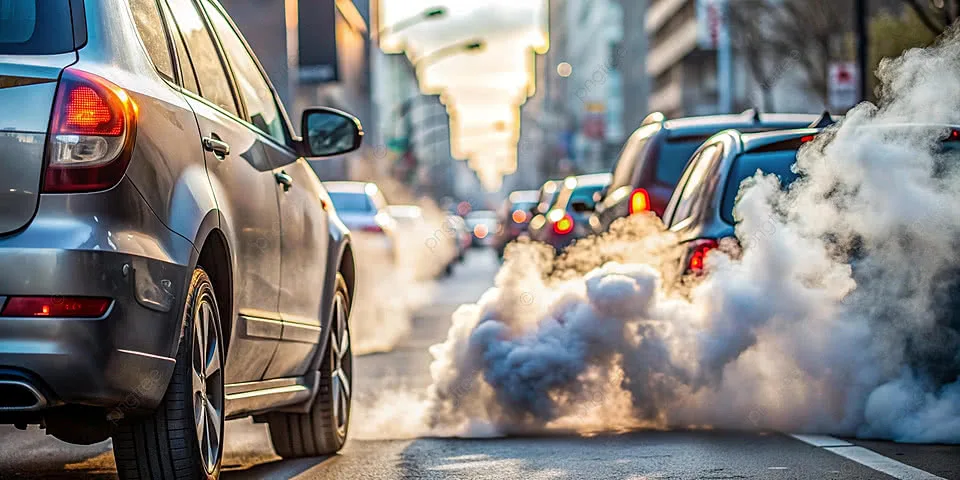
A gross polluter is a vehicle emitting more than twice the legal limit for any pollutant. The designation appears clearly on your VIR. If you see those words, stop reading about cost waivers.
You are not eligible.
The state excludes gross polluters because these vehicles produce significantly more pollution than the fleet average. Colorado's air quality regulations treat them as a priority problem. They want those cars either fixed or off the road.
Your options if labeled a gross polluter include fully repairing the vehicle until it passes, participating in the Colorado Vehicle Retirement Program, selling the vehicle out of state with full disclosure, or storing it as non-operational. None of these are cheap. But the waiver is not available.
Do not waste money on the $75 repair threshold if you are a gross polluter.
Bing (Web (fair-use with source credit))
Common Mistakes That Get Waiver Applications Denied
Missing or incomplete documentation is the number one reason for rejection. You need both failure VIRs and an itemized receipt. If any document is missing, the application bounces back.
Wrong repairs cause the second most common denial. Spending $75 on a transmission flush or a new battery does not count. The repairs must match the specific failure codes on your VIR.
A mechanic who is not certified in emissions work may not know which repairs qualify.
DIY repairs without labor costs also trip people up. If you buy a $75 part and install it yourself, you have no labor charge. The state may still accept your parts-only receipt if you document everything thoroughly.
But in practice, DIY work rarely meets the threshold. Use a shop for certainty.
Waiting too long is the final trap. That 90-day window closes fast. Start immediately and do not delay.
Bing (Web (fair-use with source credit))
Cost Waiver vs. Other Options
The cost waiver is not your only choice. Depending on your income and the vehicle's condition, another path may work better.
Economic hardship waiver. This is for low-income owners. Instead of a $75 threshold, you spend 3.5% of your household income on qualifying repairs. If that amount is less than $75, you may qualify.
You need proof of income and the same documentation process. It is harder to get due to income verification, but it can be a lifesaver.
Full repairs. Sometimes the cheapest path is fixing the car. If the failure code points to a cheap part like a gas cap or a loose hose, the repair may cost under $50. A $20 gas cap beats a $75 repair plus a $50 application fee.
Vehicle retirement. This is final but practical for old cars with multiple failures. Colorado pays you scrap value, and you get a certificate exempting you from the registration penalty. You can use that certificate on a replacement vehicle.
Legal and Compliance Risks
Falsifying documents or lying on a waiver application is fraud. Colorado takes this seriously. Fabricate a repair receipt or claim work that was not done, and you face fines and potential legal action.
The Air Care program cross-checks receipts against shop records. If a shop says they never performed that repair, your application is flagged. Repeat violations can lead to registration suspension.
Always use legitimate shops. Always get real receipts. Never inflate the cost of parts or labor.
The $75 threshold is low enough that cheating is not worth the risk.
The waiver does not transfer to a new owner. If you sell the vehicle, the buyer must pass emissions in their own name. Disclose the waiver history honestly.
Hiding it can void the sale later.
Frequently Asked Questions
Can I get a waiver if my car failed for a loose gas cap?
Probably not. A loose gas cap is an easy fix. Replace the cap for under $20 and retest.
The waiver requires $75 in repairs. If the only problem is a gas cap, you cannot meet the threshold.
Do I have to use a specific repair shop?
Not exactly. You can use any licensed shop. But the shop must provide an itemized receipt that Air Care Colorado accepts.
Using a qualified emissions repair facility from the official directory is the safest bet.
How long does the waiver last?
The waiver is valid for one registration period. That is usually one year. Next year you must test again and go through the process if you fail again.
What happens if my application is denied?
You can appeal the decision within 30 days. Contact Air Care Colorado for the appeals process. Most denials come from missing documents, so double-check your paperwork before submitting.
Final Decision Guide
Use the cost waiver if your vehicle failed for a moderately expensive emissions problem and you spent at least $75 on qualifying repairs. The retest must still show a failure. You need all your paperwork in order within the 90-day window.
Skip the waiver if your vehicle is a gross polluter (you cannot use it) or if the repair is cheap and easy to fix. The hardship waiver may be cheaper if your income qualifies. When in doubt, check the official Air Care Colorado website or call their helpline.
The staff can walk you through your specific situation.
For more vehicle ownership tips, browse our automotive blog. Keeping your car in good shape makes registration smoother.