ByMax Lee
Guide to Colorado Late Registration Fines and Prorated Back Tax Collection Rules
If you've let your Colorado vehicle registration lapse, you're not alone. But the longer you wait, the more complicated and expensive it gets. Understanding Colorado late registration fines and prorated back tax collection rules is the first step to getting your car legal again without overpaying.
As of 2026, the state's Specific Ownership Tax (SOT) is calculated on a prorated basis. You only owe for the months you actually owned the vehicle during a lapse. But late penalties stack on top of that tax.
And the formula isn't always obvious. Let's walk through exactly how it works, what you'll owe, and how to fix it.
Quick Answer
Colorado late registration fines and prorated back tax collection rules work together. You pay back taxes prorated by month. Plus a monthly penalty of roughly 1% of the tax owed.
The penalty caps at about 12%. Interest also accrues on unpaid amounts. The total grows every month you delay.
Why Getting This Wrong Costs Real Money
Letting your registration expire for a few months might seem like no big deal. Maybe you forgot to renew on your birthday. Or you were out of state.
Or the emissions test slipped your mind.
The problem is that Colorado's system doesn't reset when you finally go to renew. It tallies up every month you were delinquent. It adds the prorated back tax.
It tacks on penalties. Then it throws in interest on top. What started as a $50 tax bill can balloon into a few hundred dollars.
The most common mistake people make is waiting too long because they think the penalty is a flat fee. It's not. It's percentage-based.
Higher-value vehicles get hit harder. A $40,000 SUV sitting unregistered for six months can accrue significantly more in penalties and interest than a $10,000 sedan.
Here's the kicker: you can't renew online once you're past a certain delinquency window. That means a trip to the county clerk's office. For many Coloradans, that involves taking time off work.
The whole experience is frustrating. And it's completely avoidable if you understand the math upfront.
How Colorado's Late Registration Penalties Actually Work
Colorado's late registration penalty system follows a simple formula. Here's the breakdown.
The Monthly Penalty Rate
The state charges roughly 1% per month on the unpaid Specific Ownership Tax. That 1% is applied to the original tax amount for each full or partial month you're late.
Consider a vehicle with an annual SOT of $240. That's $20 per month in tax. If you're three months late, you owe $60 in back tax.
The penalty is 1% of the unpaid balance each month. So you're looking at roughly $0.60 per month in penalties. After three months, that's about $1.80 on top of the $60 in tax.
The penalty compounds on the unpaid tax balance. And interest accrues separately on the total unpaid balance.
The Maximum Penalty Cap
Colorado caps the late penalty at 12% of the tax owed. If your annual SOT is $240, the maximum penalty you'll ever face is about $28.80. That cap exists to prevent penalties from exceeding the tax itself.
But don't let that lull you into thinking waiting a year is okay. Interest keeps accruing. And the back tax still needs to be paid in full.
Interest on Unpaid Back Taxes
In addition to the penalty, Colorado charges interest on unpaid back taxes. The interest rate adjusts annually based on state law. As of 2026, it's around 6% to 8% per year.
It's applied to the total unpaid balance.
Interest is calculated from the original due date until the date you pay. So even after the penalty caps at 12%, interest keeps piling up.
| Component | Rate | Notes |
|---|---|---|
| Monthly penalty | ~1% of unpaid tax | Applied per month delinquent |
| Maximum penalty | 12% of tax owed | Cap reached after about 12 months |
| Interest | ~6-8% annually | Applied to total unpaid balance |
| Back tax (SOT) | Full prorated amount | Based on vehicle value and months owned |
Prorated Back Tax Explained (Without the Confusion)
Prorated back tax sounds complicated. It's actually straightforward. You only pay for the months you owned the vehicle during the lapse period.
Not the full year.
How the Prorated Tax Calculation Works
Colorado's Specific Ownership Tax is an annual tax based on your vehicle's value. The rate depends on the vehicle's age and original MSRP. The state publishes a tax table.
The short version: newer, more expensive vehicles pay higher SOT.
When your registration lapses, the state doesn't charge you for the full year. Instead, it calculates how many months you were unregistered. Then it charges a prorated share.
The formula is simple:
Prorated Tax = (Annual SOT ÷ 12) × Number of Months Delinquent
If your annual SOT is $240 and you're six months late, you owe $120 in back tax.
What Affects Your SOT Rate
Your Specific Ownership Tax depends on two main factors:
- Vehicle age: Newer vehicles have higher SOT. The rate drops each year until the vehicle is about 10 years old.
- Original MSRP: More expensive vehicles have higher SOT. That's true even after they're used.
Colorado also adjusts SOT for inflation occasionally. But the general trend is clear: newer means higher, older means lower.
A Real Example
Let's say you bought a used SUV for $25,000 in 2022. Its annual SOT might be around $180. If you let your registration lapse for four months, the prorated back tax would be:
$180 ÷ 12 = $15 per month × 4 months = $60 in back tax
Add penalties of about $0.60 per month for four months. That's roughly $2.40. Plus interest on the $60 at 7% annual rate for four months.
That's about $1.40.
Total cost: about $63.80. Plus any late registration processing fees from your county clerk's office.
That's not a huge amount. But it adds up fast if you wait longer or drive a higher-value vehicle.

The Exact Penalty Timeline You Need to Know
Colorado's system doesn't all happen at once. Here's how the timeline unfolds.
Month 1: The Grace Period
Your registration expires on your birthday each year. You technically have a few months of grace before the state considers you delinquent. That grace period is typically 1 to 3 months.
It depends on your county and how the system processes renewals.
During the grace period, you can still renew online without penalty. The state doesn't charge back tax or late fees for these first few weeks.
Month 2 to 3: First Late Penalty Applies
Once you're past the grace period, the clock starts ticking. The first late penalty applies. Interest also starts accruing on the unpaid balance.
At this stage, you can still renew online in many cases. But the system will calculate the prorated back tax plus the penalty and interest.
Month 4 to 12: Monthly Penalties Stack
For each subsequent month, another 1% penalty is added. Interest continues to accrue. Your total bill grows steadily.
After about 3 to 4 months of delinquency, many county systems lock you out of online renewal. You have to visit the county clerk's office in person. Bring proof of insurance, a valid emissions test (if required), and payment.
Past 12 Months: Maximum Penalty Reached
Once you're 12 months late, the penalty caps at 12% of the tax owed. But interest keeps going. And the back tax still needs to be paid in full.
At this point, you're also at higher risk of getting a ticket for expired registration. Police can cite you for driving with expired tags. The fine is typically $100 to $200 in Colorado.
When a Ticket Happens
If you get pulled over for expired registration, the officer will usually issue a citation. You can pay the fine or appear in court. But the citation doesn't fix your registration status.
You still need to renew and pay the back taxes and penalties separately.
Some counties allow you to show proof of renewal to have the ticket dismissed. But not all. The ticket adds another layer of cost and hassle.
Mistakes That Make a Bad Situation Worse
Even with good intentions, people make these common mistakes. Here's what to avoid.
Mistake 1: Assuming You Can Just Renew Online
This is the biggest trap. After a few months of delinquency, the online system locks you out. You can't renew on myDMV.Colorado.gov if you're past the grace window.
You have to visit your county clerk's office in person.
Don't assume you can handle it from your couch. Check your status online first. But be prepared for a trip downtown.
Mistake 2: Ignoring the Emissions Test Requirement
If you live in one of Colorado's emissions-testing counties (Denver metro, Boulder, Larimer, and others), you need a passing emissions test before you can renew. That's true even for a late renewal.
You can't just show up at the DMV with cash. You need a valid emissions certificate. It must be from within the past 90 days.
If your test expired while your registration was lapsed, you'll need a new one.
Mistake 3: Thinking a Ticket Covers the Late Fees
A ticket for expired registration doesn't waive the late fees or back taxes. You still have to pay the state the full amount owed. The ticket is a separate penalty from the city or county.
Don't pay the ticket and think you're done. You still need to renew your registration properly.
Mistake 4: Waiting Until You Get Pulled Over
Some people drive on expired tags until they get a ticket. That's risky. A ticket adds $100 to $200 in fines.
If you get into an accident with expired registration, your insurance company might deny coverage or increase your rates.
If you're pulled over multiple times, you could face vehicle impoundment. The consequences stack.
Mistake 5: Not Understanding Prorated vs. Full-Year Tax
A common question is whether you have to pay the full year's tax if you're late. The answer is no. You only pay for the months you were unregistered.
The system automatically calculates this when you renew.
Just be aware that the total you pay when renewing late includes back tax, penalties, and interest. It's not just the current year's registration fee.
Step-by-Step: How to Fix an Expired Registration
Fixing a lapsed registration in Colorado follows a clear process. Here's what to do.
Step 1: Check Your Online Eligibility
Go to myDMV.Colorado.gov and log in. Check whether your registration is eligible for online renewal. If it's been more than a few months since expiration, you'll likely get a message saying you need to visit a county office.
Don't try to bypass this. If the system says go in person, that's your answer.
Step 2: Get Your Emissions Test (If Required)
If you live in an emissions-testing county, get a valid emissions test first. The certificate must be dated within the last 90 days. Keep the paperwork.
Even if you plan to renew in person, many county offices can't process your renewal without a current emissions certificate in their system.
Step 3: Gather Your Documents
Bring these items to the county clerk's office:
- Proof of insurance (current, valid for the vehicle)
- Valid emissions certificate (if required)
- Previous registration card (if you still have it)
- Driver's license
- Payment for back taxes, penalties, interest, and current registration fees
Call ahead to confirm what your specific county requires. Some counties have slightly different procedures.
Step 4: Visit Your County Clerk's Office
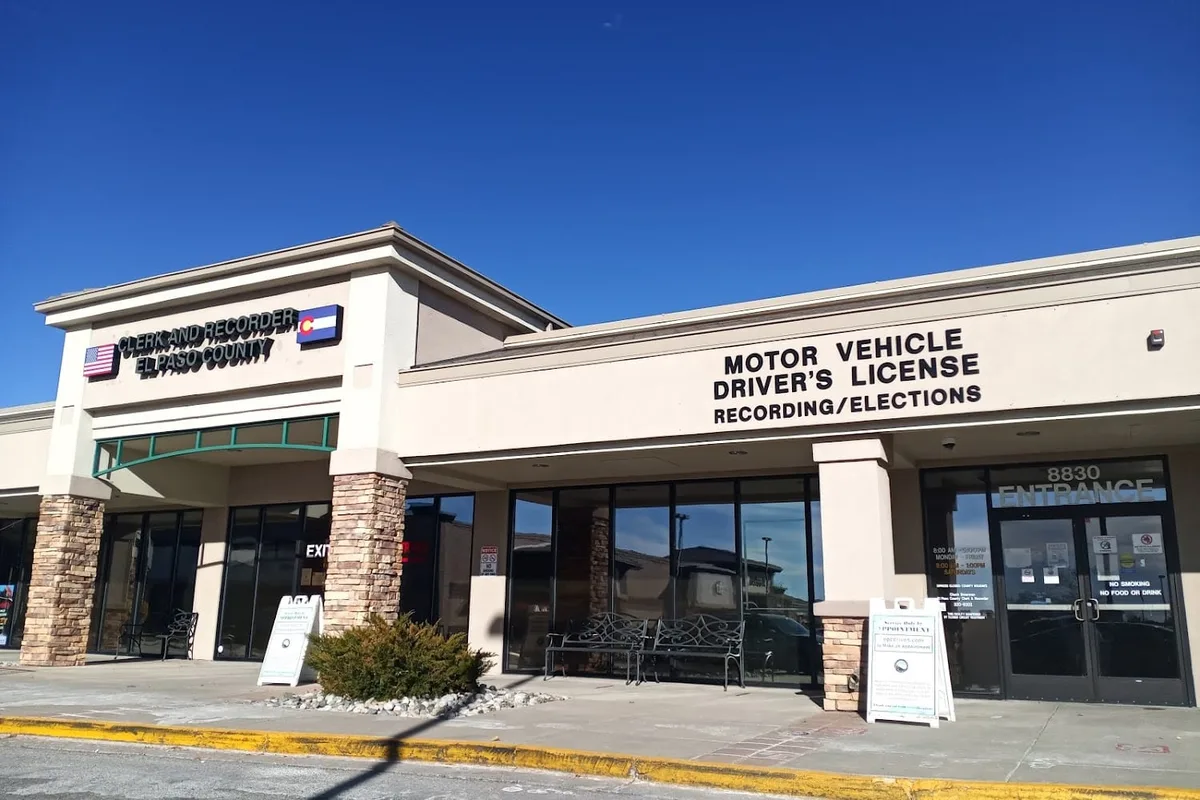
Go to your county clerk and recorder's motor vehicle office. Tell them you need to renew a lapsed registration. They'll look up your vehicle, calculate the total owed, and process the payment.
Expect to wait. County offices can be busy, especially at month-end. Go early in the morning if possible.
Step 5: Pay the Total Amount Owed
You'll need to pay:
- Prorated back taxes for the months you were delinquent
- Late penalties (1% per month, capped at 12%)
- Interest on the unpaid balance
- Current year's registration fee (if it's time to renew)
Some counties accept credit cards. Others prefer cash or check. Ask beforehand.
Step 6: Get Your New Registration and Stickers
Once paid, you'll receive your current registration card and license plate stickers. Make sure the expiration date on the sticker matches your birthday for the current year.
Apply the sticker to your plate immediately. You're now legal to drive.
Can You Get the Penalty Waived or Reduced?
Penalty waivers are rare in Colorado. The state doesn't have a standard "first-time forgiveness" program. But there are a few scenarios where you may get some relief.
When Waivers Are Possible
If you can prove the lapse was caused by circumstances outside your control, your county clerk may have discretion to reduce or waive penalties. Examples include:
- Medical emergency that prevented you from renewing
- Military deployment
- Natural disaster affecting your area
- Administrative error by the DMV or county office
You'll need documentation. A note from a doctor, deployment orders, or proof of the administrative error.
When Waivers Don't Apply
Simple forgetfulness won't qualify. Neither will being out of town for work or not having the money. The state expects you to renew on time or request an extension before the expiration date.
How to Request a Waiver
Talk to the clerk at your county office. Explain your situation. Bring supporting documents.
The clerk will review your case and decide.
There's no guarantee. But it's worth asking if you have a legitimate reason.
Payment Plans and Other Options When You Can't Pay in Full
Colorado does offer payment plans for vehicle registration in some cases. But they're not automatic. You have to request one.
How Payment Plans Work
Payment plans allow you to pay the total amount owed over several months. You'll typically need to make a down payment first. Then you pay the balance in installments.
Interest continues to accrue on the unpaid portion during the plan. So the total cost will be higher than paying in full upfront.
Who Qualifies
Payment plans are generally available for financial hardship cases. You'll need to show proof of income, expenses, and why you can't pay the full amount at once.
Each county has its own rules. Call your county clerk's office to ask about payment plan availability.
Other Options
If you can't pay at all, you can voluntarily surrender your license plates. That stops the clock on penalties and interest. You won't be able to drive the vehicle until you register it again.
Another option is to sell the vehicle. The new owner would handle registration. You'd need to notify the state of the sale.
Real Numbers: What a 3-Month vs. 6-Month vs. 1-Year Lapse Costs
Here's a realistic comparison based on a vehicle with an annual SOT of $240.
| Lapse Duration | Back Tax (SOT) | Penalties (1%/mo) | Interest (7% annual) | Total |
|---|---|---|---|---|
| 3 months | $60 | $1.80 | $1.05 | $62.85 |
| 6 months | $120 | $7.20 | $4.20 | $131.40 |
| 12 months | $240 | $28.80 (capped) | $16.80 | $285.60 |
These numbers assume no late registration processing fees from the county. Some counties charge a small fee for in-person renewals.
For a higher-value vehicle with a $600 annual SOT, the numbers multiply:
| Lapse Duration | Back Tax (SOT) | Penalties (1%/mo) | Interest (7% annual) | Total |
|---|---|---|---|---|
| 3 months | $150 | $4.50 | $2.63 | $157.13 |
| 6 months | $300 | $18.00 | $10.50 | $328.50 |
| 12 months | $600 | $72.00 (capped) | $42.00 | $714.00 |
The pattern is clear. Every month you wait adds to the total. Even a short lapse costs more than renewing on time.
When You Actually Need Professional Help
Most Colorado late registration situations can be handled on your own. But there are times when getting professional help makes sense.
When to Hire a Registration Service
Consider a professional registration service if:
- Your vehicle has been unregistered for more than a year
- You have multiple vehicles with lapsed registrations
- You're dealing with a salvage or rebuilt title
- Your vehicle was impounded due to expired registration
- You have outstanding tickets that need to be resolved first
Registration services charge a fee. But they handle the paperwork, visits to the county office, and communication with the DMV. For complex cases, it can save you time and frustration.
When to Talk to a Lawyer
Legal help is rarely needed for standard late registration. But consider a lawyer if:
- You've been charged with a criminal offense related to registration fraud
- Your license has been suspended due to registration issues
- You're facing a lawsuit related to an accident that happened with expired registration
These situations are serious. A lawyer who handles traffic and vehicle law in Colorado can advise you on the best path.
Frequently Asked Questions
How much is the late registration penalty in Colorado?
The penalty is roughly 1% per month on the unpaid Specific Ownership Tax. It caps at 12% of the tax owed after about 12 months. Interest also accrues on the unpaid balance at around 6% to 8% per year as of 2026.
Can I renew my Colorado registration online if I'm late?
You can renew online during the grace period and for a few months after expiration. Once you're past that window, typically 3 to 4 months, you'll need to visit your county clerk's office in person.
Do I have to pay back taxes on an expired registration in Colorado?
Yes. Colorado charges prorated back taxes for the months you were unregistered. The amount depends on your vehicle's annual Specific Ownership Tax and how many months you let the registration lapse.
What happens if I get a ticket for expired registration in Colorado?
You'll face a fine of $100 to $200. The ticket doesn't resolve your registration status. You still need to renew and pay the back taxes, penalties, and interest separately from the ticket.
Can I get the late penalty waived in Colorado?
Waivers are rare. They're generally only available for circumstances outside your control, like a medical emergency or military deployment. You'll need documentation, and the decision is up to your county clerk.
How long can I drive with expired registration in Colorado?
There's no legal grace period to drive with expired tags. You can get ticketed immediately after your registration expires. Some counties allow a few weeks to renew online without penalty, but you're still technically driving illegally.
Your Action Plan, Based on Your Situation
Let's summarize what to do based on where you are right now.
If you're within 3 months of expiration: Renew online at myDMV.Colorado.gov. You'll pay the current year's registration fee. No back taxes or penalties.
If you're 3 to 12 months late: Visit your county clerk's office. Bring proof of insurance, an emissions test (if required), and payment for back taxes, penalties, and interest. You can't renew online.
If you're more than a year late: The penalty is capped. But interest keeps accruing. Visit your county office as soon as possible.
Consider a registration service if the process feels overwhelming.
If you can't pay in full: Ask about payment plans. Or voluntarily surrender your plates to stop the clock on penalties.
If you've already gotten a ticket: Pay the ticket separately. Then follow the steps to renew your registration. Don't assume the ticket resolves anything.
The bottom line is simple. The longer you wait, the more you'll owe. Colorado's system is designed to encourage on-time renewal.
But if you're already behind, the math is straightforward. Pay the prorated back tax, the penalties, and the interest. Then stay on top of your birthday renewal going forward.
Your vehicle's registration is your legal right to drive. It's worth the small effort to keep it current. And if you're already in the hole, there's a clear path out.
Just don't wait another month to take it.