Your brakes and lights are the two systems that keep you out of trouble on the road. One stops you. The other lets everyone know you're there.
Vehicle Equipment Safety: Requirement to keep brakes and lights working properly. isn't just a regulation you read about once and forget. It's the legal standard that keeps every driver accountable for the most critical safety equipment on their car. If either system fails, you're not just risking a ticket.
You're risking a collision.
Federal Motor Vehicle Safety Standard 108 governs every exterior light on your vehicle, from the headlights to the license plate bulb. Standard 105 covers your hydraulic brake system. As of 2026, these standards still form the backbone of what police officers and inspection stations check for.
And the bar is lower than most people realize. Let's break down exactly what counts as "working properly" and how to make sure your car meets the mark.
Quick Answer
Your brakes must stop the vehicle in a straight line. Your lights must be visible from the required distance. Both systems need regular inspection.
The law sets minimum standards for pad thickness, fluid condition, and bulb function. Check them monthly.
Why Both Brakes and Lights Are Non-Negotiable
Think of your brakes and lights as a two-part safety system. Your brakes handle the stopping. Your lights handle the communication.
One without the other leaves you vulnerable.
A car with perfect brakes but no working tail lights is invisible at night. A car with bright headlights but worn-out pads can't stop in time. Both scenarios end the same way.
That's why the law treats them as equally important.
In our research, the most common cause of preventable crashes comes down to one of these two systems failing at the wrong moment. A burned-out brake light leads to a rear-end collision. A pad worn down to the metal causes a stop that takes too long.
These aren't mechanical mysteries. They're maintenance items you can catch ahead of time.
The risk isn't just legal. It's physical. If your lights fail, another driver may not see you brake.
If your brakes fail, you can't avoid what's in front of you. The two systems work together, and they both need to work every time.
The Core Requirements: What the Law Actually Says
Let's get specific. Federal Motor Vehicle Safety Standard 105 (FMVSS 105) requires that your service brakes bring the vehicle to a controlled stop from a specified speed within a set distance. The test conditions vary by vehicle weight, but the principle is the same.
Your brakes must work without pulling to one side, without excessive pedal effort, and without fading during repeated use.
FMVSS 108 covers lighting. Every vehicle sold in the US must have two headlights, two tail lights, two brake lights, two turn signals (front and rear), a license plate light, and reflectors on the rear. All of them must meet minimum brightness standards.
The colors are regulated too. Brake lights must be red. Turn signals must be amber or red depending on location.
Headlights must be white.
State inspection programs add their own layers. Some states require annual checks. Others leave it up to you.
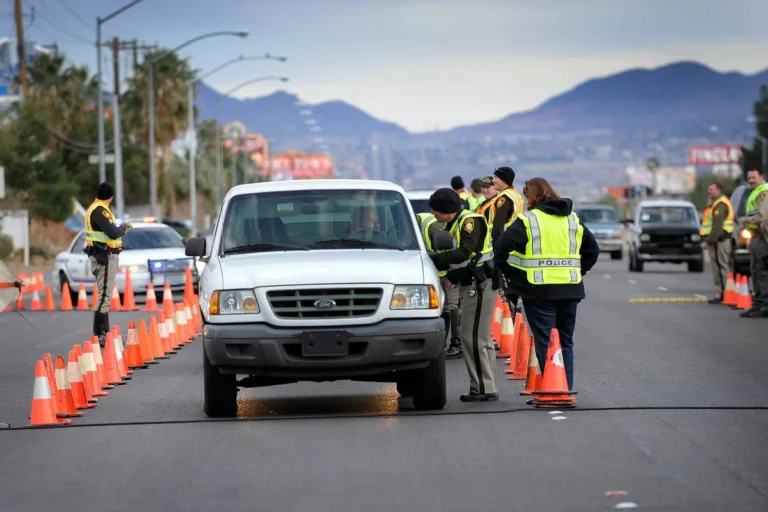
But even in states with no mandatory inspection, the federal standards still apply. If a police officer pulls you over with a burned-out tail light, you're getting a citation regardless of where you live.
The takeaway is simple. You don't need to memorize every regulation. But you do need to know that your brakes and lights must function as designed.
No exceptions.
What "Working Properly" Means for Brakes
"Working properly" for brakes goes beyond just stopping. The pedal should feel firm, not spongy. The car should stop straight without pulling.
There should be no grinding, squealing, or vibration when you apply the brakes.
Here's what the law and manufacturer specs actually require:
- Brake pad thickness. Most manufacturers specify a minimum of 2 to 3 millimeters of friction material remaining. Below that, you're running on the metal backing plate. That damages your rotors and reduces stopping power fast.
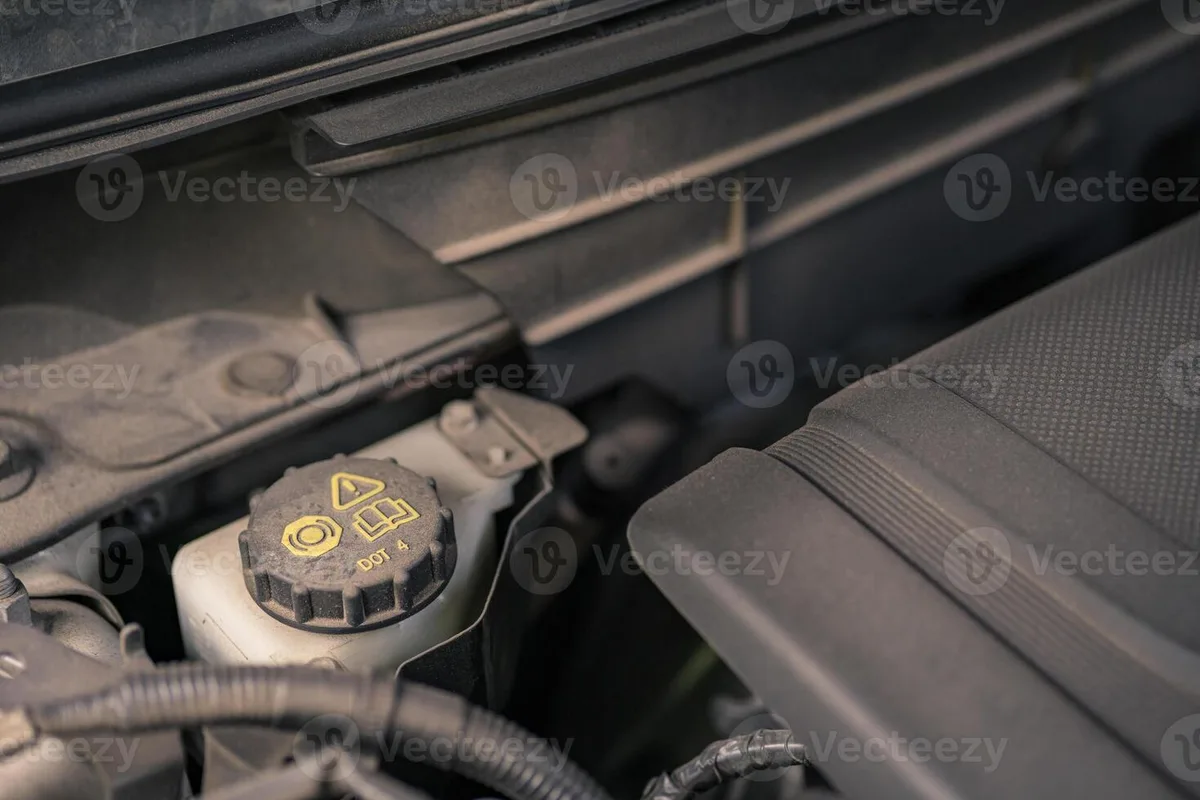
- Brake fluid level and condition. The fluid should be at the "MAX" line on the reservoir and clear or light amber. Dark brown or black fluid means it's contaminated with moisture. That lowers the boiling point and increases your risk of brake fade.
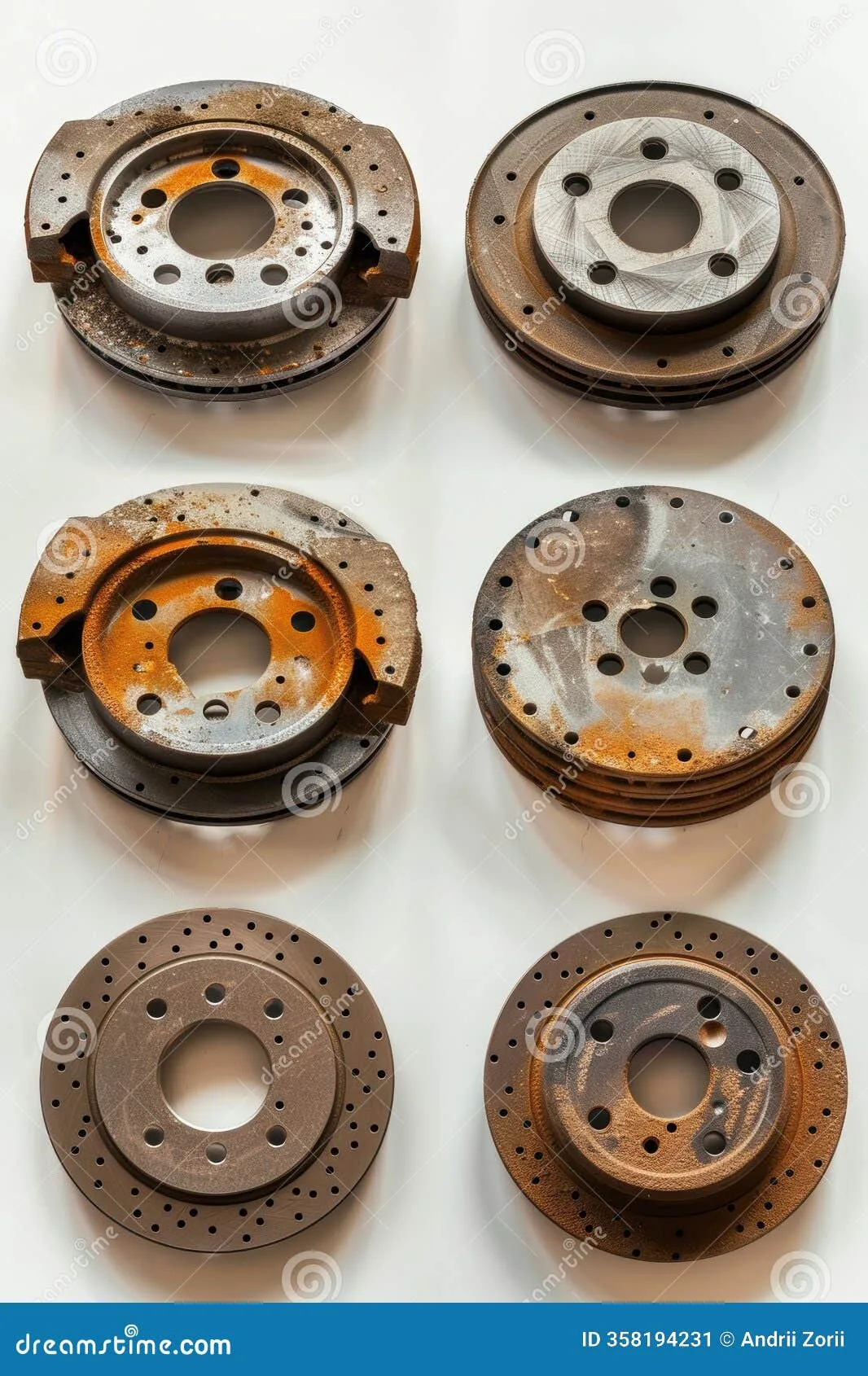
- Rotor condition. Rotors must be free of deep grooves, cracks, and excessive runout. Most rotors have a minimum thickness stamped on them. Once you hit that number, they need replacement.
- No leaks. Any fluid on the ground under the engine or wheels means a leak in the hydraulic system. That's an immediate fail.
- ABS function. The ABS light should turn on briefly when you start the car and then go off. If it stays lit, the system has a fault that needs diagnosis.
If you're not sure about your brake fluid condition, check out our guide on Mini R56 Brake Fluid for a deeper look at fluid maintenance that applies to most vehicles.
One thing most drivers overlook is pedal feel. If the pedal sinks slowly toward the floor while you're holding pressure at a stoplight, you have an internal leak in the master cylinder. That's dangerous and needs immediate repair.
What "Working Properly" Means for Lights
Every light on your car has a specific job and a specific standard. Here's what counts as working properly for each one:
- Headlights. Both low beams and high beams must work. The beam pattern should point straight ahead, not too high or too low. Cloudy or yellowed lenses reduce output significantly. That's not legal.
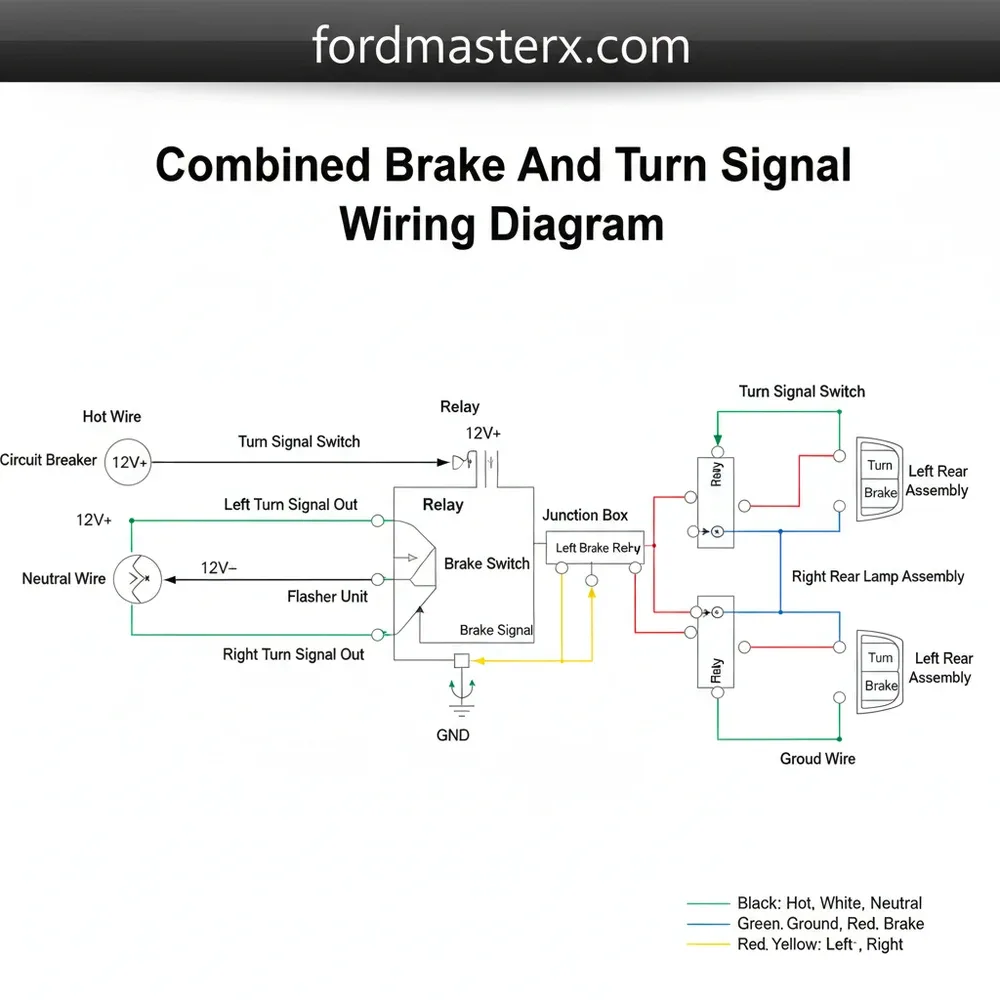
- Brake lights. Both brake lights must illuminate when you press the pedal. The light should be bright red, not dim or pinkish. A third brake light is required on vehicles manufactured after 1986.
- Tail lights. These come on with the headlights. They must be visible from at least 500 feet at night.
- Turn signals. Front and rear signals must flash at a steady rate. Fast flashing usually means a bulb is burned out on that side.
- Reverse lights. These must come on when the car is in reverse. They need to be white and visible behind the vehicle.
- License plate light. This small light must illuminate the plate so it's readable from 50 feet. It's the most commonly overlooked light on any vehicle.
- Hazard lights. All four turn signals must flash simultaneously when the hazard button is pressed.
A common mistake is assuming a bulb works because it looks fine during the day. Brake lights are especially easy to miss. You need someone behind the car to confirm they light up when you press the pedal.
Or you can use a small mirror propped against the rear bumper.
If you do your own car washes and detailing, the extra visibility from clean lenses matters. The Manual Cleaning Equipment Using In Car Wash article has tips on keeping your lights clear without scratching them.
The Right Way to Inspect Your Brakes and Lights at Home
You don't need a mechanic to check your brakes and lights. A 10-minute inspection once a month catches most problems early. Here's the process we recommend.
Lights check (5 minutes):
- Turn the headlights on. Walk to the front and confirm both low beams and high beams work.
- Check the tail lights by walking behind the car with the headlights on.
- Press the brake pedal and confirm both brake lights and the third brake light illuminate.
- Activate each turn signal and check front and rear on both sides.
- Put the car in reverse and check that both reverse lights come on.
- Confirm the license plate light is on.
Brakes check (5 minutes):
- Look through the wheel spokes at the brake pads. You should see at least 1/4 inch of friction material on each pad.
- Check the brake fluid level in the reservoir. Top it off if it's low, but investigate why it dropped.
- Press the brake pedal and feel for firmness. It should stop within about an inch of travel.
- Start the car and press the pedal. If it sinks slowly, you have a leak.
- Listen for grinding or squealing during a test drive in a safe area.
Headlight aim check (add 5 minutes):
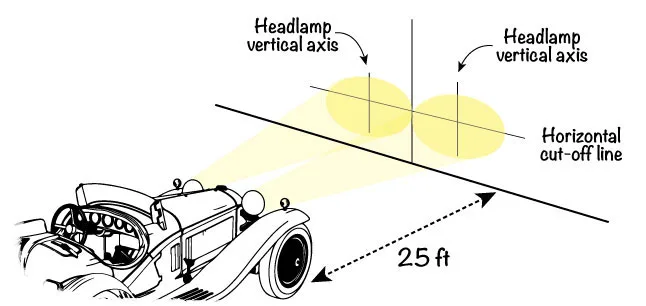
- Park on level ground facing a wall about 25 feet away.
- Turn the headlights on. The cutoff line where the beam ends should be at or slightly below the center of the headlight height.
- If the beam points too high or too low, adjust the aim. Most cars have adjustment screws on the headlight housing.
A quick note on road salt and corrosion. If you live in an area where roads get salted in winter, light bulb sockets and brake lines are vulnerable. The Does Ceramic Coating Protect Against Salt article explains how protective coatings can help slow down corrosion on exposed components.
Write down what you find. A simple notebook log of bulb replacements and pad measurements helps you spot wear patterns before they become problems.
Common Warning Signs Your Brakes Are Failing
Most brake problems give you plenty of warning before they become dangerous. The key is knowing what to listen for and what to feel.
Grinding or squealing. A high-pitched squeal when you apply the brakes usually means the built-in wear indicator is touching the rotor. That's your car telling you the pads are almost gone. If you hear a deep grinding sound, the pads are completely worn down and metal is contacting metal.
Stop driving and replace them immediately.
Spongy or sinking pedal. If the pedal feels soft and goes further toward the floor than usual, you have air in the brake lines or a fluid leak. If it slowly sinks while you hold pressure at a stop, the master cylinder is failing internally. Neither issue will fix itself.
Pulling to one side. When your car veers left or right during braking, you likely have a stuck caliper, a collapsed brake hose, or uneven pad wear on one side. This reduces stopping power and makes the car unpredictable in an emergency.
Vibration through the pedal or steering wheel. Warped rotors cause a pulsing sensation under braking. The rotors have developed uneven thickness and need resurfacing or replacement.
Dashboard warning lights. The ABS light, brake warning light, or both staying lit means the system has detected a fault. A diagnostic scan tool can pull the code and tell you exactly where the problem is.
If you're getting your car ready for winter, road salt accelerates brake line corrosion. Check our guide on Does Ceramic Coating Protect Against Salt for tips on protecting exposed underbody components.
Common Warning Signs Your Lights Are Failing
Lighting failures are easier to catch than brake problems. You just need to pay attention to the clues.
One turn signal flashing faster. This is the most obvious sign of a burned-out bulb. The flasher relay speeds up because it detects lower resistance from the missing bulb. Check both front and rear on that side.
Dim or flickering headlights. A bulb nearing the end of its life will start to dim or flicker before it goes out completely. If both headlights dim together, the alternator or battery may be the problem.
Dashboard indicator for a burned-out bulb. Many newer cars have a "bulb out" warning on the instrument cluster. If that light comes on, one of your exterior lamps is dead. Find it and replace it.
Cloudy or yellowed headlight lenses. UV damage and oxidation reduce light output by 50 percent or more in severe cases. The bulbs may work fine, but the light can't get through the hazy lens. A restoration kit or replacement housing fixes this.
Brake light that stays on. If someone tells you your brake lights never turn off, the brake light switch under the pedal is stuck or misadjusted. That switch also affects cruise control and shift interlock on automatic transmissions.
No reflection from the car ahead. Driving at night and noticing the car in front of you has no reflection from your headlights? Your headlights may be off, aimed too low, or too dim to be effective.
One quick check most people skip is the license plate light. It's a common failure point during inspections. A simple bulb swap costs under five dollars and takes two minutes.
Mistakes That Cost Money or Get You Pulled Over
Some errors are more expensive than others. Here are the ones we see most often in our research.
Ignoring the brake warning light. That light means something is wrong. It could be low fluid, a worn pad, or a system fault. Driving with it on risks brake failure and a much larger repair bill.
Replacing bulbs without checking the socket. A burned-out bulb often results from a corroded or damaged socket. If you just replace the bulb without cleaning the socket, the new one will fail quickly.
Using the wrong bulb type. Your car requires a specific bulb for each position. Halogen, LED, and HID bulbs are not interchangeable without modifications. The wrong bulb can overheat the housing or fail to produce the correct beam pattern.
Forgetting the parking brake adjustment. The parking brake uses separate mechanical components. If it's out of adjustment, it won't hold the car on a hill and can fail a safety inspection.
Neglecting the brake fluid flush. Brake fluid absorbs moisture over time. Aggregated manufacturer recommendations suggest flushing every two to three years. Old fluid has a lower boiling point and can cause brake fade during hard stops.
Skipping the pre-trip walk-around. A 30-second visual check before you drive catches burned-out bulbs, low tires, and fluid leaks. Most people skip it. Those people end up on the side of the road.
If you take your car through automatic washes, make sure your lights are secure. Loose housings can trap water and cause bulb failure. Our What To Expect In A Drive Through Car Wash article covers what to watch for.
When You Absolutely Need a Professional Mechanic
Some brake and light problems are safe for DIY work. Others require specialized tools and knowledge. Here's the dividing line.
You need a mechanic if the ABS light is on. Diagnosing ABS faults requires a scan tool that reads manufacturer-specific codes. Guessing and replacing parts randomly gets expensive fast.
You need a mechanic if the pedal goes to the floor. This indicates a serious hydraulic problem. A master cylinder failure, a leaking brake line, or a failed caliper can cause this. All of them need professional diagnosis and repair.
You need a mechanic if the car pulls hard during braking. A seized caliper can generate enough heat to damage the wheel bearing, brake hose, and rotor. That one problem can multiply into a much larger repair if you ignore it.
You need a mechanic if you hear metal-on-metal grinding. Once the pads wear down to the backing plate, the rotors are damaged. You need new rotors and pads, possibly new calipers if the pistons are scored.
You can DIY a bulb replacement if you can access the socket. Most tail light and headlight bulbs are straightforward. But some modern cars require removing the front bumper or wheel well liner to access the housing. If the process is more than a twist-and-pull, consider a professional.
You can DIY a brake pad replacement if you have the right tools. A basic socket set, a jack and stands, and a caliper compression tool are enough for most vehicles. Watch for seized slider pins and rusted rotor screws. Those can turn a one-hour job into an all-day project.
You can DIY a headlight restoration if the housing isn't cracked. A lens cleaning kit with sandpaper and UV sealant works well on hazy plastic lenses. But if the housing has a crack or broken mounting tab, you need a replacement assembly.
Legal Consequences and Insurance Implications
Failing to maintain your brakes and lights isn't just a safety risk. It carries real legal and financial consequences.
Traffic citations. A burned-out brake light or headlight is a moving violation in most states. Fines range from $50 to $250 depending on where you live. In some states, a "fix-it ticket" gives you a short window to prove the repair and avoid the fine.
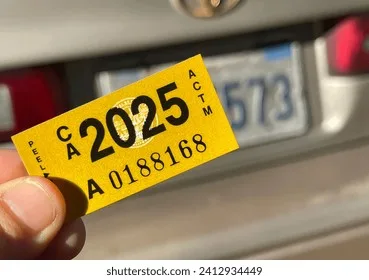
Inspection failure. If your state requires annual safety inspections, a brake or light problem means a failed sticker. You can't drive legally until the issue is repaired and the vehicle is re-inspected. That costs time and money.
Liability in a crash. If you're in an accident and an investigator finds that your brakes were below minimum thickness or your lights were not working, you can be held partially or fully liable. That affects insurance payouts and can lead to civil lawsuits.
Insurance rate increases. A citation for defective equipment can raise your insurance premiums. Multiple violations can result in policy non-renewal.
Commercial vehicle penalties. If you drive a commercial vehicle, the stakes are higher. FMCSA regulations under 49 CFR Part 393 require daily pre-trip inspections. A violation during a roadside check can result in an out-of-service order and fines starting at several hundred dollars.
The bottom line is simple. A burned-out bulb costs a few dollars and a few minutes to fix. A failed brake component can cost thousands in repairs and legal fees.
Check your equipment regularly and fix problems when you find them.
Cost-Saving Tips Without Cutting Safety Corners
You don't have to overspend to keep your brakes and lights road-ready. Smart maintenance saves money over time.
Buy bulbs in pairs. When one headlight or tail light burns out, the other is close behind. Replace both at once. You save labor time and avoid a second trip to the auto parts store.
Catch brake pads early. Replacing pads at 3mm costs less than replacing pads and rotors at 1mm. Rotors are expensive. Pads are cheap.
Flush brake fluid on schedule. Old fluid absorbs moisture and corrodes internal components. A $20 flush every two years prevents a $500 master cylinder replacement later. Our Car Shampoo For Ppf article covers safe cleaning products that won't damage brake components.
Clean headlight lenses. A $15 restoration kit restores hazy lenses to near-new brightness. New housing assemblies can cost $200 or more per side. Start with the cheap fix.
Do your own walk-around. A monthly inspection takes ten minutes. Catching a burned-out bulb before a police officer does saves you a ticket and the associated insurance hike.
Expert Q&A: Common Questions on Brake and Light Maintenance
How often should I check my brakes and lights?
Check lights once a month. Check brake pads every oil change or every 5,000 miles. Brake fluid condition should be tested every two years.
Can I use LED bulbs in a car designed for halogen?
Only if the housing is designed for LEDs or you install a compatible conversion kit. LEDs run cooler but produce a different beam pattern. Improper LEDs blind oncoming traffic and may fail inspection.
Why does my brake light stay on when the car is off?
The brake light switch is stuck or misadjusted. It's located under the dashboard near the brake pedal arm. A quick adjustment with a screwdriver usually fixes it.
If not, replace the switch.
Is it safe to drive with the ABS light on?
You can drive, but your anti-lock brakes won't work during hard stops. The standard brakes still function. Get the system diagnosed soon, especially if you drive in rain or snow.
How much brake pad thickness is too low?
Most manufacturers specify 2 to 3 millimeters as the minimum. Below that, the wear indicator contacts the rotor. At 1 millimeter, you risk metal-on-metal contact within a few hundred miles.
Final Takeaway: What to Do Right Now
Set a recurring monthly reminder on your phone. Walk around your car. Check every light.
Look at your brake pads through the wheel spokes. Press the brake pedal and feel for firmness.
If you find a problem, fix it the same week. A burned-out bulb costs five dollars and five minutes. A worn brake pad costs a hundred dollars and an afternoon.
A crash caused by failed equipment costs far more.
You don't need to be a mechanic to stay safe. You just need to look, listen, and act before the problem gets worse. Your brakes and lights are the difference between stopping and not stopping.
Between being seen and being invisible. Check them. Maintain them.
Drive confident.