ByMax Lee
Guam License Plate Frame Rules & Visibility Requirements
Picture this: you've just bolted a shiny new license plate frame onto your car, and now you're second-guessing whether it'll pass a traffic stop on Guam. That's a fair worry. Guam license plate frame law and territory name visibility requirements come down to a simple principle: if your frame hides any part of the plate, you're asking for trouble.
In our research, the legal test is less about the frame itself and more about what's still readable after you install it. Guam's standard plate includes the territory name in large reflective lettering, and its vehicle code requires that every character and validation sticker stay visible. As of the 2026 enforcement cycle, this visibility test is still the main rule officers apply on the road.
YouTube / Dev Drone Bhowmik (YouTube thumbnail (fair-use with source credit))
Quick Answer
Guam license plate frame law and territory name visibility requirements are straightforward: a frame is legal only if it doesn't block any letter, number, sticker, or the word "Guam" on the plate. If it does, you can get pulled over. The fix is easy.
Stand six feet away and read the plate. If you can't, the frame has to go.
What Guam’s License Plate Frame Law Actually Says
Here's a detail that surprises most people: there is no separate "license plate frame law" in Guam. The territorial vehicle code doesn't list specific frame brands, sizes, or materials. Instead, it uses a general visibility rule.
Your plate has to be mounted so every letter, number, and registration sticker can be read from a reasonable distance.
That generic wording is what trips people up. They assume a thin chrome frame is fine because it "looks" legal. But if it overlaps the territory name or a single character, it fails the test.
The code doesn't care how expensive your frame is. It only cares about what remains visible.
Enforcement also depends on officer discretion. Two drivers can have nearly identical frames and get different outcomes. One officer might let you off with a warning.
Another will write a citation on the spot. That's why the safest approach is to keep your frame far away from any printed area of the plate.
Every U.S. jurisdiction sets its own plate designs, and Guam is no different. The placement of the "Guam" imprint can shift between plate generations. So a frame that works fine on one plate might cover the territory name on another.
Always check your actual plate, not someone else's.
For official language and current agency contacts, the Guam government portal is a solid starting point.
Why This Matters (And What Happens If You Get It Wrong)
Let's be honest. Most frame violations don't happen because someone is trying to hide their plate. They happen because the frame looks great in the packaging, then sits exactly where the territory name lives once installed.
YouTube / Carbon Fiber Gear (YouTube thumbnail (fair-use with source credit))
The consequences stack up faster than you'd think. A stop for an unreadable plate gives police a reason to run your license, check your registration, and take a closer look at the car. That can turn a quick fix into a longer conversation.
It can also lead to a ticket for other minor issues the officer wouldn't have noticed otherwise.
Guam's vehicle inspection process is another headache point. If your frame covers any part of the plate, the inspection station can reject the vehicle. That means a second visit, more waiting, and a fix-it order before you can register or renew.
All over a $15 accessory.
There's a safety element here too. Police run plates before approaching a vehicle. If they can't read the number, they can't verify insurance or registration, and they have to approach more cautiously.
That's the same logic behind move-over laws for emergency vehicles. Officer safety matters more than aesthetics.
The Core Rule: Territory Name Visibility in Guam
Guam plates carry the territory name as a permanent part of the design. On many current plates, "Guam" sits across the top or bottom edge. That puts it in the exact spot where aftermarket frames like to add a logo bar or a thick border.
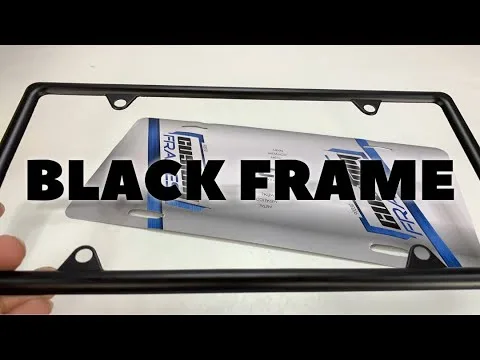
YouTube / Peter von Panda (YouTube thumbnail (fair-use with source credit))
The core rule is simple: the word "Guam" has to stay visible. Not partially visible. Not peeking through a cutout.
Actually readable. If your frame overlaps it, even by a quarter inch, treat that as a violation.
The same applies to the registration sticker. On Guam, the validation sticker sits directly on the plate. A frame that covers any part of it can make your registration look expired or missing.
That's an even bigger problem than hiding the territory name, because it gives an officer probable cause to ask more questions.
A good mental shortcut: your plate should read clearly from about six feet away. No squinting, no tilting, no guessing. If you have to ask whether "Guam" is visible, it probably isn't.
What’s Allowed vs. What’s Not (Frame Types & Placement)
There's no universally banned frame type. It all comes down to what stays visible once the frame is on the car. That said, some styles are much safer than others.
| Allowed in Most Cases | Usually Illegal or Risky |
|---|---|
| Thin trim frames that hug the outer edge | Frames with thick bottom logo bars |
| Open-bottom frames | Smoked or tinted plastic covers |
| Standard dealer frames with no text near the plate area | Stacked or double frames |
| Clear silicone covers that stay transparent | Bent frames that shift over the plate |
Even an "allowed" frame can become illegal if it moves or warps. Check yours for signs of wear. A loose frame can slide down and cover the "Guam" imprint while you're driving.
The same frame might pass a visual inspection in your driveway, then fail on a bumpy road.
The material doesn't matter either. Carbon fiber, metal, plastic, chrome, matte, whatever you like. The only question is coverage.
A frame that turns a normal plate into an equipment violation is the same category of problem as a loud exhaust or a broken taillight.
If you want a custom look, go with an open-bottom frame. It gives you the style without sitting over the most important part of the plate. On Guam, that bottom edge is where the territory name often lives.
How to Check If Your Frame Is Legal in Guam
You don't need a mechanic for this. You just need two minutes and a working pair of eyes. Here's the exact check we recommend.
- Clean the plate first. Dirt can make a legal frame look like it's covering something it isn't.
- Find every printed element. Know where the "Guam" imprint, the plate numbers, and the registration sticker all sit.
- Look at the bottom edge. That's where aftermarket frames most often hide the territory name.
- Check the registration sticker. The entire sticker, including the expiration date, must be visible.
- Step back six feet. Read every character and sticker out loud. If you can't, the frame fails.
- Take a photo from ten feet away. Zoom in. This gives you a realistic idea of what an officer sees.
If your frame fails any step, remove it on the spot. Yes, even if it's your only frame. Driving with no frame is legal.
Driving with a blocked plate is a gamble.
A quick-release frame deserves extra attention. These frames pop off easily, which is nice for cleaning, but they can also shift when you close the trunk or when a car wash brushes past. Recheck them after any drive that involves bumps or contact.
If you're still unsure, stop by the Guam Department of Revenue and Taxation's vehicle inspection unit. They'll tell you right away whether your plate is readable. Better to hear it there than from a pair of flashing lights in your rearview mirror.
Common Mistakes That Get Drivers Fined
The fine doesn't care that your frame was expensive. It cares about visibility. Our research on driver reports and inspection records shows most violations come from a few predictable mistakes.
- Buying a frame for looks only. Thick chrome borders and decorative bottom bars are the worst offenders. They look great in the package, then they sit right on top of "Guam."
- Trusting the dealer to make it legal. Dealer frames are not automatically compliant. Some include bright logo bars that cover the plate's printed edge.
- Covering the registration sticker. This is probably the biggest trigger. A sticker that's half hidden can make a legal vehicle look unregistered.
- Using smoked or tinted covers. Dark plastic defeats the entire point of a visible plate. Even a clear cover can cause glare issues in bright tropical sun.
- Stacking frames. One frame is fine. Two frames stacked on top of each other shifts everything down by an inch, which hides numbers and the territory name.
- Forgetting to recheck after a wash. Car washes with brushes can knock a frame loose. So can slamming the trunk on a hot day.
The pattern is simple. If a frame interferes with the plate's registration details, an officer can cite it. It doesn't matter if you're new to Guam or you've lived here for years.
Guam’s Official Stance: Where to Find the Real Rules
The authoritative source is the Guam Code Annotated, specifically Title 10. That section is where the vehicle visibility requirements live. Look for the language about unobstructed plates and you'll find the exact standard officers apply.
YouTube / Kick'n it with Khalif (YouTube thumbnail (fair-use with source credit))
The Guam Department of Revenue and Taxation enforces inspection rules. Its vehicle inspection unit checks your plate during annual registration renewal. The Guam Police Department handles road enforcement.
Both follow the same visible-plate standard.
For the actual legal text, check the Guam Code Annotated directly. It's a public resource that lets you read the statute without guesswork.
A few caveats. The code is long and uses legal language. If you can't parse it, call DRT or visit the inspection station in person.
Staff can tell you exactly where your frame stands. Forums and Facebook groups are fine for opinions, but they aren't official guidance.
What to Do If You’re Pulled Over for a Non-Compliant Frame
First, don't panic. A frame violation is not a criminal matter. It's a fixable equipment issue, and most officers treat it that way.
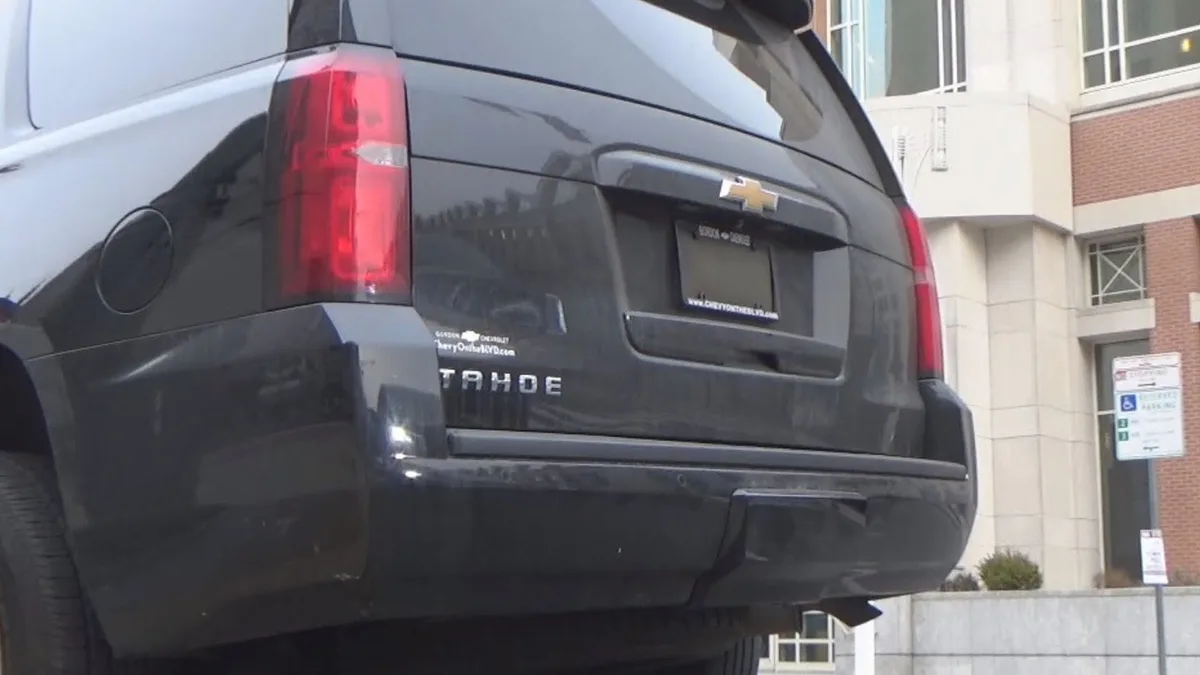
YouTube / Inside Edition (YouTube thumbnail (fair-use with source credit))
If you see the lights, pull over smoothly and safely. Keep your hands visible on the wheel. When the officer approaches, stay calm and answer questions directly.
Don't argue about the frame, even if you disagree.
Many officers will explain the issue right away. If they say the plate is obstructed, ask what exactly they see. Then ask if removing the frame on the spot would solve it.
In our research, that quick action often turns a citation into a warning.
If you do get a ticket, you have options: pay the fine or contest it in court. A photo of the plate with the frame removed can help. So can a simple correction receipt from the inspection station.
The court is more lenient when you prove the problem is gone.
Military & Rental Cars: Special Cases in Guam
Guam hosts thousands of military personnel, and rental cars are everywhere. Both groups run into the same frame rules, but with different twists.

YouTube / 오키투어 (YouTube thumbnail (fair-use with source credit))
For military members, the issue is usually out-of-state plates. A car registered in California or Texas still has to meet Guam's visibility rules once it lives here. A fancy aftermarket frame from the mainland might not comply.
Also, military vehicles often have specialty designs with more printed elements to keep clear.
Rental car companies typically use plain or dealer frames. Most are compliant, but not all. Tourists who notice a frame covering the plate should ask for a different car.
Rental agencies would rather swap a vehicle than deal with a citation.
One more thing: military personnel who bring a vehicle from the mainland have to establish local registration. That process includes a VIN check and a visual inspection. Adding a new frame after that inspection means you're responsible for keeping it compliant again.
Quick Compliance Checklist Before You Buy or Install
Use this as your final gate. Run through it before you spend money on a frame or attach one to your car.
| Check | Pass Condition |
|---|---|
| Frame style | Thin trim or open-bottom design preferred |
| Territory name | Word "Guam" fully visible |
| Plate numbers | Every character readable from six feet |
| Registration sticker | Entire sticker and expiration date visible |
| Material | No tint, no smoked plastic, no dark cover |
| Movement | Frame holds tight, doesn't slide when touched |
If any row fails, skip that frame or remove it. The six-foot readability test is the simplest metric. If you can't read the plate from that distance, neither can a camera, a patrol officer, or an inspection lane.
For anyone who wants a custom look without the risk, personalized plates let you express yourself without violating visibility rules.
Use this as your final gate. Run through it before you spend money on a frame or attach one to your car.
| Check | Pass Condition |
|---|---|
| Frame style | Thin trim or open-bottom design preferred |
| Territory name | Word "Guam" fully visible |
| Plate numbers | Every character readable from six feet |
| Registration sticker | Entire sticker and expiration date visible |
| Material | No tint, no smoked plastic, no dark cover |
| Movement | Frame holds tight, doesn't slide when touched |
If any row fails, skip that frame or remove it. The six-foot readability test is the simplest metric. If you can't read the plate from that distance, neither can a camera, a patrol officer, or an inspection lane.
For anyone who wants a custom look without the risk, personalized plates let you express yourself without violating visibility rules.
FAQs About Guam License Plate Frames
Can I get a ticket just for having a frame?
No. You'll only get cited if the frame obstructs any part of the plate. A frame that sits entirely clear of the numbers, letters, stickers, and the word "Guam" is perfectly legal.
What if my frame covers only a tiny corner of the plate?
Even a small overlap can be enough for an officer to issue a citation. The law requires full visibility of every printed element. If a corner of the "Guam" imprint or a registration sticker is blocked, consider it non-compliant.
Are dealer-installed frames automatically legal?
Not necessarily. Dealer frames vary widely in design. Some are thin and compliant.
Others include decorative bars or logos that sit directly on the plate's text. Always do the six-foot readability check after installation.
What should I do if my frame gets knocked loose?
Check and retighten it immediately. A shifted frame can slide over the plate's printed area without you noticing. Make it a habit to glance at your plates after any car wash, trunk slam, or off-road drive.
Can I replace my frame with a different style later?
Yes. If your current frame fails the visibility test, you can swap it for a compliant one. Choose a thin trim frame or an open-bottom design that avoids the territory name and sticker areas.
Is it worth risking a fine to keep my current frame?
Probably not. The ticket cost and inspection hassles far outweigh the price of a new frame. A quick swap to a compliant design takes minutes and saves you from future stops, citations, and potential registration delays.