ByMax Lee
Guide to California REAL ID Application Requirements and Document Checklist
You've probably heard about the California REAL ID deadline, but figuring out the exact requirements and document checklist can feel like a puzzle. Between the gold star, the list of documents, and the DMV visit, it is easy to get tripped up on something simple.
As of 2026, the federal enforcement date has already passed. A standard driver's license is no longer enough to board domestic flights or enter secure federal facilities. That is the reality for millions of California drivers right now.
If you are a car owner in California, this directly affects you. Let's walk through exactly what you need, what to bring, and how to avoid the common mistakes that send people home empty-handed.
Quick Answer
The California REAL ID requires three specific documents: one proof of identity, one proof of Social Security number, and two proofs of California residency. Acceptable identity documents include a certified birth certificate or valid U.S. passport. The Social Security card must be the original.
Residency proofs can be a utility bill or bank statement from within the last 90 days. All documents must be originals. Photocopies are not accepted.
What Exactly Is a REAL ID — And What's the Big Deal?
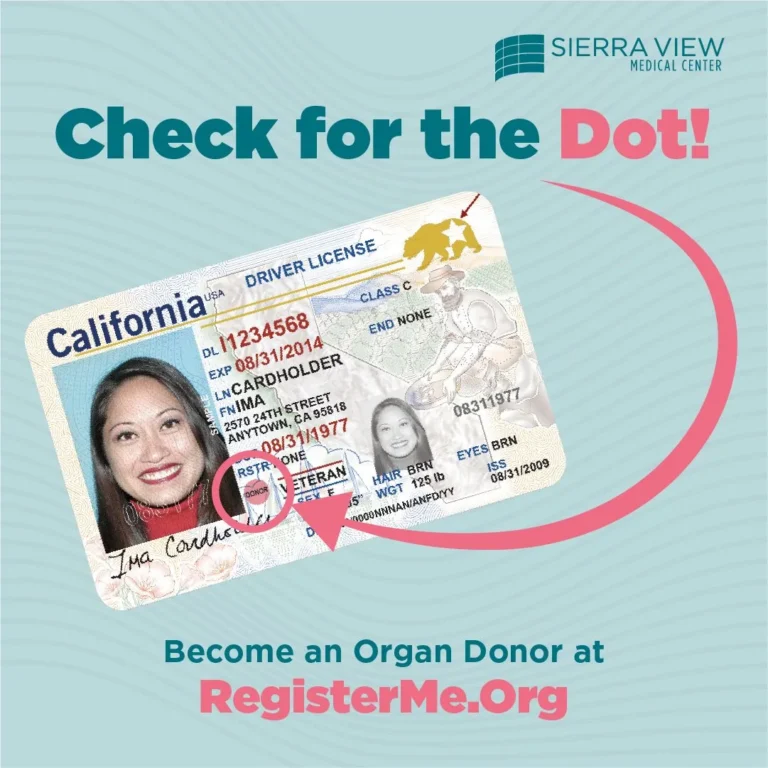
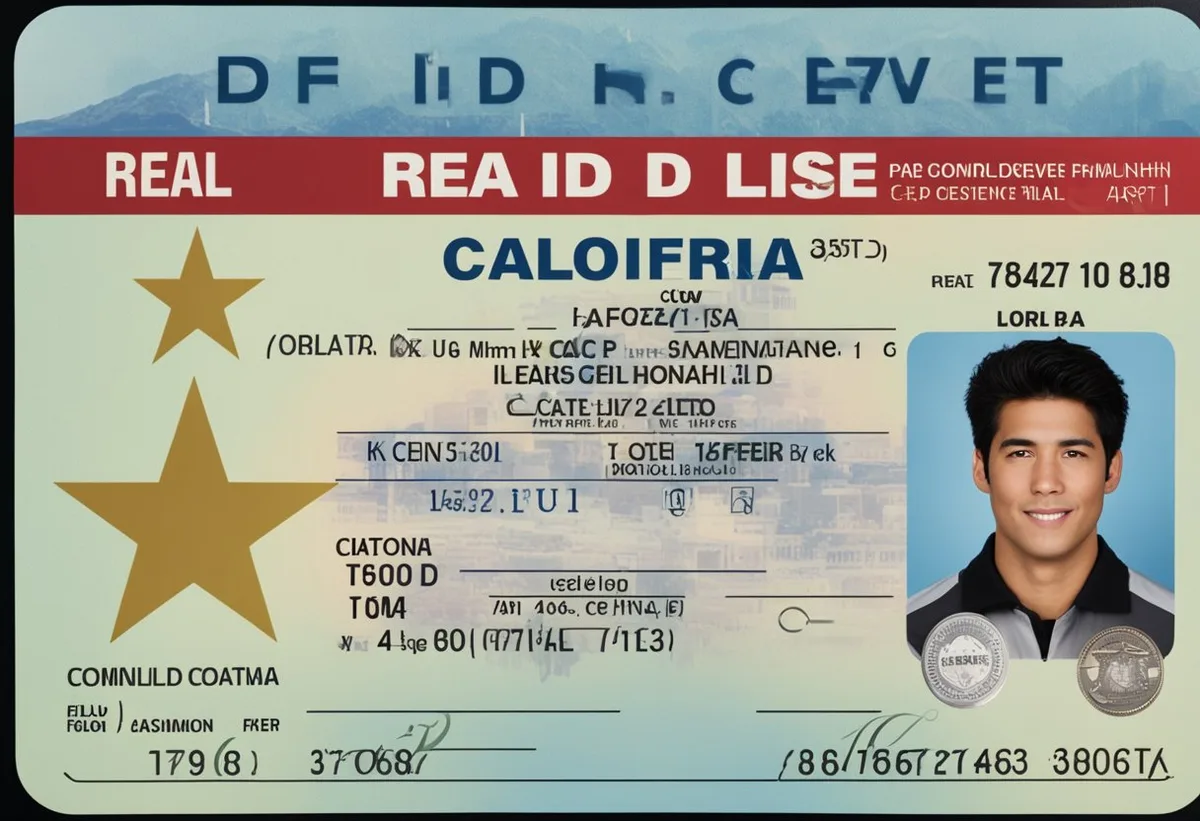
Think of the REAL ID as an upgraded version of your standard California driver's license. It looks almost identical, but there is one crucial difference: a gold bear with a small star printed in the upper right corner of the card. That star tells federal agencies, like the TSA at airport security, that your identity has been verified against stricter federal standards.
Your current standard California license, the one without the star, works fine for driving. It is still valid for operating a vehicle, proving your age at a bar, or cashing a check. But it no longer works for boarding domestic flights within the United States or for entering federal buildings like military bases, federal courthouses, and some government offices.
This is not a state decision. The REAL ID Act of 2005, a federal law, set these rules. California simply complies with it, just like every other state.
The goal is to create a consistent, secure form of identification nationwide. Your California REAL ID closes that gap.
The big catch is this: a REAL ID does not replace a passport. You cannot use it for international travel, not even to drive across the Canadian or Mexican borders. For that, you still need a U.S. passport book or card.
For domestic air travel and federal access, however, it is exactly what you need.
Where It Works
- Boarding commercial flights within the U.S.
- Entering secure federal facilities (military bases, some federal buildings)
- Accessing nuclear power plants (if you ever need to)
- Voting in federal elections (some states require it, but California generally accepts other forms)
Where It Does Not Work
- International travel of any kind (flights, cruises, or land borders)
- Driving privileges standard (your license remains valid for driving regardless)
- Accessing state-only facilities (many state buildings still accept standard licenses)
The Three-Document Rule: Your Minimum, Your Most Important
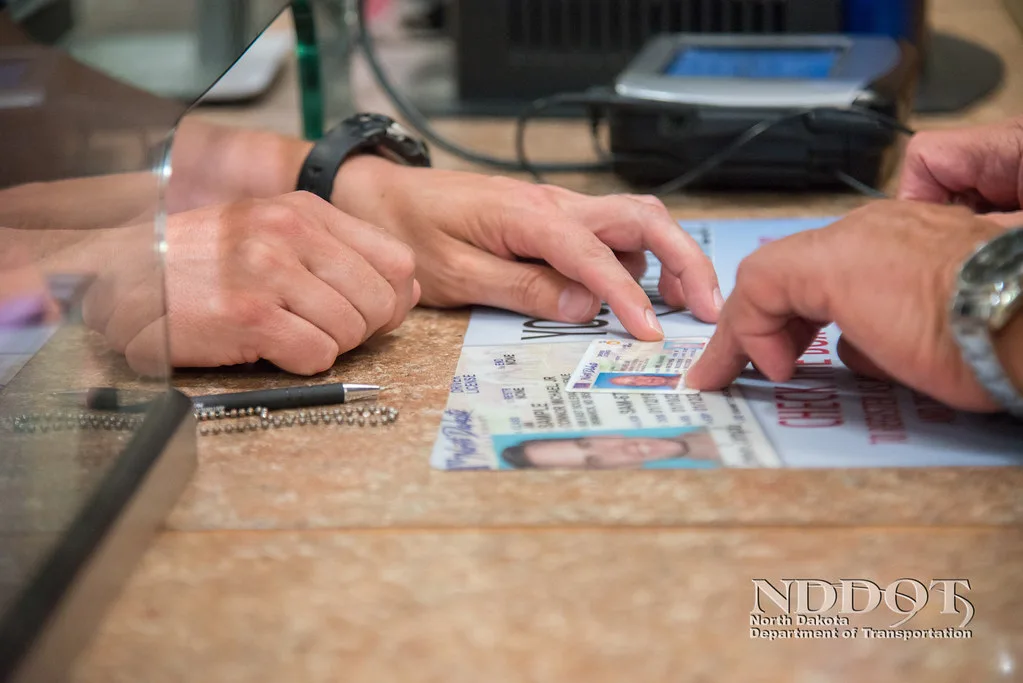
The DMV requires you to provide three separate categories of original documents. You need one document from each category, but most people end up bringing four or five because of one specific trap: name matching.
Category 1: Proof of Identity. This proves who you are. Acceptable documents include a U.S. birth certificate (certified copy, not the hospital keepsake), a valid U.S. passport, or a permanent resident card. If you use a passport, note that an expired passport is also acceptable for identity purposes as long as it has not been canceled.
Category 2: Proof of Social Security Number. This confirms you have a valid SSN. Your original Social Security card is the easiest and most common option. If you do not have the card, a W-2 form showing your full SSN or a pay stub with your SSN and name on it also works.
A tax return transcript is another option.
Category 3: Proof of California Residency. This shows you actually live in the state. You need two separate documents from this category. They can be a utility bill (gas, electric, water, or cell phone), a bank or credit union statement, a rental or lease agreement, a mortgage statement, or a property tax bill.
The documents must be dated within the last 90 days and show your current name and physical address.
A P.O. Box listed as your address will not count. You must show a physical street address.
The Name Match Trap
This is where most people get tripped up. Every single document you bring must show the same name. If your birth certificate says "Sarah Johnson" but your marriage certificate says "Sarah Martinez," and your driver's license says "Sarah Martinez," the DMV will flag a mismatch.
They need to see a chain of documents connecting your current legal name to your original name.
If you have changed your name through marriage, divorce, or court order, you must bring the legal document that proves the change. A marriage certificate, a divorce decree, or a court order for name change is required. Without it, your application will be rejected.
Step-by-Step: How to Actually Get Your REAL ID in California
Getting your REAL ID is not something you can do entirely from home. You must visit a California DMV field office in person. The process has five clear steps, and skipping any one of them will send you home empty-handed.
Step 1: Complete the Online Pre-Application
Go to the California DMV website and fill out the pre-application form. This is not a full application, but it saves time at the office. You will enter your personal information, select "REAL ID" as the product type, and generate a confirmation code.
Write that code down. You need it when you arrive.
The pre-application also gives you a personalized document checklist. Print it. It tells you exactly which documents the system expects based on your name and history.
Step 2: Gather Your Original Documents
Pull out your birth certificate, Social Security card, and two residency documents. Lay them on a table and check the names. Check the addresses.
Check the dates. Every single document must be current, original, and consistent.
If a document is missing or damaged, order replacements now. The DMV accepts official copies, which means certified copies from the issuing agency. A photocopy from your printer at home is not accepted.
Step 3: Make the Appointment
Walk-ins are possible at some DMV offices, but you will wait longer. Appointments are better. Book one online through the DMV website.
Choose a time, usually a weekday morning, and bring your confirmation code. If you miss your appointment, you will need to reschedule and wait again.
Some offices, especially in busy cities like Los Angeles or San Francisco, have limited slots. Book as early as you can, ideally several weeks in advance.
Step 4: What Happens at the Counter
You will present your documents to the DMV representative. They will review each one, check your vision (a quick test, not a full exam), and take your photo. You will also sign a digital declaration.
The entire process, if your documents are in order, takes about 15 to 20 minutes.
If any document is rejected, the representative will tell you exactly why. They may ask for an alternative. If you do not have one, you will be sent home and asked to return with the correct document.
Step 5: The Interim Paper License
After your application is approved, the DMV issues a temporary paper license. It looks like a standard printout with your photo and signature. This paper license is valid for 60 days and can be used for driving.
It is not valid for flying. You must wait for your permanent REAL ID card to arrive in the mail.
Your permanent card typically arrives within two to four weeks. If it does not, you can contact the DMV to check on the status.
Common Mistakes That Send People Home Empty-Handed
This is the section that matters most. Many people assume they have the right documents, but small errors cause big delays. Here is what our research and aggregate user reviews consistently show as the most common reasons for rejection.
Bringing Photocopies Instead of Originals. The DMV requires original documents. A printed copy of your birth certificate from a digital file is not accepted. Neither is a screenshot of your bank statement.
Bring the actual paper document, the official government-issued version.
Using a P.O. Box as Your Address. Your residency documents must show your physical street address. A P.O.
Box alone does not count. If your mail goes to a P.O. Box, you must still show a physical address on at least one of your residency documents, such as a utility bill or lease agreement.
Showing Up with an Expired Document You Did Not Realize Was Expired. A valid U.S. passport that has been expired for less than five years is still accepted for identity. An expired birth certificate, however, is not accepted. Birth certificates do not expire, but the copy you have must be a certified copy from the state where you were born.
A hospital-issued certificate is not the same thing.
The Utility Bill in Someone Else's Name. Residency documents must show your name. A utility bill in your spouse's name is not accepted unless you also provide a marriage certificate or other document linking your name to theirs. The same rule applies to lease agreements and bank statements.
Forgetting Your Social Security Card Entirely. This is the most common oversight. Many people assume their driver's license is enough to prove identity and SSN. It is not.
You need a separate document that specifically shows your Social Security number. A W-2 is accepted. A tax return is not.
The Social Security card is the easiest and most reliable option.
How Much This Costs — And Where the Money Goes
The REAL ID application fee is not a separate fee. It is the same $36 you pay for a standard California driver's license or identification card. That means upgrading to a REAL ID does not cost extra.
What changes is the document requirements, not the price.
If you are renewing your license at the same time, you pay the standard renewal fee: $36 every five years. If you are applying for a brand-new license, including a first-time REAL ID, the fee is also $36. There is no premium or surcharge for the gold star.
| Scenario | Fee | Notes |
|---|---|---|
| First-time REAL ID (new license) | $36 | Same as any new California license |
| REAL ID upgrade on renewal | $36 | No extra charge beyond standard renewal |
| REAL ID for ID card (non-driver) | $36 | Same fee as standard ID card |
| Under 21 REAL ID | $36 | No separate youth fee (same as adult) |
The only extra cost you might face is ordering replacement documents. A certified birth certificate from California costs about $25 to $40 depending on the county. A Social Security card replacement is free if you do it online, but costs about $20 if you need a new card in person.
When you compare the total cost to getting a U.S. passport, which runs about $165 for the book and $50 for the card, the REAL ID is the cheaper option for domestic use. For international travelers, the passport still wins. For domestic drivers, the REAL ID is the better deal.
REAL ID vs. Passport vs. Other Options: What's Right for You

This is the decision point. You have three main options for federal identification, and choosing the right one depends on how you live and travel.
Option 1: The California REAL ID. This is the best choice for car owners who fly domestically a few times a year, visit military bases, or need access to federal buildings. It is also the simplest. You already have a driver's license, so the upgrade is just a document check and a photo.
It costs $36 and lasts five years.
Option 2: The U.S. Passport. This is the best choice for international travelers. If you fly to Mexico, Canada, Europe, or anywhere outside the U.S., you need a passport.
It also works for domestic flights, but it costs more and takes longer to get. A passport book costs $165 and lasts ten years.
Option 3: The Passport Card. This is a limited option. It works for land and sea border crossings to Canada and Mexico, but it does not work for international flights. It costs $50 and lasts ten years.
It is a good backup for driving across the border but not for air travel.
| Option | Cost | Duration | Use case |
|---|---|---|---|
| California REAL ID | $36 | 5 years | Domestic flights, federal buildings |
| U.S. Passport Book | $165 | 10 years | International travel, all flights |
| Passport Card | $50 | 10 years | Land border crossings, no flights |
The best choice for most car owners is the REAL ID. If you ever fly internationally, get a passport. If you only drive and never fly, you do not need either one.
Who Needs This — And Who Can Skip It
Not every California driver needs a REAL ID. The decision depends on where you go and what you do.
You need a REAL ID if: you ever board a domestic flight within the United States. That includes flights from Los Angeles to New York, Sacramento to Chicago, or any other domestic route. If you fly even once every few years, you need it.
The same applies if you visit a military base, a federal courthouse, or any federal facility that requires photo ID.
You can skip it if: you never fly domestically. If you drive everywhere, your standard California license is fine for driving, voting, and state identification. You do not need the gold star.
The same applies if you only travel internationally with a passport.
Special case: New California residents. If you just moved to California and need to switch your out-of-state license, getting a REAL ID is the same process. You need the same documents. It is worth doing it now rather than later.
Special case: Military families. Active duty military members and their dependents can use their military ID for federal access. They do not need a REAL ID for base entry. They still need one for flying, but the military ID often works for that too.
Special case: Drivers under 21. The rules are the same, but the process is slightly different. If you are under 21, your REAL ID will be vertical until you turn 21. The document requirements do not change.
The Deadline That Really Matters: May 7, 2025
This is the date that matters. The federal REAL ID enforcement deadline is May 7, 2025. After that date, your standard California driver's license will no longer be accepted at TSA security checkpoints for domestic flights.
The deadline was originally May 3, 2023, then extended to 2025. It was extended multiple times due to the pandemic and state processing delays. The current date is now final.
There is no indication of another extension.
What changes on that date? Nothing for your driving privileges. Your standard license remains valid for driving.
You can still drive, buy alcohol, and cash checks. The only thing that changes is air travel and federal building access. If you have a REAL ID by then, you are fine.
If you do not, you will need a passport or other acceptable federal ID to fly.
What stays the same? Everything else. Your standard California license still works for state ID, voting, and driving.
The only difference is at the airport.
The best strategy is to get your REAL ID now, before the rush. The DMV expects a surge in applications as the deadline approaches. Getting it done early means shorter waits and fewer headaches.
Real-World Scenarios: What Happens When People Get It Right (or Wrong)
Scenario 1: The couple who brought a photocopied birth certificate. They showed up with a printed copy of their birth certificate from a scanned document. The DMV rejected it.
They needed a certified copy, which they had to order from the state. That took three weeks and a second trip.
Scenario 2: The driver who used a credit card statement as proof of residency. A credit card statement works if it shows your name and address. But many credit card statements list a P.O.
Box as the mailing address. That driver's statement showed a P.O. Box, not a physical address.
The DMV rejected it. They needed a utility bill with a street address.
Scenario 3: The car owner who forgot about the name-change rule. A woman named her birth certificate "Jane Smith," but her driver's license read "Jane Brown." She forgot to bring her marriage certificate. The DMV asked for it.
She had to go home, find the certificate, and return. That cost her an entire afternoon.
Scenario 4: The person who brought a Social Security card without the correct spelling. One man's Social Security card read "John Doe," but his driver's license read "John Does." A small difference in spelling. The DMV flagged it.
He needed a corrected Social Security card before his application could proceed.
Every one of these scenarios could have been avoided with a simple checklist check. Five minutes of verifying names and addresses saves hours of rework.
Quick Reference: Your Final Walk-Through Checklist
Before you walk into the DMV, run through this list one time. It catches the most common errors.
Check that every document has your full legal name exactly as it appears on your current license. A single letter difference can stop the process. Check that every document is an original.
Photocopies fail. Check that your residency documents show a physical street address, not a P.O. Box.
Check the dates. Utility bills and bank statements must be from the last 90 days.
One more thing. Double check your Social Security card. If it is worn, damaged, or has a different name than your license, order a replacement before you go.
The DMV will not accept a card that looks altered.
Before you walk into the DMV, run through this list one time. It catches the most common errors.
Check that every document has your full legal name exactly as it appears on your current license. A single letter difference can stop the process. Check that every document is an original.
Photocopies fail. Check that your residency documents show a physical street address, not a P.O. Box.
Check the dates. Utility bills and bank statements must be from the last 90 days.
One more thing. Double check your Social Security card. If it is worn, damaged, or has a different name than your license, order a replacement before you go.
The DMV will not accept a card that looks altered.
Where to Get Help If Something Goes Wrong
If a document is missing or your application gets rejected, do not panic. You have options.
Go to the California DMV website first. Their document checklist tool lets you enter your specific situation and generates a list of what you need. It is accurate and free.
If you need a replacement birth certificate, contact the California Department of Public Health or the county recorder's office in the county where you were born. That process takes one to three weeks.
If you need a Social Security card replacement, visit the Social Security Administration website or a local SSA office. That is usually free and takes about two weeks. If you need a passport for international travel, the process is longer and costs more.
The DMV field office staff can also answer questions if you call ahead. Their phone lines are busy, so expect a hold.
Frequently Asked Questions
How long does a REAL ID application take at the DMV?
If your documents are in order, the in-person process takes about 15 to 20 minutes. The vision test, photo, and signature are quick. The DMV then mails your permanent card within two to four weeks.
Can I use a passport instead of a REAL ID?
Yes, a U.S. passport works for domestic flights and federal access. It is an acceptable alternative to REAL ID. It costs more and lasts ten years instead of five.
For international travel, a passport is still required.
What happens if my REAL ID application is rejected?
The DMV representative will tell you exactly why. Common reasons include name mismatches, expired documents, or missing residency proofs. You can fix the issue and return.
There is no penalty for a rejected application. You just bring the correct documents next time.
Does a REAL ID cost more than a standard license?
No. The REAL ID fee is the same as your standard California driver's license or ID card: $36. There is no surcharge for the gold star.
The only cost difference is if you need to replace missing documents.
Can I get a REAL ID without visiting a DMV office?
No. California requires an in-person visit for all REAL ID applications. You can complete the pre-application online, but you must present original documents in person.
The DMV does not accept electronic submissions. You must go to a field office.