ByMax Lee
Guide to Colorado High Altitude Vehicle Engine Performance and Oxygen Sensor Maintenance
If you have ever driven from a lower elevation into a Colorado mountain pass, you have felt it. The engine goes sluggish. Acceleration lags.
That check engine light sometimes pops on. Colorado high altitude vehicle engine performance and oxygen sensor maintenance is something every car owner in the state needs to understand. It is not a myth or a quirk.
It is a real engineering challenge that affects your engine every day.
At Denver's 5,280 feet of elevation, the air is about 18 percent less dense than at sea level. That means less oxygen enters your engine's cylinders unless the system compensates correctly. And that is where oxygen sensors come in, often causing confusion and unnecessary repairs.
Let's walk through what is really happening under your hood.
Wikimedia Commons / Bureau of Land Management
Quick Answer
Oxygen sensors at high altitude can give false lean readings. The ECU compensates by raising fuel trims. A persistent check engine light often points to a tuning issue, not a bad sensor.
Diagnose fuel trims before replacing parts. Proper maintenance means checking the whole air-fuel system, not just the sensor.
Why This Matters More in Colorado Than Anywhere Else
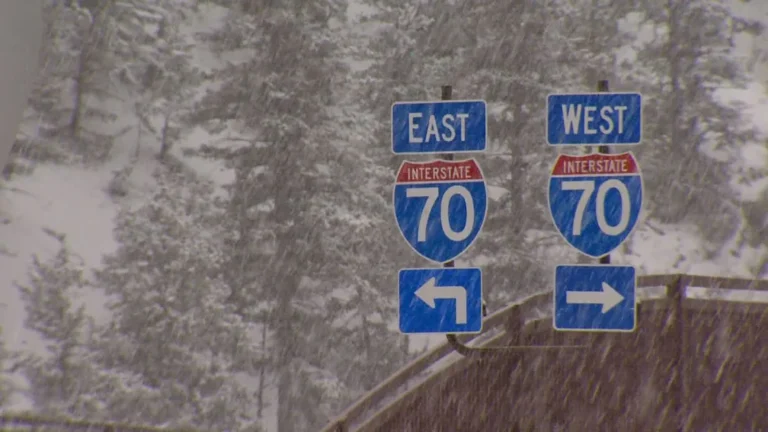
Colorado is not just high. It is a roller coaster of elevation. You can start your commute at 5,280 feet in Denver, climb I-70 to 11,158 feet at the Eisenhower Tunnel, and descend back down all in one trip.
No other state puts that kind of daily stress on your engine's air-fuel management.
Your engine control unit (ECU) adjusts for altitude using data from the oxygen sensors and the mass air flow (MAF) sensor. At sea level, that system works within a narrow band. At Colorado's elevation, the ECU has to work much harder.
Most vehicles built after 1996 can handle moderate altitude changes. But the constant swing from 5,000 to over 10,000 feet and back forces the ECU into continuous adaptation. That wears out oxygen sensors faster and can throw off long-term fuel trims.
If you drive daily on the Front Range, your engine deals with conditions that coastal mechanics never see.
This matters because the fix is often simple once you understand the root cause. A lot of Colorado drivers replace oxygen sensors that are still good. They chase the check engine light with new parts when the real problem is fuel trims that have drifted out of spec.
What Actually Happens to Your Engine at 5,280 Feet
Let us talk about air density. At sea level, your engine gets a full column of oxygen-rich air. At 5,280 feet, the air is roughly 82 percent as dense.
Each intake stroke draws in about 18 percent less oxygen. Your engine has to compensate by adjusting fuel delivery.
The ECU does this through fuel trims. Short-term fuel trim (STFT) adjusts in real time. Long-term fuel trim (LTFT) learns over multiple drive cycles.
At sea level, normal LTFT readings hover around plus or minus 5 percent. In Colorado, many healthy engines run at plus 10 to 20 percent on the long-term trim just to maintain the right air-fuel ratio.
| Condition | Long-term fuel trim (typical) | Air density vs sea level |
|---|---|---|
| Sea level | ±5% | 100% |
| Denver (5,280 ft) | +10% to +20% | ~82% |
| Mountain pass (10,000+ ft) | +20% to +30% | ~70% |
Wikimedia Commons / vxla from Chicago, US (CC BY)
That higher fuel trim is normal. It is the ECU doing its job. The problem starts when the trims max out or when the oxygen sensor starts reporting incorrectly.
The sensor does not fail because of altitude directly. It fails because the ECU keeps asking it for corrections that push it outside its ideal operating range.
If you have a naturally aspirated engine, you feel the power loss most. Forced induction engines with turbochargers or superchargers handle altitude better because they compress the thinner air. But even those systems rely on oxygen sensors to keep the mixture safe.
The O₂ Sensor Problem Nobody Tells You About
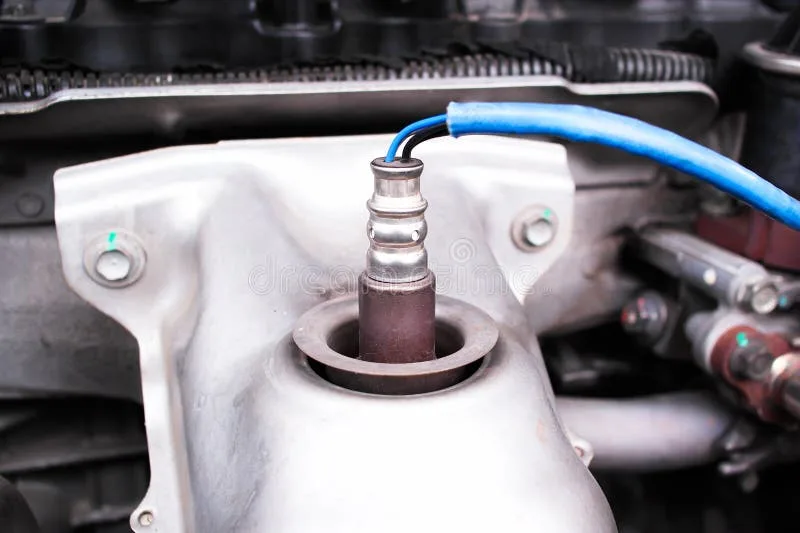
Oxygen sensors measure unburned oxygen in the exhaust. They tell the ECU whether the engine is running rich (too much fuel) or lean (too little fuel). The ECU then adjusts the fuel injectors to bring the mixture back to the ideal 14.7 to 1 air-fuel ratio.
At Colorado altitude, that ratio shifts. The thinner air means the engine needs less fuel to hit the same ratio, but the ECU does not know that immediately. It relies on the oxygen sensor to tell it when the mixture is off.
The oxygen sensor sees a lean condition. It sends a voltage signal that says "add more fuel." The ECU complies. But because the incoming air is already thin, adding more fuel can make the mixture too rich.
The sensor then swings the other way. This back and forth cycling can cause erratic readings.
Over time, this constant cycling degrades the sensor. It builds up carbon deposits from incomplete combustion. It can also trigger false trouble codes.
The most common are P0171 (system too lean) and P0174 (system too lean, bank 2). Mechanics not familiar with altitude effects often replace the sensor immediately. That is a waste of money.
Another issue is oxygen sensor heater failure. At altitude, especially in Colorado winters, the heater element works harder to bring the sensor up to operating temperature. Cold starts at 10,000 feet stress the heater circuit.
That can cause a sensor that is mechanically fine to throw a heater circuit code.
Bing (Web (fair-use with source credit))
If you live in a mountain town like Leadville or Breckenridge, your oxygen sensors may run at the edge of their design limits. A basic cleaning of the sensor tip with sensor-safe cleaner can sometimes help. But the real fix is making sure your fuel trims stay within a healthy range.
Why Your Check Engine Light Might Be Lying to You
A check engine light in Colorado does not always mean something is broken. It can mean your engine is trying to adapt but has hit a limit. The ECU stores a diagnostic trouble code (DTC) when a parameter goes outside a preset threshold.
At altitude, those thresholds are calibrated for sea level conditions.
That is not a design flaw. It is a compromise. Automakers set the thresholds to work for the whole country.
Colorado is the outlier. You can get a lean code even when the engine is running fine. The ECU thinks there is a vacuum leak because the fuel trim is so high.
Common codes that appear falsely at altitude include:
- P0171 (system too lean, bank 1)
- P0174 (system too lean, bank 2)
- P0135 (oxygen sensor heater circuit malfunction bank 1)
- P0141 (oxygen sensor heater circuit malfunction bank 2)
- P0420 (catalyst system efficiency below threshold)
The P0420 code deserves special mention. At high altitude, the catalytic converter can appear less efficient because the engine runs a different air-fuel ratio. That does not always mean the converter is bad.
It can mean the oxygen sensor readings upstream and downstream are mismatched due to fuel trim correction.
Before you replace a catalytic converter, check your fuel trims first. If the long-term trims are above 20 percent, the code is likely a symptom of the tune, not the hardware.
How to Diagnose the Right Way (Before You Buy Parts)
Diagnosing oxygen sensor and engine performance issues at Colorado altitude requires a methodical approach. Start with the data, not the parts.
Step 1. Read the code and capture freeze frame data
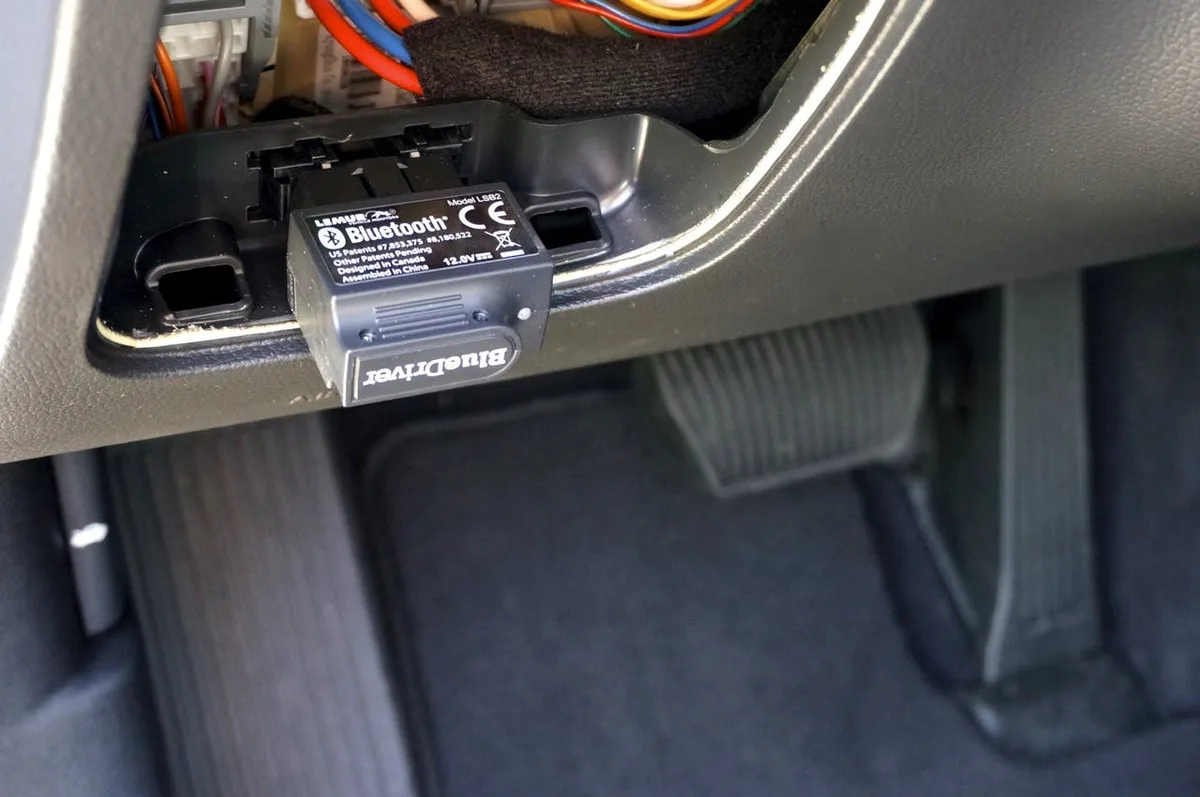
Connect an OBD-II scanner. Write down the exact code. Look at the freeze frame data.
That tells you what the engine was doing when the code set. Note the engine load, coolant temperature, and RPM.
Step 2. Check live fuel trim readings
With the engine at normal operating temperature, read the short-term and long-term fuel trims at idle and at 2,500 RPM. Compare them to the table above. If the long-term trim is above 25 percent, that is a red flag.
If it is between 10 and 20 percent, that is likely normal for Colorado.
Step 3. Inspect the MAF sensor
A dirty MAF sensor can cause false lean codes that mimic oxygen sensor failure. Remove the MAF sensor. Inspect the wire or film element for debris.
Clean it with MAF sensor cleaner. A dirty MAF sensor is a common cause of high fuel trims at altitude.
Step 4. Check for vacuum leaks
Altitude amplifies small vacuum leaks. A leak that would cause a 5 percent trim adjustment at sea level can cause a 15 percent adjustment at 5,280 feet. Spray carburetor cleaner around intake gaskets and vacuum hoses while watching the fuel trim reading.
If the trim changes, you found a leak.
Step 5. Verify the oxygen sensor voltage pattern
For narrowband sensors, the voltage should switch between 0.1 and 0.9 volts about once per second at idle. If the sensor stays stuck at one voltage or switches slowly, it may be contaminated. For wideband sensors, look for a steady reading near the target stoichiometric value.
Step 6. Perform a drive cycle reset
If all readings look normal but the check engine light remains, reset the ECU by disconnecting the battery for 60 seconds. Then perform a drive cycle to allow the ECU to relearn. The drive cycle should include low-speed city driving, highway cruising, and deceleration.
After 50 to 100 miles, check whether the light returns.
If the light comes back with the same code and the fuel trims are still within normal Colorado range, consider an ECU reflash or tune designed for altitude. This is especially important for older vehicles with less adaptive programming.
When to Replace an O₂ Sensor vs When to Fix the Tune
This is the question that saves Colorado drivers real money. The answer comes down to what the data tells you.
Replace the oxygen sensor if:
- The voltage pattern is flat or stuck (no switching)
- The heater circuit resistance is out of spec (check your service manual)
- The sensor tip shows physical damage or heavy contamination
- The code is specifically a heater circuit or slow response code
Fix the tune instead of the sensor if:
- The fuel trims are high (above 20 percent) but the sensor voltage pattern looks normal
- The check engine light codes are lean codes (P0171, P0174) with no vacuum leaks found
- The sensor is less than 60,000 miles old
- The only symptom is a check engine light with no drivability issues
Many Colorado drivers replace a perfectly good sensor because they see a lean code. The sensor is not the problem. It is doing its job by reporting the lean condition.
The ECU is the problem because it cannot fully compensate for the altitude without a proper tune.
A custom tune designed for Colorado elevation costs between $300 and $800 depending on the vehicle. That is cheaper than replacing sensors every year and guessing at the root cause.
Colorado Emissions: What You Must Know to Pass
Colorado requires emissions testing through the Aircare Colorado program. The test checks for check engine light status, OBD-II monitor readiness, and tailpipe emissions. As of 2026, vehicles model year 2005 and newer are tested through the OBD-II port only.
Your vehicle will fail if the check engine light is on. That is the number one reason Colorado drivers fail. Even if the code is a false altitude code, the light means a fail.
OBD-II monitor readiness matters too. After clearing codes or replacing a sensor, the monitors need to complete their self-test cycle. This takes several drive cycles.
You cannot reset the ECU and drive straight to the test station.
Bing (Web (fair-use with source credit))
Common monitor readiness issues at altitude include:
- Catalyst monitor not ready (needs sustained highway driving)
- Oxygen sensor monitor not ready (needs varied load conditions)
- EGR monitor not ready (needs specific RPM ranges)
A proper drive cycle for Colorado conditions should include 20 minutes of mixed driving. Include stop-and-go city traffic and 10 minutes of steady highway cruising at 55 to 65 mph. If you live at high elevation, complete the drive cycle at the elevation where you normally drive.
Real Numbers: Costs, Lifespan, and What Is Normal at Altitude
Here are the numbers that matter for Colorado drivers:
| Item | Typical value |
|---|---|
| Oxygen sensor lifespan (sea level) | 80,000 to 100,000 miles |
| Oxygen sensor lifespan (Colorado) | 60,000 to 80,000 miles |
| Sensor replacement cost (DIY) | $50 to $200 per sensor |
| Sensor replacement cost (shop) | $150 to $400 per sensor |
| ECU tune for altitude | $300 to $800 |
| Emission test fee (Colorado) | $25 (gas cap test) or $94 (full OBD-II and tailpipe) |
| Normal Colorado LTFT range | +10% to +20% |
| Drive cycle for monitor readiness | 50 to 100 miles |
These numbers come from manufacturer specifications and state program data. Your experience may vary depending on your vehicle make, model, and driving habits.
One important note. Sensor lifespan at altitude is shorter because the sensor cycles more aggressively. If you drive a short commute in Denver, your sensor may last closer to the lower end of the range.
If you take frequent highway trips where the ECU stabilizes, the sensor may last longer.
5 Mistakes That Cost Colorado Drivers Real Money
Mistake 1. Replacing the oxygen sensor without checking fuel trims
This is the most common error. A lean code appears. The mechanic swaps the sensor.
The light comes back. Repeat. Check fuel trims first.
It takes two minutes with a scanner.
Mistake 2. Ignoring the MAF sensor
A dirty MAF sensor can cause fuel trim issues that look exactly like a bad oxygen sensor. Clean the MAF sensor before you replace anything else. It costs about $10 for a can of cleaner.
Mistake 3. Clearing codes right before an emissions test
Clearing codes resets the monitor readiness status. Your OBD-II monitors need to complete self-tests before the test station can read them. If you clear codes the night before your test, you will fail the readiness check.
Mistake 4. Using the wrong octane fuel
At altitude, lower octane fuel is generally acceptable because the thinner air reduces cylinder pressure and knock risk. But if your vehicle requires premium at sea level, stick with premium in Colorado. Check your owner's manual.
Mistake 5. Assuming a P0420 code means a bad catalytic converter
A P0420 code at altitude is often a symptom of rich fuel trims, not a failed converter. Replace the converter only after you confirm the fuel trims are in range and the oxygen sensor readings are correct.
Pro Tips for Keeping Your Engine Happy in the Mountains
Keep your engine bay clean. Dirt and debris around sensors can cause false readings. Use MAF sensor cleaner every 30,000 miles if you drive primarily at altitude.
Consider a high-altitude tune if you live above 7,000 feet. Vehicles in mountain towns like Leadville, Fairplay, or Breckenridge benefit from a tune that sets the fuel trims to a new baseline. This reduces sensor cycling and extends sensor life.
Cold starts at elevation are harder on your engine. Use the correct viscosity oil for winter conditions. Thicker oil increases engine load and affects fuel trims.
Check your spark plugs. Worn plugs cause misfires that can trigger oxygen sensor codes. Colorado's altitude amplifies the effect of weak spark.
If you drive an older vehicle with less adaptive engine management, consider updating the ECU or using a plug-and-play tuning device. The OE programming was designed for sea level conditions.
When to Hand It to a Shop (and What to Ask Them)
Some diagnostics require equipment that most DIY owners do not have. A shop with a wideband oxygen sensor setup, a smoke machine for vacuum leaks, and a dyno can diagnose altitude issues faster than guessing at home.
Take it to a shop if:
- You have replaced parts and the code keeps returning
- You need an ECU reflash or custom tune
- You suspect a mechanical issue beyond sensor problems
- You need emissions test preparation and advice
What to ask the shop:
- "Can you read my fuel trims at idle and at 2,500 RPM?"
- "Have you worked on vehicles that come from sea level and are now in Colorado?"
- "Will you check the MAF sensor before replacing the oxygen sensor?"
- "Can you do a vacuum leak smoke test?"
A shop that understands altitude effects will not rush to replace sensors. They will start with the data.
The Bottom Line: Your Action Plan
Colorado high altitude vehicle engine performance and oxygen sensor maintenance comes down to understanding the root cause. Here is your action plan.
First, get a scanner and read your fuel trims. Compare them to the normal ranges for your elevation. If the trims are above 20 percent, look for vacuum leaks or a dirty MAF sensor before changing the oxygen sensor.
Second, if you have a check engine light, read the code and the freeze frame data. Do not clear the code until you understand what triggered it.
Third, if you need to pass emissions, make sure your monitors are ready. Complete a proper drive cycle at the elevation where you test.
Fourth, consider a tune if you live at high altitude permanently. It will save you money on sensors and fuel over time.
Fifth, maintain your engine properly. Clean the MAF sensor, change spark plugs on schedule, and use the right oil for winter conditions. Proper car care, including maintaining the engine bay between washes, helps sensors last longer.
Frequently Asked Questions
Can altitude cause a false check engine light?
Yes. At Colorado elevation, fuel trims run higher than sea level baselines. This can trigger lean codes like P0171 and P0174 even when no mechanical problem exists.
Always check fuel trims before replacing parts.
How often should I replace oxygen sensors in Colorado?
Expect oxygen sensors to last 60,000 to 80,000 miles in Colorado compared to 80,000 to 100,000 miles at sea level. The constant altitude cycling accelerates wear. Check your sensor voltage pattern at 60,000 miles.
Will a tune fix my oxygen sensor issues at altitude?
A proper altitude tune can prevent false codes and extend sensor life. The tune sets a new baseline for fuel trims so the sensors do not have to cycle as aggressively. This is especially effective for vehicles that live at high elevation.
Can I pass Colorado emissions with a check engine light on?
No. A check engine light is an automatic fail under the Aircare Colorado program. You must resolve the code and complete a drive cycle to reset the monitors before testing.
Does premium fuel help at high altitude?
Not generally. The thinner air at altitude reduces cylinder pressure and knock risk. Most vehicles designed for regular fuel at sea level can run regular fuel in Colorado.
But if your owner's manual requires premium, stick with premium.
What is a normal fuel trim reading in Denver?
Long-term fuel trims of plus 10 to 20 percent are normal for Denver elevation. If your trims exceed 25 percent, inspect for vacuum leaks or a dirty MAF sensor before replacing the oxygen sensor.