Georgia annual ad valorem tax requirements for vehicles purchased before 2013 catch many owners off guard. Most folks assume the 2013 law killed all vehicle taxes, but that only applies to cars bought later.
If your car was titled in the state before March 1, 2013, you still owe a yearly property tax on it. The state charges 1% of the vehicle's fair market value each year. Per the Georgia Department of Revenue, this old ad valorem system stays active as of 2026.
Missing the payment can freeze your tag renewal fast, so know the rules before your birthday month.

Why Getting This Tax Wrong in Georgia Actually Costs You
This is not a small fee you can skip without notice. The county tag office will block your registration if the annual ad valorem tax goes unpaid. That means no legal tag, no decal, and a citation risk if you drive.
The penalty structure is strict. State law sets a 10% late charge plus 1% monthly interest on the owed amount. Those numbers compound fast on a vehicle with modest value.
We've covered similar surprises on our vehicle compliance blog for other states. Georgia's version is unique because the tax repeats every year instead of a one time title hit. Owners of pre 2013 cars must treat it as a recurring bill.
A registration hold also creates a tax lien on the vehicle. You cannot sell or transfer a clean title until the debt clears. That hurts resale value and limits your options.
We've also written about abandoned car procedures that trigger liens elsewhere. The Georgia lien works the same way, quietly growing until you pay.
Quick Answer: Pre-2013 Vehicles Still Owe Annual Ad Valorem Tax
Georgia annual ad valorem tax requirements for vehicles purchased before 2013 mean a yearly bill. Owners pay 1% of fair market value plus county millage. The tax is due at birthday month tag renewal.
Failure brings penalties and a registration block. This applies to vehicles titled before March 1, 2013.
How Georgia's Annual Ad Valorem Tax Works for Vehicles Bought Before March 1, 2013
The system runs on a simple loop tied to your birth month. The Georgia Department of Revenue publishes a vehicle value manual each year. Your county tax commissioner uses that value to build the bill.
Unlike the newer Title Ad Valorem Tax, this old method never ends. You keep paying as long as the car is registered in Georgia. The amount drops yearly because the state depreciates the fair market value.
Here is the basic workflow:
- DOR sets fair market value from model year and depreciation schedule.
- County multiplies that value by 1% state rate.
- Local millage adds a small county portion if applicable.
- Owner gets a renewal notice before their birthday month.
- Tax must be paid to release the registration decal.
This differs from old plate eligibility rules in some states that freeze taxes for classics. Georgia gives no broad age exemption for passenger cars. You pay until the vehicle leaves the road or the state.
The tax follows the vehicle, not the original buyer. If you inherit a 2009 sedan titled here, the bill transfers to you. The same applies to gift recipients and spouses on joint titles.
What Your Bill Is Based On: DOR Fair Market Value and the 1% State Rate
Your bill starts with a number the state assigns, not the price you paid. The Georgia Department of Revenue uses a depreciation table that lowers value each year. A 2010 truck is worth far less on paper in 2026 than in 2013.
The state ad valorem rate is a flat 1% of that fair market value. That rate is fixed by O.C.G.A. § 48-2-111 for pre 2013 vehicles. County additions are separate and explained in the next section.
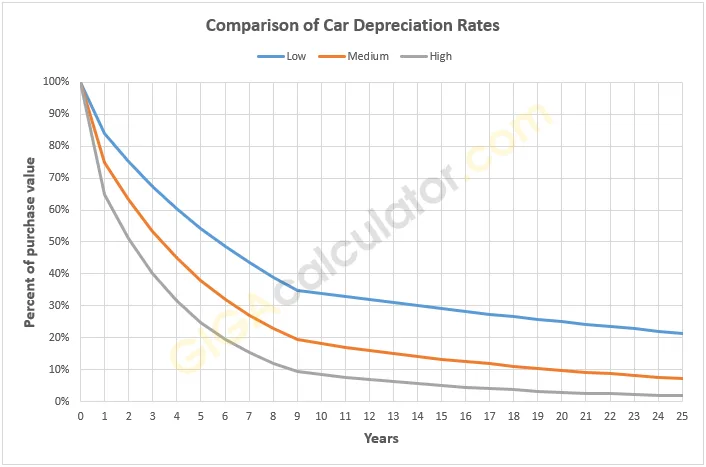
A quick example helps. Say the DOR lists your 2008 sedan at $3,000 fair market value. The state portion is $30 per year (1% of $3,000).
Add county millage and the total might reach $45 in some localities.
The value is public and predictable. You can check the annual manual before renewal to estimate the hit. This contrasts with classic ride exemptions that waive fees in other states based on age alone.
If the DOR value looks wrong, you can appeal through the county. We cover that dispute step later in the article. For now, know the 1% figure is fixed for the state share.
County Millage and Why Your Neighbor's Bill May Differ
The state rate is uniform, but county millage is not. Each of Georgia's 159 counties sets its own millage for ad valorem motor vehicle tax. That is why two identical 2012 SUVs can show different bills.
Fulton County may add a higher millage than a rural county. The difference is usually small, but it stacks on the 1% state base. You will see both lines on the renewal notice.
Just as mountain driving requirements shift by region, millage shifts across Georgia jurisdictions. Your neighbor one county over could pay more for the same truck.
County millage is set by local commissioners each budget year. It funds schools, roads, and first responders. The tax commissioner merely collects what the rate dictates.
If you move counties but keep the car garaged in the old one, the old county still bills you. Georgia taxes the place where the vehicle is primarily kept. This catches newcomers who assume a new address changes the bill immediately.
Who Owes This Tax: Owners, Heirs, and Out-of-State Moves
The tax follows the vehicle, not just the person who bought it. If you hold a Georgia title dated before March 1, 2013, the bill is yours. This holds for cars, trucks, SUVs, and most passenger vans.
Heirs get the debt along with the keys. When a family member passes and leaves a 2011 hatchback, the new owner resumes the annual payments. Gift transfers between spouses work the same way.
Military members stationed here are not exempt. A pre-2013 car garaged on base still owes the state share each year. The only break is for vehicles kept out of state under orders, and that needs documentation.
Out-of-state owners moving a pre-2013 vehicle into Georgia face a surprise. The moment the car is primarily garaged here, the county tax commissioner starts billing. Notifying the motor vehicle office on time keeps the right jurisdiction on the file.
Commercial-rated vehicles follow the same ad valorem path. The fair market value comes from the DOR manual, not a blue book guess. Fleet owners often get caught off guard by the recurring nature of the bill.
Pre-2013 Ad Valorem vs. Post-2013 TAVT: The Cutoff That Trips People Up
The March 1, 2013 line is the single most confusing point in Georgia vehicle tax. Cars bought and titled before that date stay on the old annual system. Cars titled after pay a one-time Title Ad Valorem Tax instead.
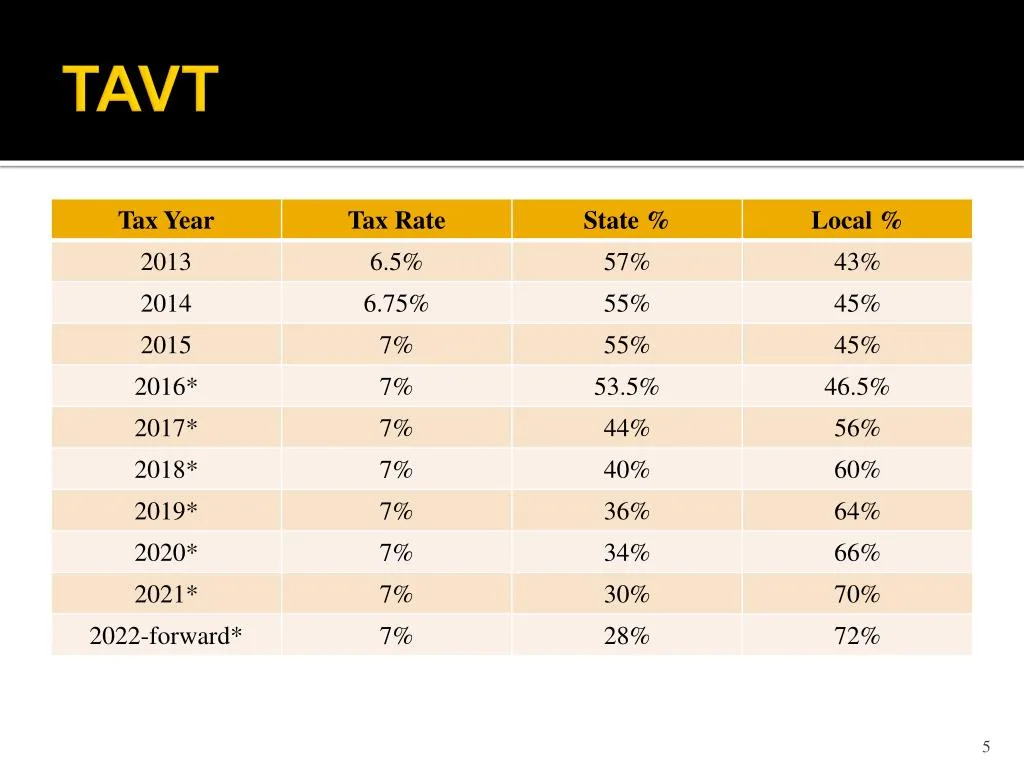
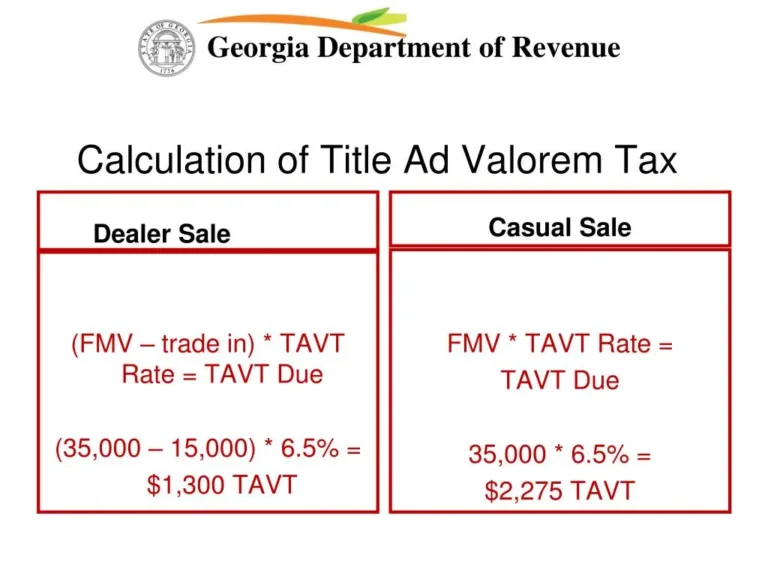
The newer TAVT charges 7% of the sale price at title transfer. You never see another ad valorem bill on that vehicle. The pre-2013 car keeps the 1% yearly loop with county add-ons.
Leased vehicles use a different method under both systems. The lessor pays a proportional fee, and the driver does not get a renewal tax bill. This confuses folks who lease an older unit thinking they owe the annual share.
If you bought a 2012 model in 2014, you are still in the old system. The cutoff is the title date, not the model year. We've covered buyer remedy options for bad used car deals, but tax class is set by title day.
The savings flip over time. A cheap older car costs little per year under ad valorem. A fresh purchase under TAVT takes a big hit once, then nothing.
Step-by-Step: Renewing Your Tag and Paying the Annual Tax
The cycle starts with a mailed or online notice from your county. It arrives before your birthday month, which is your renewal month. Read the ad valorem line before you pay anything.

Here is the flow we advise:
- Check the DOR fair market value listed on the notice.
- Confirm the 1% state amount and any county millage.
- Pay the tax through the county portal, mail, or office.
- Receive your registration decal once the tax clears.
- Keep the receipt in case of a system lag.
The decal releases only after the tax posts. Some counties take a day to sync the payment. Plan ahead if your birthday is at month end.
Update your address with the DOR if you moved. A missed notice is not a defense against penalties. The same rule applies in every state we track for vehicle billing.
You can pay at the tag office counter if you prefer in person. Bring the renewal notice and ID. The clerk prints the decal on the spot after the tax clears.
Mistakes That Trigger Penalties, Liens, or a Registration Hold
The biggest error is assuming TAVT replaced your bill. Owners of pre-2013 cars who skip renewal get a 10% late penalty. Monthly interest of 1% then stacks on the owed amount.
Missing the birthday deadline is the next common slip. Georgia ties renewal to the owner's birth month, not the plate month. Drive on an expired tag and you risk a citation plus lost tags risk a tow.
Paying the wrong county creates a mess. If the car moved garages but the old county still bills, pay the old one. The new county cannot release a hold it did not issue.
Ignoring the notice does not pause the debt. The county files a tax lien that blocks title transfer. We've seen sellers lose deals over a $40 unpaid bill from three years back.
How to Dispute the DOR's Vehicle Value Before You Pay
You can challenge the fair market value if it looks too high. The county tax commissioner handles the appeal, not the DOR directly. File before you pay so the hold does not trigger.
Gather proof of actual condition and recent sales of similar models. A crashed 2009 coupe should not carry clean retail value. Photos and a repair bill strengthen your case.
The county reviews the evidence and may lower the assessed value. If they deny it, you can escalate per local board of assessors rules. Act within the stated window on your notice.
This step saves money on a recurring bill, not just one year. A successful reduction drops every future renewal until the car ages out. That is why we tell owners to check the value line every single time.
Legal Backing: O.C.G.A. Rules and County Tax Commissioner Authority
The annual tax sits in O.C.G.A. § 48-2-111 for pre-2013 vehicles. The statute gives the county tax commissioner power to collect and enforce. The Georgia Code confirms the state rate and penalty terms.
Counties act as the state's agent for collection. They file the lien and block registration per state law. You cannot challenge the statute, only the assessed value we covered earlier.
Expert Tips for Keeping the Annual Bill Predictable
Pull the DOR value manual each January before your renewal month. You'll spot increases from a wrong model year entry. Fixing the record early avoids a surprise at the counter.
Set a calendar alert for your birthday month start. Pay the first week to dodge any system lag. Keep the receipt screenshot in your phone photos.
If you move, tell the DOR and the new county together. That keeps the garaging address clean and the right office billing. It prevents double charges or a missed hold.
FAQs on Georgia Annual Ad Valorem Tax for Older Vehicles
Does a pre-2013 vehicle ever stop owing the tax?
The tax continues every year the car stays registered in Georgia. Only retiring the plate ends the bill. The value drops with age, but the 1% state share stays active.
You pay at each birthday renewal until the title is surrendered or the vehicle is reported off the road.
Can I pay the annual tax in installments?
Counties require the full amount at renewal to release the decal. Some offer split payments only on approved payment plans. You must ask the tax office before the due date.
A missed plan payment restores the hold, so clear the balance early if you set one up.
What if I sold the car but got a bill?
Notify the county with the buyer's info and sale date right away. The new owner becomes liable from transfer. A late notice after sale needs the bill corrected by the tag office.
Provide the bill of sale and the new registration to close your account without penalty.
Is the tax deductible on federal returns?
State ad valorem tax on a personal car is not deductible under current federal rules. A business use vehicle may allow a portion. Talk to a tax pro for your case.
Keep the renewal receipt, since a sole proprietor might claim it under auto expenses with proper records.
Do out-of-state titled pre-2013 cars owe this?
Only if the vehicle is primarily garaged in Georgia. A titled out-of-state car here for school may qualify for exemption. The owner must show the home state registration and proof.
Military orders and student status need documentation on file with the county before the renewal date to avoid a bill.