ByMax Lee
Northern Mariana Islands School Bus Stop Law Guide
The Northern Mariana Islands school bus stop law for all drivers on divided highways is one of the most misunderstood traffic rules in the territory. Many drivers assume the same rules apply as in U.S. states, but CNMI's law has critical differences that can mean the difference between safety and a costly violation. As of 2026, the Commonwealth Traffic Code (Title 6) sets clear expectations for when you must stop, and when you don't.
In our research of CNMI's traffic regulations, we found that the rule hinges on whether a physical barrier separates traffic. This single detail changes everything for drivers on Saipan, Tinian, and Rota.
Quick Answer
The Northern Mariana Islands school bus stop law for all drivers on divided highways requires you to stop when traveling in the same direction as a school bus with flashing red lights. If a physical barrier separates your lane from the bus, you do not have to stop. This rule applies to all motorists.
Violations can result in fines and points on your license.
The Bottom Line: When You Must Stop for School Buses on Divided Highways in the Northern Mariana Islands
YouTube / Canada Breeze (YouTube thumbnail (fair-use with source credit))
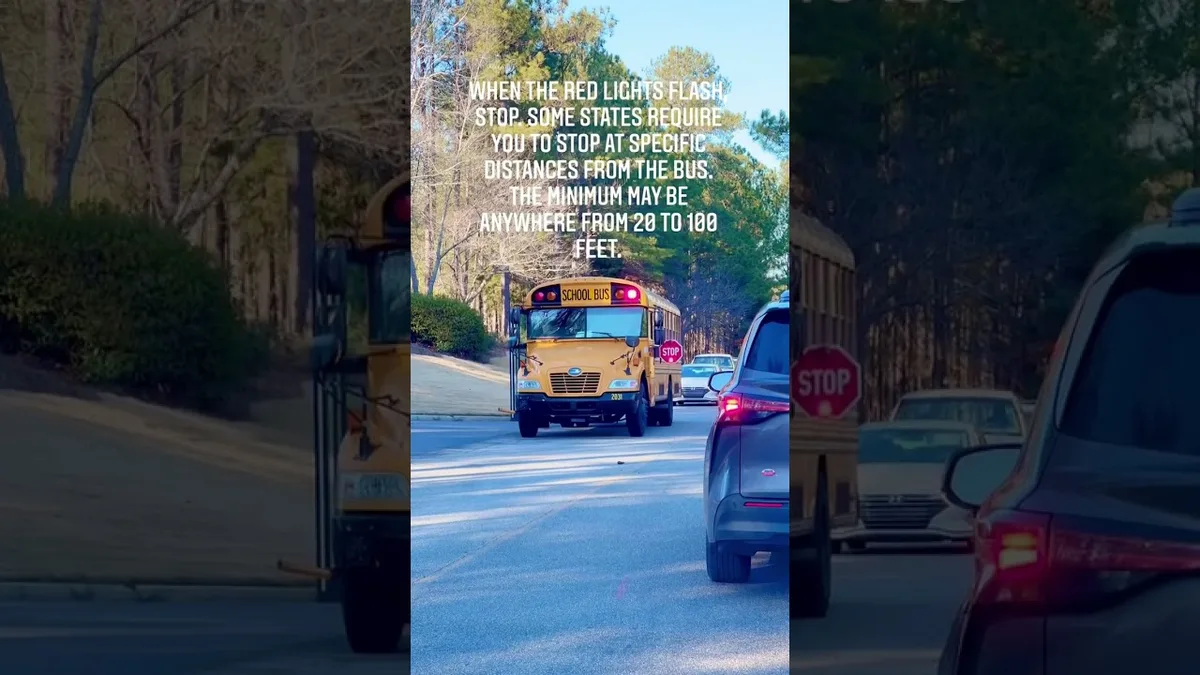
The law is simple: if you're behind a school bus on a divided highway and its red lights are flashing, you stop. No exceptions. The confusion starts when you're on the opposite side of the road.
In CNMI, the dividing line is a physical barrier. If there's a concrete median, grass strip, or any solid separation between your lane and the bus's lane, you're not required to stop. But if it's just a painted line or no barrier at all, you must stop regardless of direction.
This mirrors the approach in some U.S. states but differs from others. See Maryland School Bus Stop Law On Divided Highways for how another jurisdiction handles the same scenario.
The stakes are high. School buses are designed to keep kids safe, but that only works if drivers follow the rules. A moment of hesitation or a wrong assumption can lead to tragedy, or at least a hefty fine.
Why This Rule Exists: Child Safety Comes First
School buses are one of the safest ways for kids to travel, but the danger zone is the 10 feet around the bus. That's where most accidents happen. CNMI's law exists to protect children as they board or exit the bus, especially on busy divided highways where traffic moves fast.
The flashing red lights and extended stop arm are universal signals. They mean: stop and wait. The law assumes that if you're in the same direction as the bus, you're close enough to pose a risk to kids crossing the street.
On the opposite side, a physical barrier acts as a natural shield, reducing that risk.
This isn't just about following the letter of the law. It's about creating a predictable environment where kids, parents, and drivers all know what to expect. When everyone follows the same rules, the roads become safer for everyone.
Divided Highway vs. Undivided Highway: What's the Difference in CNMI?
Openverse / ITB495
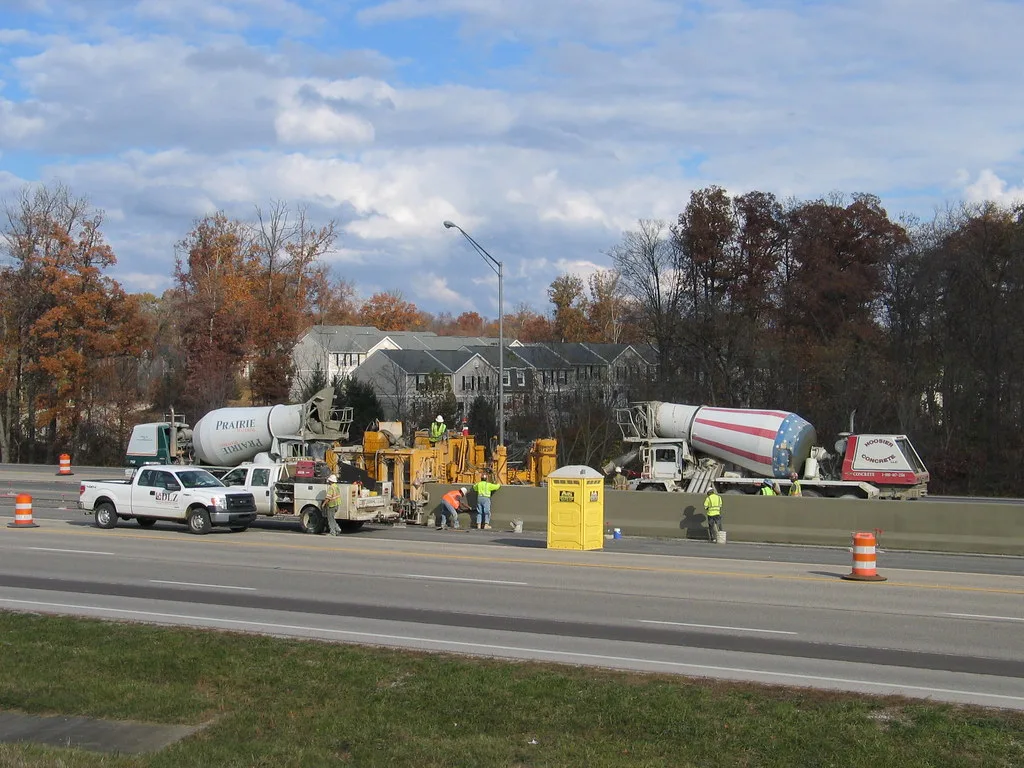
A divided highway in CNMI is any road with a physical barrier separating traffic moving in opposite directions. This could be a concrete median, a raised curb, a grass strip, or even a row of flex posts. The key is that the barrier prevents vehicles from easily crossing into the opposite lane.
An undivided highway, on the other hand, has no such barrier. Traffic in both directions shares the same roadway, separated only by painted lines. On these roads, the rule is straightforward: you must stop for a school bus with flashing red lights, no matter which direction you're traveling.
Here's a quick way to remember it:
| Road Type | Barrier Present | Must Stop (Same Direction) | Must Stop (Opposite Direction) |
|---|---|---|---|
| Divided Highway | Yes | Yes | No |
| Divided Highway | No | Yes | Yes |
| Undivided Highway | N/A | Yes | Yes |
If you're unsure whether a road is divided, err on the side of caution and stop. It's better to be safe than sorry.
Same Direction vs. Opposite Direction: Do You Still Have to Stop?
YouTube / Driving-Tests.org (YouTube thumbnail (fair-use with source credit))
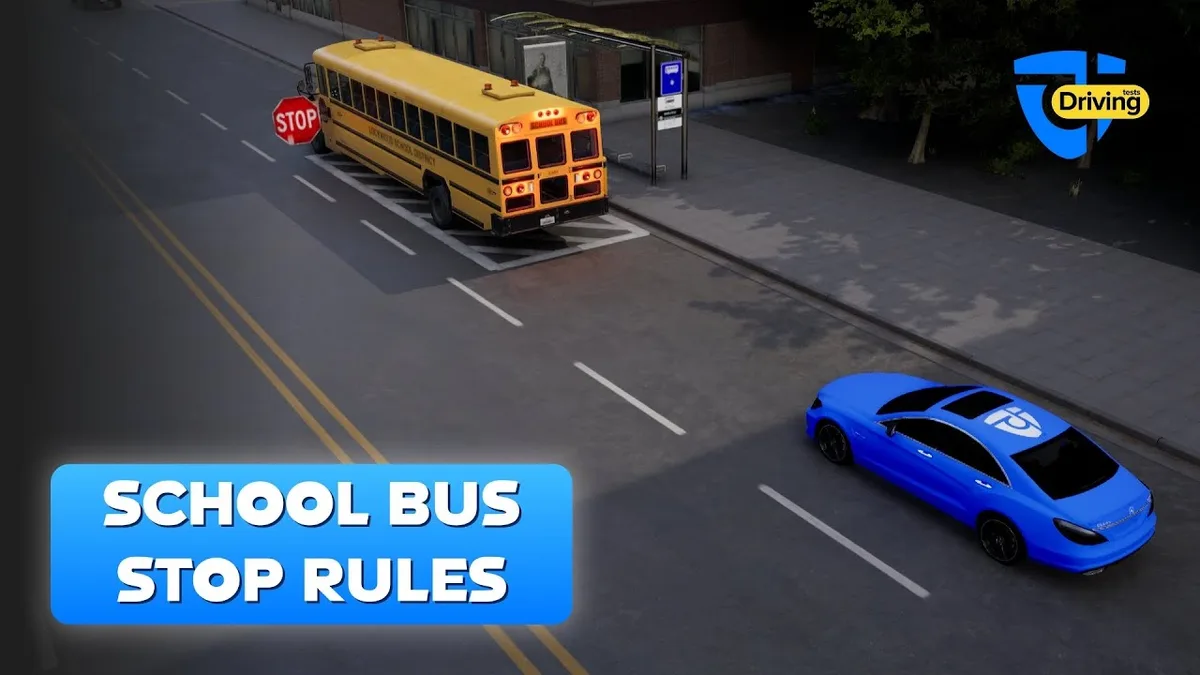
Yes, you must stop if you're traveling in the same direction as the bus, even on a divided highway. The law assumes that if you're behind the bus, you're close enough to the children boarding or exiting to pose a risk.
If you're traveling in the opposite direction, the rule depends on the barrier:
- With a physical barrier: You do not have to stop.
- Without a physical barrier: You must stop.
This distinction is critical. Many drivers assume that a divided highway always means they can keep moving, but that's not the case in CNMI. The presence of a physical barrier is what changes the requirement.
Here's a simple way to think about it: same direction equals always stop. Opposite direction equals stop only if there's no barrier.
The Physical Barrier Rule: When It Saves You From Stopping
YouTube / Verra Mobility (YouTube thumbnail (fair-use with source credit))
The physical barrier rule is the key to understanding CNMI's school bus stop law on divided highways. If a solid barrier separates your lane from the bus's lane, you're not required to stop when traveling in the opposite direction.
But what counts as a physical barrier? According to CNMI's traffic code, it's any structure that prevents vehicles from crossing into the opposite lane. This includes:
- Concrete medians
- Raised curbs
- Grass strips or landscaped dividers
- Flex posts or guardrails
Painted lines, double yellow lines, or even a wide shoulder do not count as physical barriers. If there's no solid separation, you must stop for the bus regardless of direction.
This rule exists because a physical barrier reduces the risk of a child darting into your lane. Without that barrier, the law assumes you're close enough to pose a danger, so you must stop.
Step-by-Step: What to Do When You See a School Bus Stop Arm
YouTube / Verra Mobility (YouTube thumbnail (fair-use with source credit))
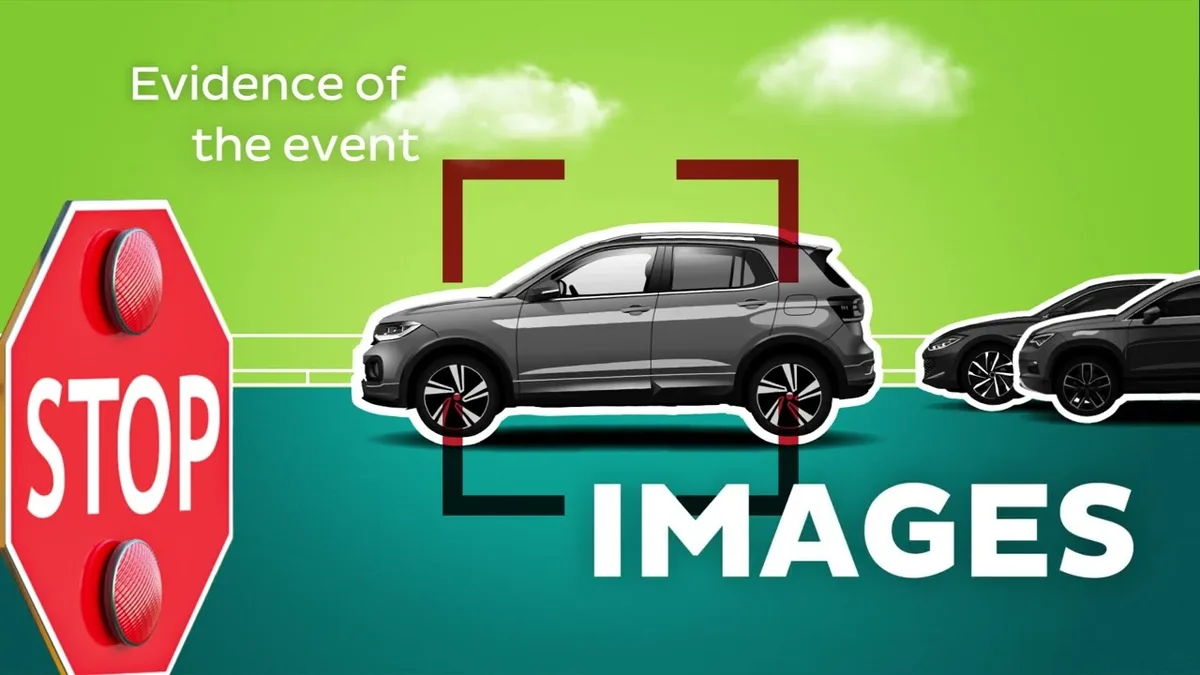
When you see a school bus with flashing red lights and an extended stop arm, here's what you should do:
- Check your direction. Are you traveling the same way as the bus or the opposite way?
- Look for a barrier. Is there a physical divider between your lane and the bus's lane?
- If same direction: Come to a complete stop at least 10 feet from the bus.
- If opposite direction with barrier: You may proceed with caution.
- If opposite direction without barrier: Come to a complete stop.
- Wait. Remain stopped until the bus moves again and the lights turn off.
- Proceed. Only then should you continue driving.
This process mirrors the steps outlined in Maryland Move Over Law Rules For Emergency Vehicles, another traffic rule that prioritizes safety through clear action steps.
Never race past a stopped school bus. Kids can appear from anywhere. Give them space and time.
Penalties for Violations: Fines, Points, and Legal Trouble
Violating the school bus stop law in CNMI is no small matter. Penalties can include:
- Fines: Typically ranging from $200 to $500 for a first offense.
- Points: Two points added to your driver's license.
- License suspension: Repeat offenses can lead to temporary license suspension.
- Court appearance: Serious cases may require a court hearing.
Insurance premiums can also rise after a violation. A single ticket can cost you far more than the fine itself over time.
The best strategy is to always stop when in doubt. If you're unsure whether you need to stop, stop. It takes only a few seconds and keeps everyone safe.
Common Mistakes Drivers Make (And How to Avoid Them)
Even experienced drivers get this wrong. Here are the most common mistakes we see:
- Assuming all divided highways are the same. Some roads that look divided aren't. Always look for a solid barrier.
- Stopping too close to the bus. Stay at least 10 feet away. This gives kids space to move safely.
- Proceeding too early. Wait until the bus moves and the lights are off. Don't guess.
- Ignoring the stop arm. Flashing lights alone should be enough, but the arm is the clearest signal. Always stop when it's extended.
- Distracted driving. If you're on your phone or doing anything else, you might miss the bus signals entirely. Maryland Handheld Driving Ban What You Need To Know explains how distractions affect driving safety broadly.
Avoiding these mistakes comes down to one habit: slow down and pay attention around school buses.
Real Scenarios: Where This Law Applies on Saipan, Tinian, and Rota
YouTube / kuamnews (YouTube thumbnail (fair-use with source credit))
Let's look at how this law plays out in real locations across the Northern Mariana Islands.
Saipan, Beach Road: This major divided highway features a concrete median in most sections. If a school bus stops on the southbound side, northbound traffic can continue without stopping. However, several stretches lack a barrier, so drivers must be alert.
Saipan, Middle Road: Parts of this road are undivided. School buses stopping here require all traffic from both directions to stop.
Tinian, Main Road: The primary road on Tinian has limited divided sections. Most of it functions as an undivided highway, meaning the full stop rule applies in both directions.
Rota, Hospital Road: This road has a mix of divided and undivided sections. Drivers should watch for changes in the median and adjust accordingly.
These scenarios show why knowing your route matters. If you commute through school zones regularly, take time to learn which roads have barriers and which don't. The same principle applies to Michigan Horse Carriage Road Sharing Rules where local conditions dictate different driving requirements.
What the CNMI Traffic Code (Title 6) Actually Says
The legal basis for the school bus stop law is found in Title 6 of the Commonwealth Traffic Code. While the exact section numbers can shift with updates, the core provisions remain consistent:
- Section 6xxx: Requires all vehicles to stop for a school bus displaying flashing red lights when traveling in the same direction.
- Section 6xxx: Provides the exception for vehicles on the opposite side of a divided highway with a physical barrier.
- Section 6xxx: Defines "physical barrier" as a permanent structure separating opposing traffic flows.
- Section 6xxx: Establishes penalties for violations, including fines and license points.
The National Highway Traffic Safety Administration (NHTSA) provides guidelines on school bus safety that influence territorial laws. You can learn more at NHTSA School Bus Safety.
For the most current and detailed legal text, consult the official CNMI traffic code or speak with a local traffic attorney.
FAQs
Do I have to stop for a school bus on a divided highway in CNMI?
Yes, if you're traveling in the same direction as the bus. If you're on the opposite side and a physical barrier separates your lane, you do not have to stop.
What counts as a physical barrier in CNMI?
A concrete median, raised curb, grass strip, or guardrail can all qualify as physical barriers. Painted lines or wide shoulders do not count.
How close must I stop to a school bus?
You must stop at least 10 feet away from the bus. This gives children a safe distance to board or exit.
What happens if I don't stop for a school bus in CNMI?
Violations can result in fines between $200 and $500, two points on your license, and potential insurance increases. Repeat offenses may lead to license suspension.
Does this law apply on all roads in the Northern Mariana Islands?
Yes. The school bus stop law applies on all public roads in CNMI, including Saipan, Tinian, and Rota.
What should I do if I'm unsure whether to stop?
When in doubt, stop. It's always safer to stop than to risk a violation or, worse, endangering a child. You can always restart when the bus moves.
When to Talk to a Traffic Attorney in the Northern Mariana Islands
If you've received a citation for violating the school bus stop law, consulting a traffic attorney in CNMI may be worthwhile. An attorney can review the specifics of your case, check whether the citation was issued correctly, and explore options for reducing penalties.
This is especially important if you're a commercial driver. A school bus violation can affect your Michigan Mandatory Liability Insurance Limits Explained and potentially your ability to work.
Your Quick Reference Checklist: Safe and Legal Driving Around School Buses
Use this checklist every time you approach a school bus:
- Are the red lights flashing?
- Is the stop arm extended?
- Am I traveling in the same direction as the bus?
- Is there a physical barrier between us?
- Am I stopping at least 10 feet away?
- Am I remaining stopped until the bus moves?
- Am I avoiding distractions like my phone?
Checking these boxes takes only seconds. But those seconds keep kids safe and keep you out of trouble.