ByMax Lee
Guide to Move It Law: Rules for Keeping the Road Clear After Minor Accidents.
If you've ever been in a minor fender bender, you know that sinking feeling of sitting in traffic wondering what to do. The Move It Law: Rules for keeping the road clear after minor accidents. gives you a legal framework to handle that moment. It tells you when to stay put and when to pull over.
According to NHTSA research, roughly 20% of highway crashes are secondary collisions caused by vehicles stopped in travel lanes. That is one in five accidents that could have been prevented. Understanding this law keeps you safe and keeps traffic moving.
Let's break down what you need to know.
Bing (Web (fair-use with source credit))
Quick Answer
Move It Law requires you to clear the road after a minor accident. If no one is hurt and your car can drive, move it to a safe spot. You must still exchange information and report the crash.
Failing to move can result in a fine of up to $250.
Why Move It Law Exists (and Why Getting It Wrong Can Cost You)
The main reason for these laws is safety. A stalled car in a travel lane creates a dangerous obstacle. Drivers coming up fast may not see you in time.
That is how secondary crashes happen.
Traffic congestion is another big factor. A single stopped car can back up traffic for miles. Emergency vehicles need those lanes clear.
By moving your car, you help everyone move faster.
There is a legal cost too. In most states, blocking traffic after a minor accident is a separate violation. Fines typically range from $50 to $250.
Some states even add points to your license.
Our research shows that many drivers do not know these laws exist. They wait for police on a busy highway when they could have pulled over safely. That mistake can turn a fender bender into a ticket.
Check our main blog for more driving safety tips.
The Core Rule: When You Must Move Your Vehicle After a Fender Bender
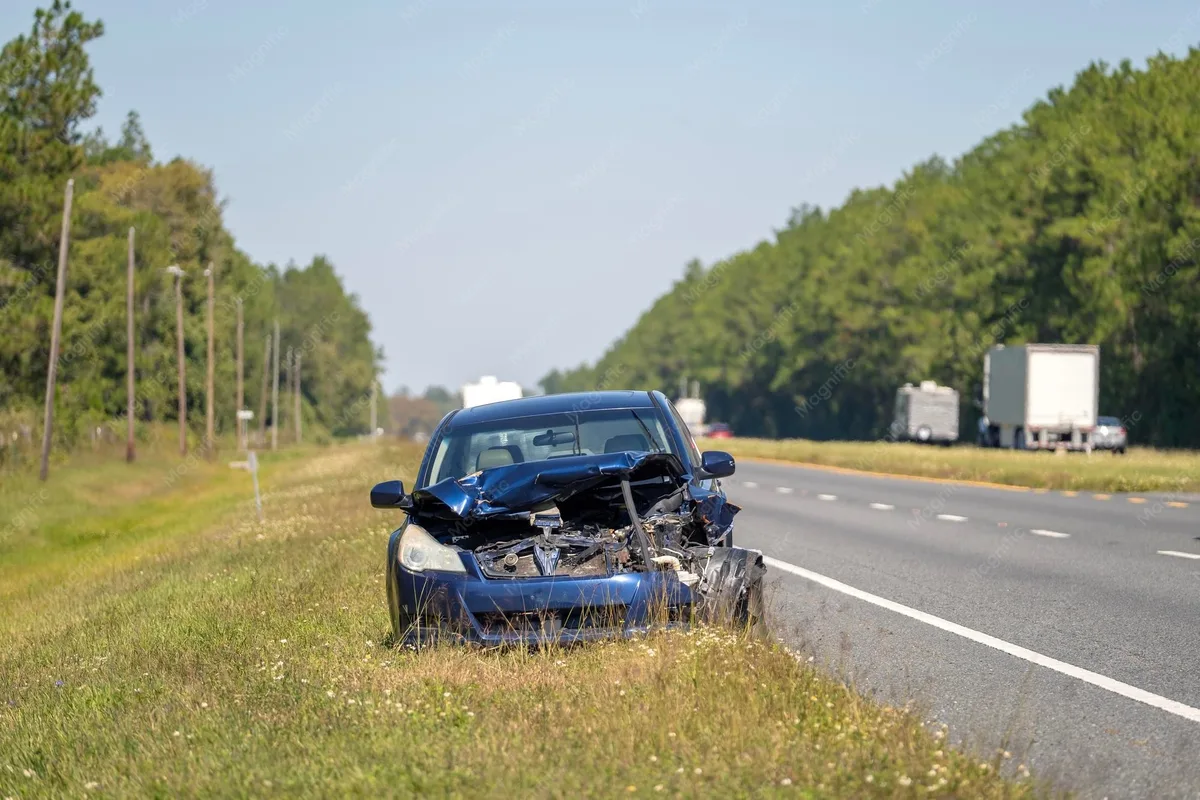
The rule is simple but has clear conditions. You must move your vehicle if all three conditions are true: no injuries, the car is drivable, and you are blocking a travel lane. If any of those conditions change, the rule changes.
Use this table to decide quickly:
| Condition | Required Action |
|---|---|
| No injuries, car drivable, blocking traffic | Move to nearest safe location immediately |
| No injuries, car drivable, not blocking traffic | Move to shoulder or parking lot when safe |
| Any injuries or car not drivable | Do not move. Call police. |
The law uses the phrase "nearest safe location." That means the closest spot where you can park without blocking traffic. A shoulder works. So does a side street or a parking lot entrance.
You do not have to drive miles away.
The key is to stay calm. Check your mirrors. Signal your move.
Drive slowly to your spot. Do not worry about surface damage from driving a few feet. Safety comes first.
The Critical Exception: When You Should Absolutely NOT Move
There are clear situations where moving your car is the wrong choice. Understanding these exceptions can protect you from serious legal trouble.
Do not move the car if anyone is injured. Even a complaint of neck pain counts. Moving the vehicle could be seen as tampering with evidence.
It could also worsen an injury.
Do not move if you suspect the other driver is impaired. If they seem drunk or confused, stay in place. Leave that judgment for the police.
Moving could make it harder to prove impairment.
Do not move the car if the vehicle is unsafe to drive. A leaking radiator, grinding metal, or smoking engine means you should not start it. Driving a damaged car can cause a fire or a breakdown in an even worse spot.
Do not move in hazardous weather. Ice, heavy rain, or fog make the shoulder risky. If visibility is poor, it is safer to stay put with hazard lights on until help arrives.
Here is the hard truth: moving when you should not can lead to a hit-and-run charge. Even if you stop a hundred feet away, leaving the original scene can be interpreted as fleeing. Know the exceptions as well as the rule.
How to Document the Scene Before You Move (Without Admitting Fault)
Before you pull away, take a moment to document everything. This protects you during insurance claims. It also saves you from he-said-she-said arguments.
Start with photos. Take wide shots showing both vehicles in their positions. Then take close-ups of the damage on both cars.
Include the area around the accident: street signs, lane markings, skid marks. If the road is wet, capture that too.
Exchange information at the scene. Get the other driver's name, phone number, insurance company, and policy number. Their license plate number is essential.
Ask for a photo of their driver's license and insurance card.
Write down the time, date, and weather conditions. Note the direction both vehicles were traveling. If there were witnesses, get their contact information.
A witness statement can change everything.
Do not say "I am sorry" or "It was my fault." Even a casual apology can be used against you in some states. Stick to facts. Exchange information.
Let the insurance companies work out fault later. For tips on documenting existing car damage before an accident, see our guide on swirling car wash brush damage.
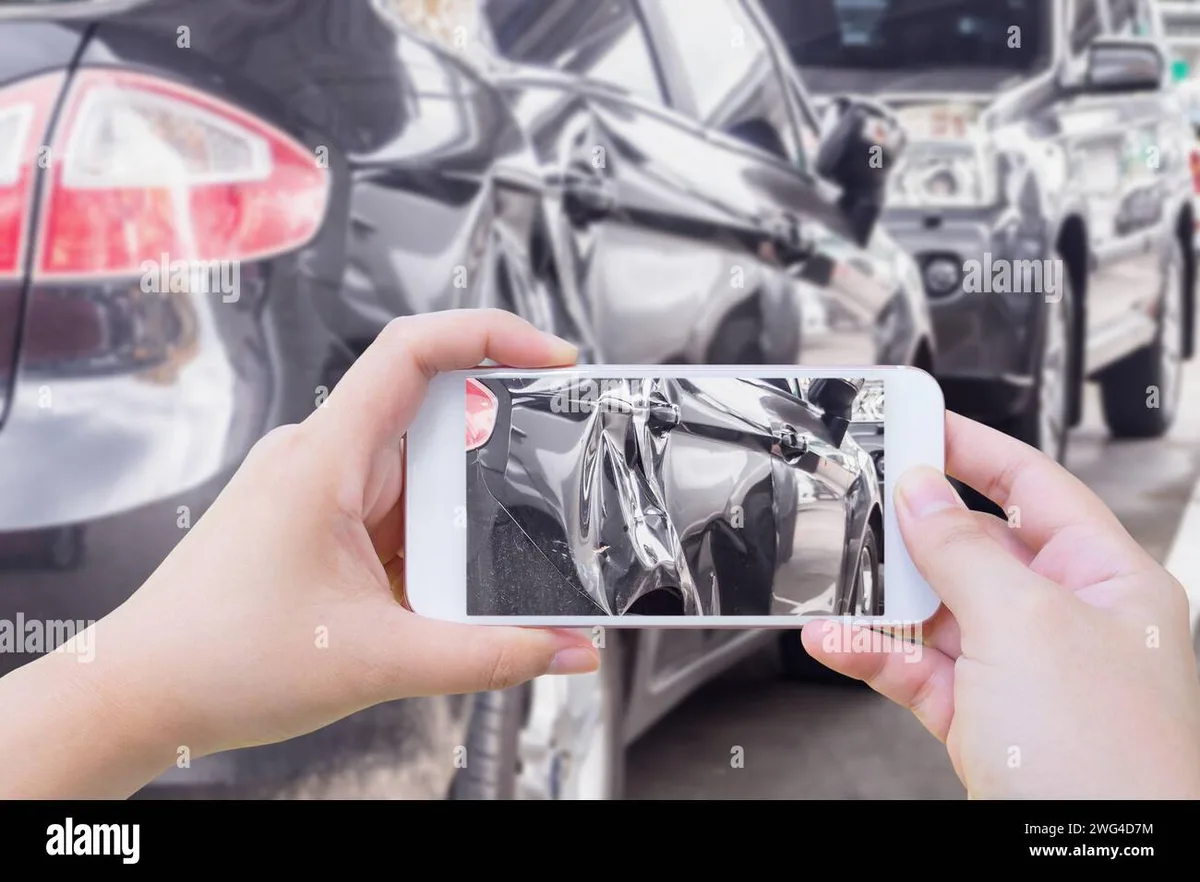
Bing (Web (fair-use with source credit))
Step-by-Step: Moving Your Vehicle Safely to the Nearest Shoulder or Lot
Once you have your documentation and you confirm it is safe to move, follow these steps. Take them one at a time.
Step 1: Assess the Scene. Check for injuries first. Not just yours, but your passengers and the other driver. If everyone is okay, proceed.
If not, skip to staying in place.
Step 2: Turn on Hazard Lights. This alerts other drivers that something is wrong. Keep them on until you are safely parked.
Step 3: Check Traffic. Look in your mirrors. Turn your head if needed. Make eye contact with drivers in the next lane if possible.
Wait for a gap.
Step 4: Signal and Steer Slowly. Use your turn signal. Drive at parking lot speed. Do not accelerate hard.
Your goal is a controlled, gentle move.
Step 5: Choose a Safe Spot. The shoulder is best. If the shoulder is narrow or missing, find a side street or a parking lot entrance. Do not drive onto a grassy median if it is wet or steep.
Step 6: Park and Set Brake. Turn off the engine. Set the parking brake. Keep your hazard lights on.
Now you can safely exchange information.
Step 7: Exchange Info and Report. Fill out your details. Call the police if required by your state. Notify your insurance company within the required window, often 24 hours.
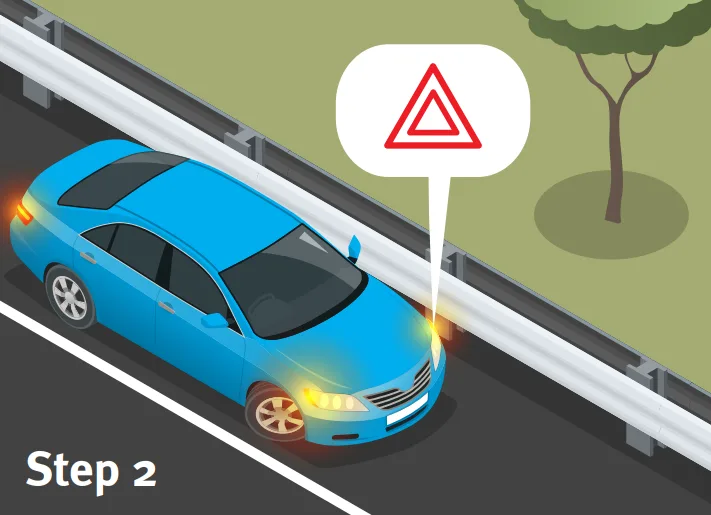
Bing (Web (fair-use with source credit))
For advice on what to do if your car gets washed unintentionally, read about what happens when you accidentally put a car key through the wash.
How State Laws Differ and How to Know What Yours Says
Move It laws are not uniform across the country. Each state writes its own version. Some states require you to move after any fender bender.
Others only require it on highways with speed limits above 55 mph.
California Vehicle Code 20002 applies to all public roads. Texas Transportation Code 550.022 only applies on highways. Florida Statute 316.061 covers all roads but excludes injury accidents.
The differences matter.
The easiest way to find your state's rule is to check your DMV website. Search for "move it law" plus your state name. Most states publish a one-page fact sheet.
Bookmark it on your phone.
A quick rule of thumb applies in most states. If the accident is on a highway, move it. If it is on a surface street with no injuries, move it.
When in doubt, call the non-emergency police number and ask.
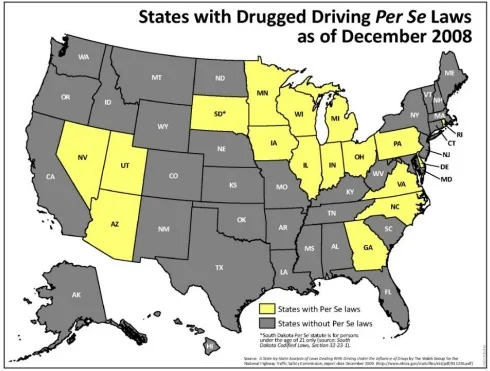
Wikimedia Commons / The National Highway Traffic Safety Commission
What About Parking Lots, Private Property, and Highway Shoulders?
Move It laws generally apply to public roads. Parking lots are private property. The same safety logic applies, but the legal requirement is different.
In a parking lot, there is no law forcing you to move. You still should move to avoid blocking other drivers. The insurance rules work the same way.
Document the scene first, then pull into a parking space.
Highway shoulders are tricky. Some states consider the shoulder part of the roadway. Others treat it as a safe zone.
The safest bet is to get completely off the pavement. If the shoulder is narrow, find the next exit or a wide spot.
Never walk on the highway to exchange information. Stay inside your car with your seatbelt on until you reach a safe spot. Your safety matters more than getting insurance details immediately.
Common Mistakes That Lead to Tickets, Fines, or Hit-and-Run Charges
The biggest mistake drivers make is not moving at all. They sit in the travel lane waiting for police. That can earn you a citation for blocking traffic in 40 states.
Another common error is moving when you should not. If there are injuries or a suspected DUI, moving the car can look like tampering. Police may charge you with leaving the scene.
That is a criminal offense, not just a ticket.
Some drivers forget to document before moving. They pull off the road and then realize they have no photos of the original position. That weakens your insurance claim significantly.
Take photos first, even if traffic is building up.
A third mistake is giving the wrong information. Some drivers admit fault at the scene. Do not say "I am sorry" or "I did not see you." Just exchange names, insurance, and contact info.
Let the insurance adjusters sort out fault later. For more on what happens when things go wrong with your car, read about what to expect in a drive through car wash.
Special Situations: Rental Cars, Commercial Vehicles, and Rideshare Drivers
Rental cars come with extra rules. The rental agreement usually requires you to report any accident to the rental company immediately. Do not just move the car and drive off.
Call the rental company's roadside assistance number first.
Commercial vehicles have federal rules under FMCSA regulations. If you drive a truck with a commercial license, you must follow stricter reporting requirements. Do not move a commercial vehicle unless the shoulder is wide enough to accommodate it safely.
Blocking a lane in a big rig is safer than risking a rollover on soft ground.
Rideshare drivers carry additional liability. Uber and Lyft have their own accident reporting procedures. You must notify the app before moving the vehicle.
Failure to do so can void your coverage. Rideshare insurance has specific gaps you need to understand.
For all these special cases, the golden rule applies. Your personal safety and the safety of others comes first. Move only when it is genuinely safe to do so.
The paperwork can wait a few minutes.
How Moving (or Not Moving) Affects Your Insurance Claim
Insurance companies look at whether you followed the law. If you moved when required, your claim proceeds normally. If you blocked traffic unnecessarily, the insurer may reduce your payout.
The key factor is documentation. Photos of the scene before moving are powerful evidence. They prove the accident was minor and the road was clear.
Without those photos, the insurance adjuster has to rely on your word and the other driver's word.
Moving the car does not count as admitting fault. Insurance companies know the difference between obeying the law and accepting blame. As long as you documented the scene, moving is neutral for liability.
Failing to move when required can hurt your claim. If the other driver argues that you caused further congestion, the insurer may assign partial blame to you. That can reduce your settlement by 10% to 20% in some cases.
Not moving when injuries are present is the right call. That protects the evidence and your legal position. Insurance companies respect that decision.
For more on car maintenance and protection, see our article on does ceramic coating protect against salt.
Real Scenarios: What to Do in Each Common Situation
Scenario 1: Highway fender bender, no injuries, both cars drivable.
You're in the fast lane. The car ahead taps their brakes and you bump their bumper. No one is hurt.
Both cars drive fine.
Do this: Take a quick photo of the position. Turn on hazards. Signal and merge to the shoulder or nearest exit.
Exchange info there. Report to police if required by your state. This is the textbook Move It Law case.
Scenario 2: Parking lot tap, no damage visible.
You back into a parked car in a lot. No one is inside the other car. There's no visible damage.
Do this: Take photos anyway. Leave a note with your contact information. Move your car to a nearby parking space.
Wait 10 minutes for the owner. If they don't show, report the incident to your insurance. Parking lots are private property but you still have a legal duty to stop.
Scenario 3: Intersection bump with claimed injury.
You rear-end someone at a stoplight. They get out holding their neck. They say they're injured.
Do this: Do not move your car. Call 911 immediately. Stay in your vehicle with your seatbelt on.
Tell the dispatcher there is a reported injury. Do not discuss fault with the other driver. Wait for police and medical responders.
Moving in this situation can lead to serious legal trouble.
Scenario 4: Single-car slide into a ditch.
You hit a patch of ice and slide into a ditch. No other vehicles are involved. Your car is stuck but drivable once pulled out.
Do this: If you are off the roadway and not blocking traffic, stay put. Call for a tow. Do not try to drive out if it means spinning wheels onto the road.
If you are partially blocking a lane, call police for traffic control. This scenario usually does not trigger Move It Law requirements.
Quick Legal Reference: Fines, Reporting Windows, and Key Exceptions
Here is a snapshot of what you need to know. Fines for failing to move vary by state. The typical range is $50 to $250.
Some states add court costs and administrative fees on top.
| State | Fine Range | Reporting Window | Key Exception |
|---|---|---|---|
| California | $50 – $200 | 24 hours | Injury or DUI suspicion |
| Texas | $100 – $250 | 24 hours | Highway speed limit under 55 mph |
| Florida | $60 – $120 | Immediately | Any injury at all |
| New York | $100 – $150 | 10 days | Vehicle not drivable |
Reporting windows matter. Most states require you to file a police report within 24 hours if damage exceeds a certain threshold. That threshold is usually $1,000 to $1,500.
If the damage is clearly minor, a report may not be required.
Some states have no explicit Move It Law. Arizona and Montana, for example, rely on general obstruction statutes. The principle is the same.
Blocking traffic unnecessarily can still earn you a citation.
Always check your state's specific statute. A quick search on your state DMV website takes two minutes. That two minutes could save you a fine.
Frequently Asked Questions
Do I have to move my car if there is no damage?
Yes, in most states. The law looks at whether you are blocking traffic, not whether damage exists. If you are in a travel lane and no one is hurt, move to the shoulder.
What if I move my car and the other driver leaves?
That is frustrating but not a legal problem for you. You have fulfilled your duty to clear the road. Call the police and report the hit-and-run.
Give them the other driver's description and license plate if you have it.
Can I be charged with hit-and-run for moving after a minor accident?
No, as long as you stop at a nearby safe location and exchange information. Moving to the shoulder is not leaving the scene. Driving away entirely without stopping is hit-and-run.
Does moving my car count as admitting fault?
No. Insurance companies understand Move It Law requirements. Moving to clear the road is a safety action, not an admission of liability.
Your photos and documentation will show the scene.
What if the other driver refuses to move?
You cannot force them to move. If they refuse and there is heavy traffic, call the non-emergency police line. Tell the dispatcher that a driver is refusing to clear the road.
Do not argue with them. Stay safe and let law enforcement handle it.
Do Move It laws apply in construction zones?
Yes, they apply anywhere the public has a right to travel. Construction zones have narrower shoulders and more hazards. Be extra cautious when moving.
If there is no safe spot to pull over, stay put and call for help.