If you’ve moved to Florida from a state that requires yearly inspections, the first time you renew your car registration probably felt surprisingly easy. No wait at an inspection station. No checking your tire tread.
No emissions test. That’s because Florida’s lack of annual vehicle safety and emissions inspection requirement is baked into state law. You just register, pay the fee, and you’re done.
But that simplicity comes with real trade-offs. As of 2026, Florida has more than 21 million registered vehicles, making it one of the largest states with zero mandatory safety oversight. That’s a lot of cars, trucks, and SUVs rolling around with no state‑verified condition baseline.
Let’s break down what that absence means for your wallet, your safety, and your next used‑car purchase.
Quick Answer
Florida does not require annual safety or emissions inspections for passenger vehicles. Registration renewal needs no inspection proof. Only rebuilt‑title cars get a state safety check.
As a buyer or owner, you are responsible for the vehicle’s condition. Paying an independent mechanic for a pre‑purchase inspection is the smartest step you can take.
Why This Topic Demands Your Attention
No inspection means no hassle, but it also means hidden problems stay hidden. Worn brake pads, bald tires, and leaking exhaust don’t get flagged unless a law enforcement officer stops you for something else.
This directly affects your safety on the road. Using NHTSA recall data, Florida shows higher rates of unrepaired safety recalls compared to states with annual inspections. Without a state prompt, many drivers don’t know about open recalls on their own car.
Key risks that escape detection:
- Unrepaired safety recalls that can cause crashes or fires
- Flood damage from hurricanes, cleaned and resold without disclosure
- Odometer rollback, harder to spot without periodic state readings
- Emissions tampering, like missing catalytic converters or defeat devices
The lack of a state inspection shifts the burden entirely to you. Whether you’re buying a used car or keeping your current one on the road, you are the only quality‑control checkpoint.
The Core Fact: Florida Opts Out of Annual Vehicle Inspections
Florida law does not require a safety or emissions inspection for any privately‑owned passenger vehicle during registration or renewal. Florida Statute 320.02 lists what you need: proof of insurance, the title, and payment. Nowhere does it mention an inspection slip.
The only mandated state safety check applies to salvage‑rebuilt vehicles. If a car has been declared a total loss and is rebuilt, it must pass an inspection at a Florida Department of Highway Safety and Motor Vehicles station before it can be titled as “rebuilt.” That’s it.
For emissions, Florida sits in full attainment of all federal air quality standards under the Clean Air Act. The EPA does not require the state to run an Inspection and Maintenance (I/M) program. So no tailpipe test, no OBDII scan, no smog check.
Out‑of‑state transfers get a VIN verification (form HSMV‑82040) but no mechanical or emissions check. You can bring a car from California, New York, or anywhere else and register it in Florida without proving any systems work.
What Other States Require (and Why Florida Differs)
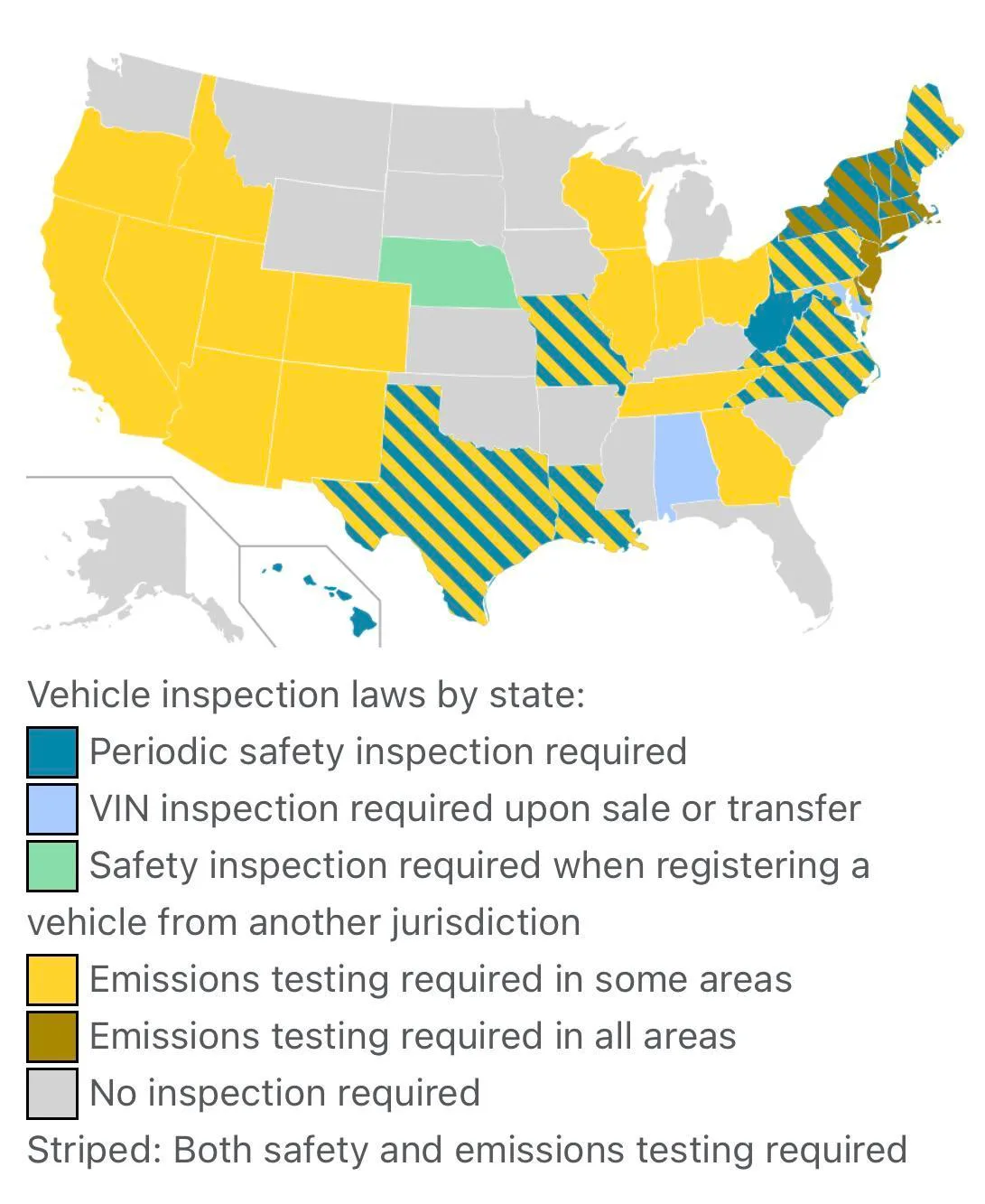
Inspection requirements vary widely across the country. Here’s how the major approaches stack up:
| State approach | Examples | What’s checked |
|---|---|---|
| Safety and emissions annually | New York, Pennsylvania, Texas | Brakes, tires, lights, horn, emissions system |
| Safety only annually | Maine, Vermont | Safety components |
| Emissions only (biennial) | California, parts of Colorado | OBDII scan, tailpipe |
| No inspection | Florida, Alabama, Mississippi, Kentucky | Nothing |
Why is Florida in the “no inspection” group? Several reasons come together. Attainment status means no federal pressure to test emissions.
The state has a strong cultural preference for minimal regulation. And the cost of building a statewide inspection network is high. Legislators have consistently chosen not to spend that money.
The Real Upside: Savings and Simplicity
Let’s give credit where it’s due. Skipping inspections saves you time and money.
- No annual inspection fee, usually $10 to $50 per car per year
- No forced repairs for minor issues like a small windshield crack or dim license‑plate bulb
- Online registration renewal in under five minutes
- Full freedom to modify your vehicle with lift kits, custom exhausts, or aftermarket lighting
- Less government paperwork and no need to schedule an appointment
For a two‑car household, that can mean $40 to $100 back in your pocket each year. Plus zero trips to a crowded inspection station. But those savings only matter if you stay on top of your car’s health yourself.
You are the inspector now.
The Hidden Costs: Safety Risks and Consumer Fraud
The absence of a state inspection also creates real risk. Hidden mechanical problems don’t get caught until they cause a breakdown or a crash.
| Hidden risk | How it plays out in Florida |
|---|---|
| Unrepaired recalls | No state reminder; many owners ignore notices |
| Flood‑damaged cars | Hurricanes produce thousands of flooded vehicles; without an inspection, water damage can be hidden |
| Odometer fraud | No periodic reading makes rollback harder to detect |
| Emissions tampering | Missing cats or defeat devices stay on the road |
| Brake and tire neglect | Worn components aren’t flagged until failure |
Insurance rates reflect this reality. Florida has among the highest auto insurance premiums in the country. Many factors contribute, but the lack of a statewide inspection is one piece of the puzzle.
Insurers know they’re covering cars that haven’t had a recent third‑party safety check.
For buyers on the private market, the risk is biggest. Without a state baseline, you’re trusting the seller’s word about the car’s condition. That’s a gamble you shouldn’t take.
How This Affects Auto Insurance in Florida
Higher premiums are one of the costs you pay for the convenience of no inspection. Insurance companies underwrite risk based partly on vehicle condition. Without a state safety check, the overall risk pool is less predictable.
Florida already ranks among the most expensive states for car insurance. Aggregate industry data shows rates here are roughly double the national average. The lack of annual inspections is one factor among many, but it contributes to the perception that vehicles on Florida roads may be less safe.
You can counter this by keeping maintenance records and having a recent inspection report from a trusted mechanic. Some insurers offer small discounts for such documentation. It’s worth asking your agent about.
For a deeper look at how these factors interact, our vehicle safety blog covers insurance trends and state‑specific rules.
Buying a Used Car in Florida: Your New Responsibility
When you shop for a used car in Florida, you cannot rely on a state inspection sticker to verify condition. That sticker doesn’t exist. The burden falls entirely on you.
A clean Carfax or AutoCheck is a good start, but it won’t catch everything. Flood damage is often underreported. Mechanical wear is invisible to a history report.
You need a hands‑on evaluation.
Before you buy, take these steps:
- Get a vehicle history report and cross‑check the title brand.
- Verify the VIN on all panels to catch potential salvage fraud.
- Test all lights, wipers, HVAC, and electronics.
- Check tire age and tread depth.
- Look for water stains, musty smells, or rust in the footwells.
- Schedule a pre‑purchase inspection with a reputable shop.
States like Connecticut enforce annual safety checks that catch many issues before a car is sold. For example, Connecticut's trailer towing safety requirements mandate specific equipment checks. Florida has no equivalent.
You are the inspector.
The Pre-Purchase Inspection: Your Only Safety Net
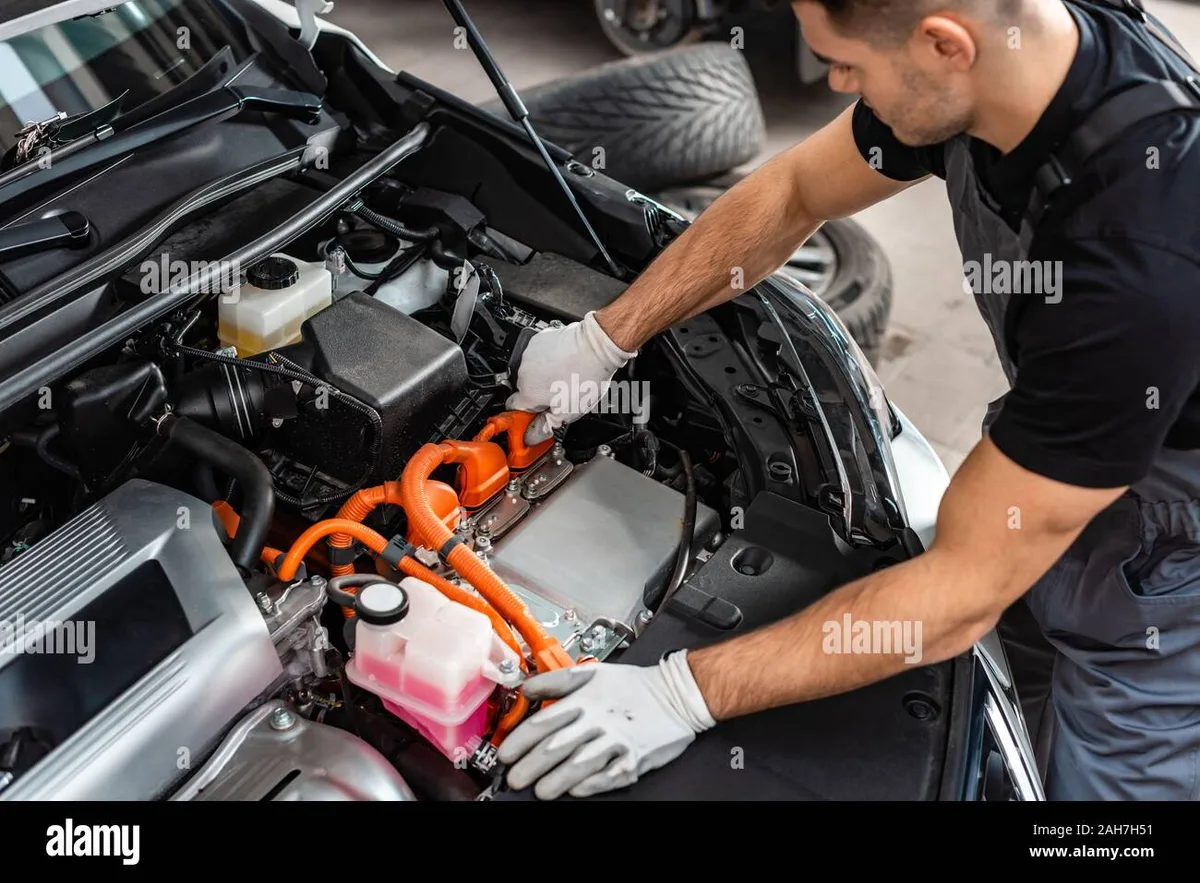
A pre‑purchase inspection by an independent mechanic is the single best hedge against buying a hidden problem. It typically costs $100 to $200. For a $10,000 car, that’s one to two percent of the price.
Small price for peace of mind.
What a thorough inspection covers:
- Brake pad thickness, rotor condition, fluid levels
- Tire condition, age, and tread depth uniformity
- Suspension components, bushings, and shock condition
- Engine compression, leaks, belt and hose wear
- Transmission operation, fluid color and smell
- Exhaust system integrity and any signs of tampering
- OBDII scan for pending codes, readiness monitors, and hidden issues
- Frame inspection for collision or flood damage
Many shops offer mobile inspections. Others require you to drop the car off. Either way, get a written report before you hand over any money.
In Florida, this is the only way to verify what a state inspection would have caught. Don’t skip it. And when you find a trustworthy mechanic, keep their number on speed dial for annual checkups.
For comparison, Connecticut's window tint laws are enforced through their inspection program, a reminder that other states build safety into the registration process.
The State’s Role: What Is Actually Enforced?
Florida does not completely ignore vehicle safety. It just relies on a different enforcement model.
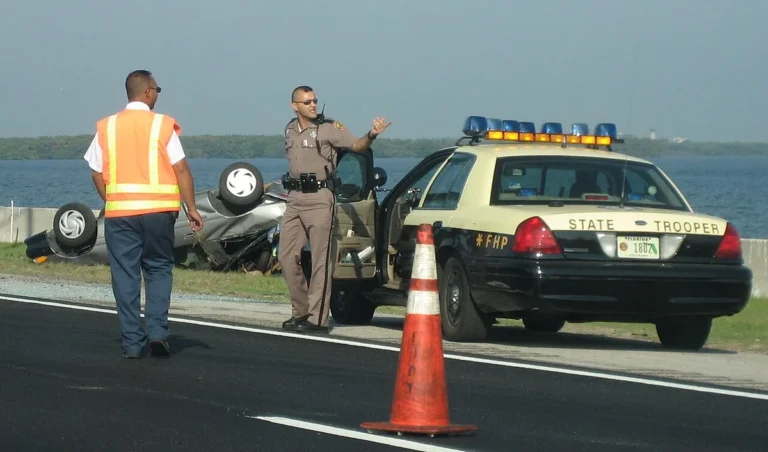
Police officers can pull you over and write an “unsafe vehicle notice” under Florida Statute 316.610 if they spot obvious problems. Things like a broken windshield, missing mirrors, or a dragging bumper can trigger a fix‑it ticket. But this is reactive, not proactive.
Window tint is regulated separately. Law enforcement typically checks tint during traffic stops using a meter. Exemption permits exist for medical conditions, but the process is separate from registration.
Salvage‑rebuilt vehicles must pass a state safety inspection before getting a rebuilt title. This is the only mandatory mechanical check in Florida. If you buy a car with a rebuilt title, verify that it passed this inspection.
Connecticut's historic vehicle plate rules show how another state structures exemptions. Florida’s version is simpler: no inspection at all.
Florida’s Unique Climate and Environmental Factors

Florida’s climate places unusual stress on vehicles. Heat accelerates rubber degradation, battery failure, and paint damage. Humidity promotes corrosion in electrical connectors and underbody components.
Hurricanes produce widespread flood damage. After a major storm, hundreds of thousands of vehicles may be submerged. Many are cleaned, dried, and resold inside the state or shipped elsewhere.
Without an inspection requirement, flood damage can be concealed relatively easily.
The lack of a state inspection also means emissions tampering goes unchecked. Catalytic converter theft is rampant in Florida, and some drivers never replace the missing part. The check engine light stays on, and no government authority flags it during registration.
Connecticut's catalytic converter theft prevention laws illustrate a different approach, one that involves etching programs and enforcement. Florida relies on owners to stay honest.
Your best defense is vigilance. Have your car inspected annually at an independent shop, even though the state doesn’t require it. Replace fluids on schedule.
And after any hurricane, have the underbody and interior checked for signs of water intrusion.
Common Mistakes and How to Avoid Them
The biggest mistake is assuming a used car from a private seller is safe because it “looks fine” and “runs smooth.” In states with annual inspections, many red flags get caught before a car hits the market. In Florida, they don’t.
Skipping a vehicle history report is another common error. A clean Carfax doesn’t guarantee the car hasn’t been flooded, but it can reveal title brands, mileage discrepancies, and reported damage. Pay the thirty bucks.
It’s worth it.
Relying on a test drive alone is a third mistake. A bad engine mount or worn suspension bushing can feel normal on a short loop. That’s why a professional pre‑purchase inspection is non‑negotiable for any car over a few thousand dollars.
For context, Connecticut's lemon law process shows how some states protect buyers. Florida leaves that protection up to you.
What to do instead: make a checklist. Every car you consider, run the VIN, check tire date codes, look under carpets for water stains, and have a mechanic you trust give it a full once‑over.
Expert Recommendations for Risk Mitigation
Treat your car like it will be inspected, even though it won’t. Schedule an annual checkup with an independent shop. This mirrors what a state inspection would cover.
The cost is usually under $150.
Keep a maintenance log. Insurers and future buyers value documented history. It also helps you catch patterns, a brake fluid leak or a slow coolant drop, before they become emergencies.
Stay current with recalls. Use the NHTSA recall lookup tool with your VIN twice a year. In Florida, no state agency will remind you.
Connecticut's vehicle abandonment laws show how other states stay on top of problem vehicles. Florida’s approach is more hands off, so you have to be proactive.
Invest in a cheap OBDII scanner. Read codes monthly. A pending code can wave a flag early.
Fix small problems before they turn into expensive ones.
Frequently Asked Questions
Does Florida require any kind of vehicle inspection at all?
Only for salvage‑rebuilt vehicles. A rebuilt title requires passing a state safety check at a FLHSMV station. For everything else, no inspection is required to register or renew.
Can I get pulled over for an unsafe vehicle?
Yes. Law enforcement can issue an unsafe vehicle notice under Florida Statute 316.610 if they spot something obviously wrong. This is reactive, not proactive.
You won’t get a reminder when your brake pads get thin.
Is there any emissions testing in Florida?
Not for passenger vehicles. Florida is in attainment of federal Clean Air Act standards, so the EPA does not require a state Inspection and Maintenance program. No tailpipe test, no OBDII scan at registration.
Will a car from another state need an inspection to be registered in Florida?
No. Out‑of‑state transfers only require a VIN verification form (HSMV‑82040). No mechanical or emissions check is needed.
How do I know if a used car is safe without a state inspection?
Pay a trusted mechanic for a pre‑purchase inspection. Look for flood signs, check the title history, and run a VIN check. Take the car for a longer test drive including highway speeds.
Are manufacturers required to ensure a car’s safety after the sale?
They issue recalls but are not responsible for inspecting your car. Owners must respond to recall notices and get repairs done. Florida does not tie recall completion to registration.
Final Take: Living Without Inspections
Living in a state with no annual vehicle safety or emissions inspection is simpler on the surface. You save time and a small fee. But that simplicity transfers significant responsibility to you.
The trade‑offs are real. Higher insurance premiums, more hidden flood cars, and undetected mechanical problems are part of the landscape. The absence of a state check doesn’t make problems vanish.
It just hides them until they surface in a breakdown or a repair bill.
The path forward is straightforward. Treat your car to an annual checkup. Always get a pre‑purchase inspection.
Stay on top of recalls. Know the common scams in your local market. Florida’s lack of an annual inspection requirement means you are in the driver’s seat, for better and for worse.
Make it the better option by staying informed and vigilant.