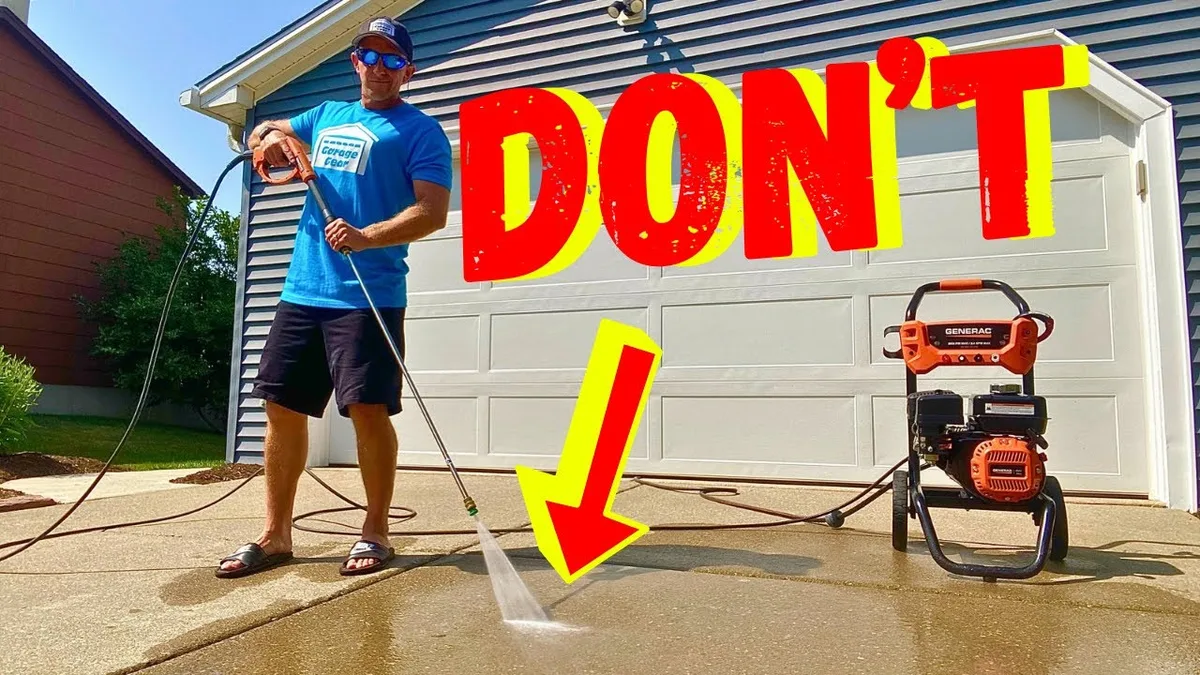
Image source: YouTube / Garage Gear (YouTube thumbnail (fair-use with source credit))
Is it best to use detergent when jet washing a drive? It depends on the stain and surface. Detergent cuts through oil, moss, and deep grime, but plain water works fine for light dust.
Manufacturer specs confirm most pressure washers handle detergent at 2,000, 3,000 PSI. That’s the sweet spot for concrete and block paving.
Quick Answer
Yes, use detergent for oil, moss, or heavy dirt. Skip it for light dust or sealed asphalt. Detergent lifts stains water can’t.
Always rinse thoroughly.
When Detergent Helps (And When It Doesn’t)
Detergent is a game-changer for stubborn stains. Oil, grease, and organic growth like moss or algae cling to porous surfaces. A good driveway cleaner breaks these down chemically, so the pressure washer can blast them away.
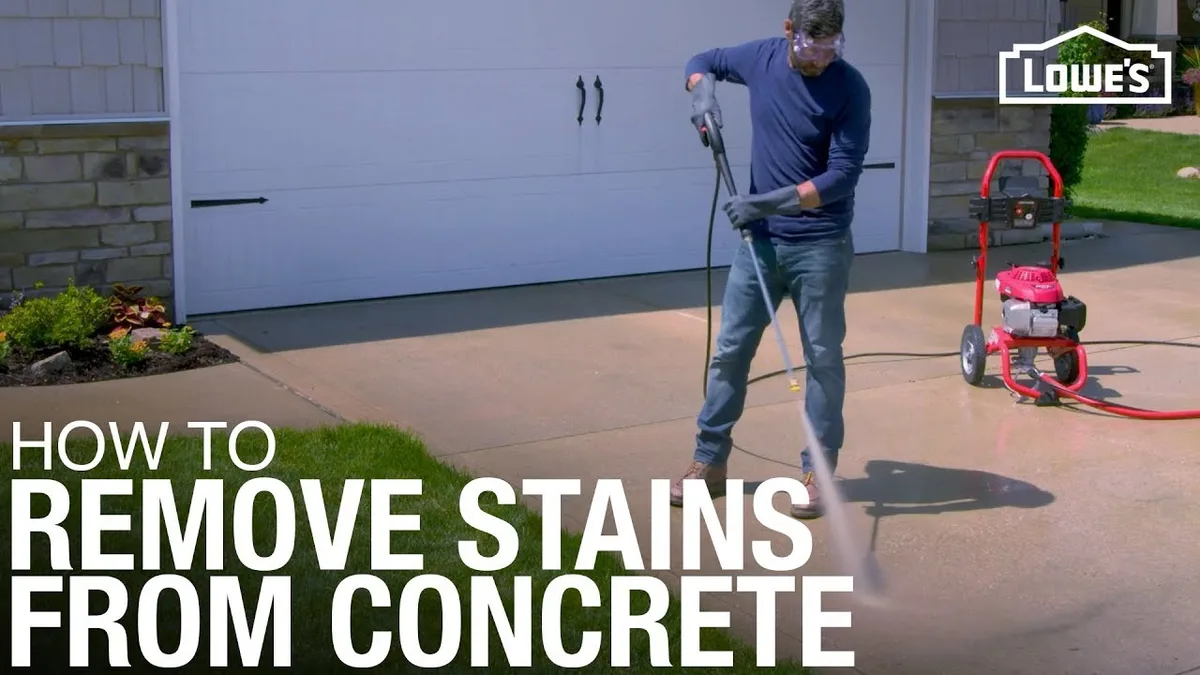
Image source: YouTube / Lowe's Home Improvement (YouTube thumbnail (fair-use with source credit))
For light dirt or loose debris, water alone is enough. Using detergent unnecessarily wastes money and can leave residue. It can also strip sealants if the driveway was recently treated.
The 3 Driveway Types That Need Detergent
Concrete drives absorb oil and stains deeply. Detergent penetrates the pores to lift contaminants before rinsing.
Block paving traps dirt in the joints. A detergent pre-soak loosens grime between the blocks, making the wash more effective.
Image source: YouTube / Clever Hacks (YouTube thumbnail (fair-use with source credit))
Asphalt can handle detergent, but only if it’s unsealed. Sealed asphalt may degrade with harsh chemicals, so stick to water unless the stain is severe.
The 2 Times You Should Skip It
Newly sealed driveways shouldn’t be washed with detergent for at least 30 days. The chemicals can interfere with the curing process.
If your driveway is just dusty or has light surface dirt, water at the right PSI will do the job. Adding detergent won’t improve the result and may leave a film.
How to Pick the Right Detergent for Your Drive
| Stain Type | Best Detergent Type | Avoid |
|---|---|---|
| Oil/Grease | Alkaline-based degreaser | Acidic cleaners |
| Moss/Algae | Oxygen bleach or sodium hypochlorite | Plain dish soap |
| General Dirt | Mild driveway cleaner | Household bleach |
Alkaline cleaners work best for oil and grease. They break down hydrocarbons without damaging concrete or block paving.
For moss and algae, oxygen bleach is safer than chlorine. It kills spores without harming nearby plants.
Step-by-Step: Using Detergent Without Damaging Your Drive
Pre-wet the driveway to loosen surface dirt. This prevents detergent from sticking to dry grime.
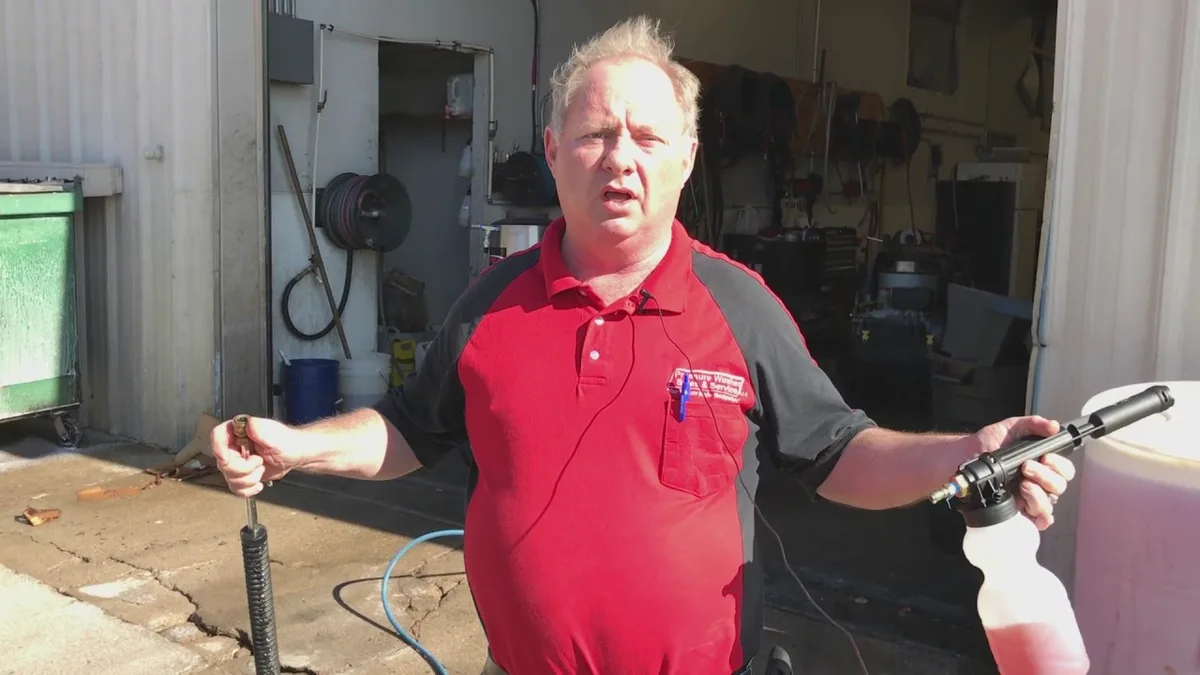
Image source: YouTube / Pressure Washer Sales & Service LLC (YouTube thumbnail (fair-use with source credit))
Apply detergent using the soap nozzle at low pressure. Let it sit for 5, 10 minutes but don’t let it dry.
Rinse from the top down in overlapping passes. Keep the nozzle 12, 18 inches from the surface to avoid etching.
Common Mistakes That Ruin Driveways (And How to Avoid Them)
Using the wrong nozzle can strip sealant or pit concrete. Stick to a 25° or 40° tip for detergent work.
Letting detergent dry on the surface creates streaks. Rinse while it’s still wet and foamy.
Skipping a pre-wet means detergent clings to loose dirt. A quick water pass first makes the clean more even.
Pressure Washer Settings for Safe Detergent Use
| Surface | PSI Range | Nozzle | Detergent Type |
|---|---|---|---|
| Concrete | 2,500–3,000 | 25° | Alkaline degreaser |
| Block Paving | 2,000–2,500 | 40° | Oxygen bleach |
| Asphalt (unsealed) | 1,500–2,000 | 40° | Mild driveway cleaner |
Never use a 0° nozzle with detergent. The concentrated stream can damage the surface and waste cleaner.
For sealed asphalt, reduce PSI to 1,500 or lower. Higher pressure can strip the sealant layer.
Eco-Friendly Options That Actually Work
Oxygen bleach kills moss and algae without harsh chemicals. It’s safe for plants and pets once dry.
Biodegradable detergents break down quickly. Look for plant-based formulas with no phosphates.
Vinegar and baking soda mixes work for light stains. But they’re less effective on oil or deep grime.
How Often Should You Use Detergent?
Deep clean with detergent once or twice a year. This removes built-up contaminants without overuse.
For high-traffic drives, a light detergent wash every 3, 4 months keeps stains from setting. Stick to mild cleaners for frequent use.
Avoid detergent in freezing weather. Water and chemicals can freeze, damaging the surface.
Final Decision Guide: Detergent or Just Water?
Use detergent for oil, grease, moss, or deep stains. These require chemical breakdown before pressure washing.
Stick to water for light dust, loose debris, or sealed asphalt. Detergent won’t improve results and may cause damage.
For block paving or concrete with heavy growth, detergent is essential. It reaches into pores and joints where water alone can’t.
Frequently Asked Questions
Can I use dish soap in my pressure washer?
No. Dish soap creates too many suds and can clog the system. Use only pressure washer-rated detergents.
How long should detergent sit before rinsing?
5 to 10 minutes is ideal. Longer than 15 minutes risks drying and leaving residue.
Will detergent damage my driveway sealant?
Yes if it’s fresh. Wait 30 days after sealing before using detergent. For older sealant, test a small area first.
Is hot water better than cold for detergent?
Hot water helps detergent work faster. But most home pressure washers use cold water, which still works with proper dwell time.
Can I pressure wash a driveway in winter?
Avoid it if temperatures are near freezing. Water and detergent can freeze, cracking the surface.